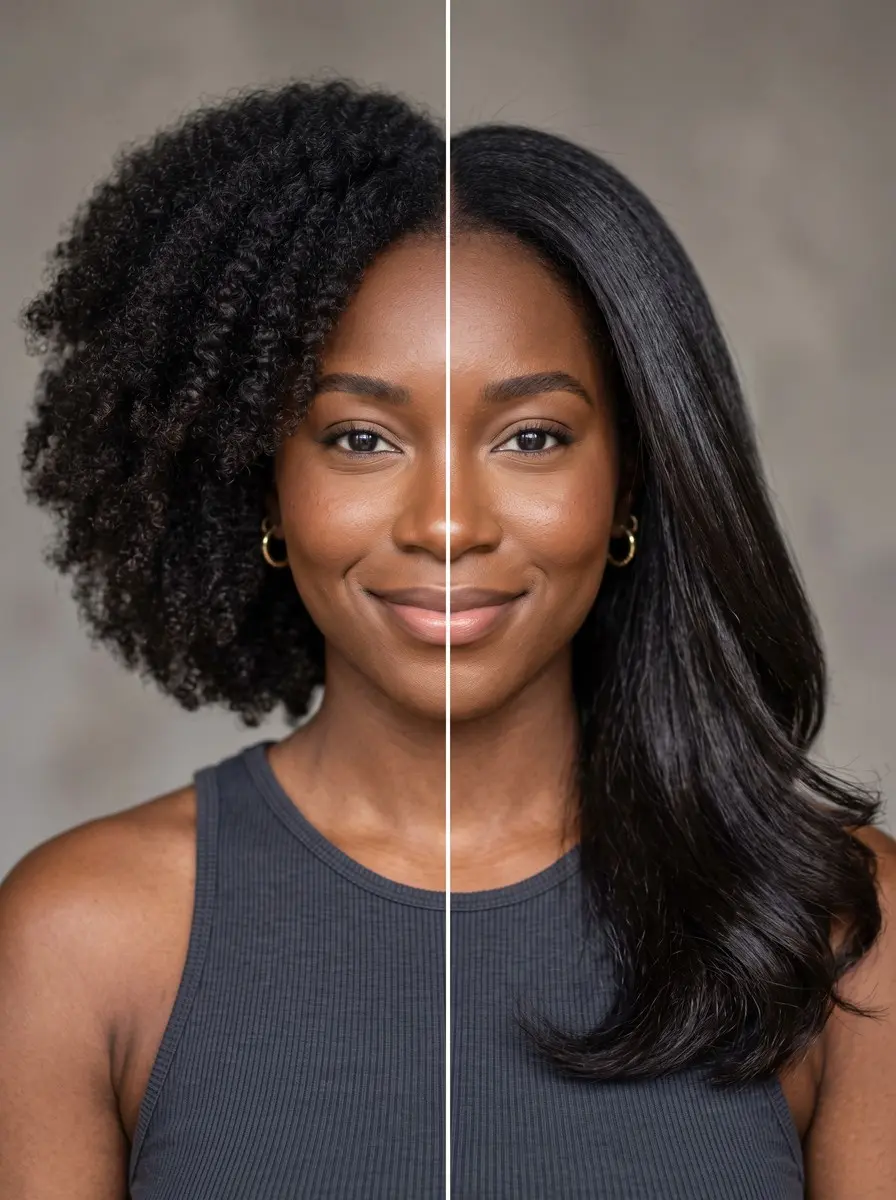
To style a wolf cut, blot hair to about 80% dry and put mousse at the roots. Then blow-dry the roots up with a round brush if your hair is straight or thick, or diffuse if it is wavy or curly. Finish with texture spray on the ends and a flexible-hold hairspray.
A wolf cut looks effortless when you leave the salon. Two washes later it can dry flat on top, puff out at the ends and start to look like a grown-out mullet. The cut hasn’t failed. A wolf cut is built from short crown layers and longer, shaggier lengths, and it only reads as a wolf cut when you style those two zones differently: lift at the roots, separation and grit through the ends.
This guide shows you how to style a wolf cut at home, step by step, for straight or fine, wavy, curly and thick hair, with air-dry, diffuse and blow-dry options. It also covers the bangs, a five-minute second-day refresh, and fixes for a flat crown, a triangle shape and layers that disappear. You need a handful of products and about 20 minutes.
What You’ll Need
- Heat protectant spray (lightweight mist) — Protects the mid-lengths and ends, the oldest and most fragile hair, from blow-dryer, diffuser and iron heat.
- Volumising mousse (root lift) — Sets at the roots as it dries, giving the crown lift that makes the cut read as a wolf cut.
- Medium ceramic round brush (about 1.5-2 in barrel) — Lifts the crown roots and sets the layers outward or inward during the blow-dry.
- Dry texture spray — Adds grip and separation to the dry mid-lengths and ends so the layers look piecey instead of smooth and blended.
- Hair dryer diffuser attachment — Dries wavy and curly wolf cuts with crown lift without breaking up the curl pattern.
As an Amazon Associate, HairAide earns from qualifying purchases. Some links above are affiliate links — they cost you nothing extra and help support free tutorials.
Step-by-Step
-
Start by working out what your length can do, because the cut limits the style. Chin-length wolf cuts give softer, less dramatic layers, so aim for tousled texture rather than big crown height. Shoulder-length cuts show the most distinct layers and hold crown volume well. Long wolf cuts give the most dramatic contrast between a full crown and wispy ends. If your hair is fine, check that your crown layers are soft and blended rather than very short. Very short crown layers can make fine hair look thinner, and no styling fully hides that. Once you know what your length gives you, you can stop fighting the cut with extra product.
-
Wash, then wrap your hair in a microfibre towel or turban until it is about 80% dry, with no drips and just slight dampness at the roots. Microfibre absorbs water without the friction of a terry towel, which roughs the ends up into the fuzz that makes wolf-cut layers look blurry instead of piecey. Stopping at 80% matters for two reasons: products spread evenly on damp hair, and hair keeps the shape it is in as the last of the water leaves, so that is the moment to style. Curly hair is the exception. Stop while it is still very damp, because curls clump and define best when product goes onto wet hair.
-
Apply products in a set order, because each one works on a different zone. First, mist a heat protectant through the mid-lengths and ends, which are the oldest, most fragile part of the hair and take the most heat. Next, work a golf-ball-sized amount of volumising mousse into the roots only, lifting sections at the crown. Mousse sets as it dries, which gives the root lift a wolf cut depends on, but on the ends it just makes the layers stiff. Save texture spray for the dry mid-lengths and ends after styling, and use a flexible-hold hairspray last so nothing you add later flattens the shape. Curly hair can use a curl cream or light gel on the lengths and keep the mousse at the roots.
-
Style the bangs first, while the rest of your hair is still damp. Fringe hair is short, dries fastest and keeps whatever shape it dries in. For curtain bangs, blow-dry them forward and side to side to neutralise any cowlick, then dry them over a round brush away from your face so they split at the centre and sweep back toward your cheekbones. For a choppy fringe, dry it straight down with the nozzle pointed toward the ends, then pinch a little texture spray through the tips so it breaks into separate pieces instead of one solid block. Curly bangs skip the dryer here: scrunch them and let them dry with the rest of your hair in step 6.
-
If your hair is straight, fine or thick, blow-dry it for the most control. Rough-dry the roots first, either with your head upside down or by pushing the roots against their natural fall, because roots that dry flat stay flat. Then take the crown in 2-inch sections with a medium round brush and lift each one straight up from the scalp. Roll the ends outward for a shaggy flick or inward for a softer, rounder shape. Fine hair needs a smaller brush and less product. Thick hair needs smaller sections, with the nozzle pointed down the hair shaft to keep the bulk smooth. Finish each section with a few seconds of cool air: hair holds the shape it cools in, so this locks the lift in place.
-
If your hair is wavy or curly, air-dry or diffuse it instead of brushing the lengths, because a brush breaks wave and curl clumps apart into frizz. Scrunch the lengths upward with your palms. To air-dry, clip the crown roots up with flat clips and leave your hair untouched until it is completely dry. To diffuse, use low speed and medium heat, cup each section in the diffuser bowl for 30-60 seconds, and tip your head forward while you do the crown for root height. Wavy hair also suits a hybrid: round-brush the crown for lift as in step 5, then diffuse the lengths for texture. When it is fully dry, scrunch out any stiff cast from the mousse or gel to free soft, separated layers.
-
Once your hair is fully dry, add texture where a wolf cut needs grip. Spray a dry texture spray through the mid-lengths and ends from about 8 inches (20cm) away, then scrunch and twist small sections between your fingers to split the layers into pieces. For a more tousled finish on straight hair, curl random 1-inch sections with a curling iron or bend them with a straightener. Alternate directions, curl away from your face, and leave the last inch of each end straight so the result looks lived-in. Mist a flexible-hold hairspray over the whole shape last. It holds the lift but lets the layers move. Switch to a firm hold if your style drops by midday.
-
Fix the common failures with small adjustments instead of a full restyle. For a flat crown, re-dampen the roots, add a little more mousse and dry them upside down, or flip your parting to the other side so the roots stand up against their new direction. A triangle shape, narrow on top and wide at the ends, means the volume is in the wrong place: build height at the crown, keep texture spray off the bulkiest ends, and smooth them inward with the round brush. For frizz, stop brushing the ends and press a pea-sized amount of smoothing cream over the lengths. If the layers disappear, twist texture spray through small sections. If the look is too polished, rake through it with your fingers and shake out the roots. If the triangle or the vanishing layers come back even after careful styling, the cut has lost its shape and needs a trim with more internal layering.
-
On day two, refresh your hair in about five minutes instead of rewashing. Spray dry shampoo into the roots at the crown and along the parting, wait a minute for it to absorb oil, then massage it in with your fingertips, which also lifts flattened roots. Flip your head over and scrunch a little texture spray through the lengths to bring back the separation. Wavy and curly hair does better with a light mist of water, a scrunch and a minute under the diffuser. Re-shape just the bangs and one or two crown sections with the round brush, then finish with a light mist of hairspray.
Common Mistakes to Avoid
- Working mousse through the ends instead of only into the roots, which stiffens the layers and still leaves the crown flat.
- Brushing out wavy or curly lengths once dry, which breaks the clumps into frizz and blurs the layers into one undefined mass.
- Loading texture spray onto ends that are already bulky, which widens the bottom of the shape and exaggerates a triangle.
- Curling every section in the same direction and right to the tips, which turns a shaggy cut into uniform, overly polished curls.
- Asking for very short crown layers on fine hair, which can make it look thinner however carefully you style it.
Pro Tip
Before you blow-dry the lengths, wind the crown sections onto two or three large velcro rollers and leave them in while you do your makeup. Hair holds the shape it cools in, so ten minutes on a roller gives lift that lasts much longer than a brush-only blow-dry.
Frequently Asked Questions
How do I style a wolf cut without heat?
Blot your hair until damp, work mousse into the roots and scrunch the lengths upward. Clip the crown roots up with flat clips so they dry lifted, then leave your hair alone until it is completely dry. Remove the clips, scrunch out any stiffness and add texture spray to the ends. This suits wavy and curly wolf cuts best. Straight hair will look softer and flatter than a blow-dry.
How often should a wolf cut be trimmed?
Most wolf cuts need a trim every 6-10 weeks to keep their shape. Hair grows about half an inch a month, so after two months the short crown layers are roughly an inch longer and start to blend into the lengths. That is when the cut loses its contrast and starts to look like a mullet. Longer, softer versions can usually go closer to 10 weeks.
Can you get a wolf cut with fine hair?
Yes, fine hair can carry a wolf cut. Ask for soft, blended layers and avoid very short layers at the crown, which can make fine hair look thinner. Style it with mousse at the roots only, a round-brush blow-dry for lift, and a light texture spray. Skip heavy creams and oils, which weigh the layers down.
Why does my wolf cut look like a mullet?
Usually the sides are lying flat while the back stays full, or the cut has grown out. To fix the styling, blow-dry the sides and front pieces outward with a round brush so they match the volume at the back. If it still looks like a mullet on a freshly styled day, the back has outgrown the layers and needs blending at your next trim.
Do I need both mousse and texture spray for a wolf cut?
They do different jobs, so most wolf cuts benefit from both. Mousse goes on damp roots and sets as it dries, giving crown lift that lasts through the blow-dry. Texture spray goes on dry mid-lengths and ends to add grip and separation. Curly hair can use curl cream or gel on the lengths instead of mousse but still benefits from mousse at the roots.
You Might Also Like
- 27 wolf cut hairstyles to inspire your next look
- 30 curly wolf cut ideas to inspire your next look
- 30 wolf cut with bangs ideas to inspire your next look
- 40 long wolf cut ideas to inspire your next look
- wolf cut vs shag: which one to book
- how to blow-dry curtain bangs
- how to diffuse curly hair
- how to get rid of thick hair frizz
- how to make a blowout last longer
Once you style the two zones differently, with lift at the roots and grip through the ends, a wolf cut takes about 20 minutes on wash day and five on the days in between. A note on heat: mist a heat protectant through damp lengths before blow-drying or diffusing. Use curling irons and straighteners on completely dry hair only, because wet hair under an iron is genuinely damaging. Keep irons to about 150C/300F for fine or bleached hair and 180-200C/355-390F for coarse hair.
If the shape still looks flat, triangular or like a mullet after careful styling, stop adding product and book a trim. The layers have grown out, and a stylist can rebalance the crown and blend the back.
Sources
- John Frieda's at-home routine: wrap in a microfibre turban until about 80% dry, apply heat protectant to the lengths, work volumising mousse in at the roots, lift the roots with a hairdryer and round brush, then scrunch and finish with a firm-hold hairspray. johnfrieda.com