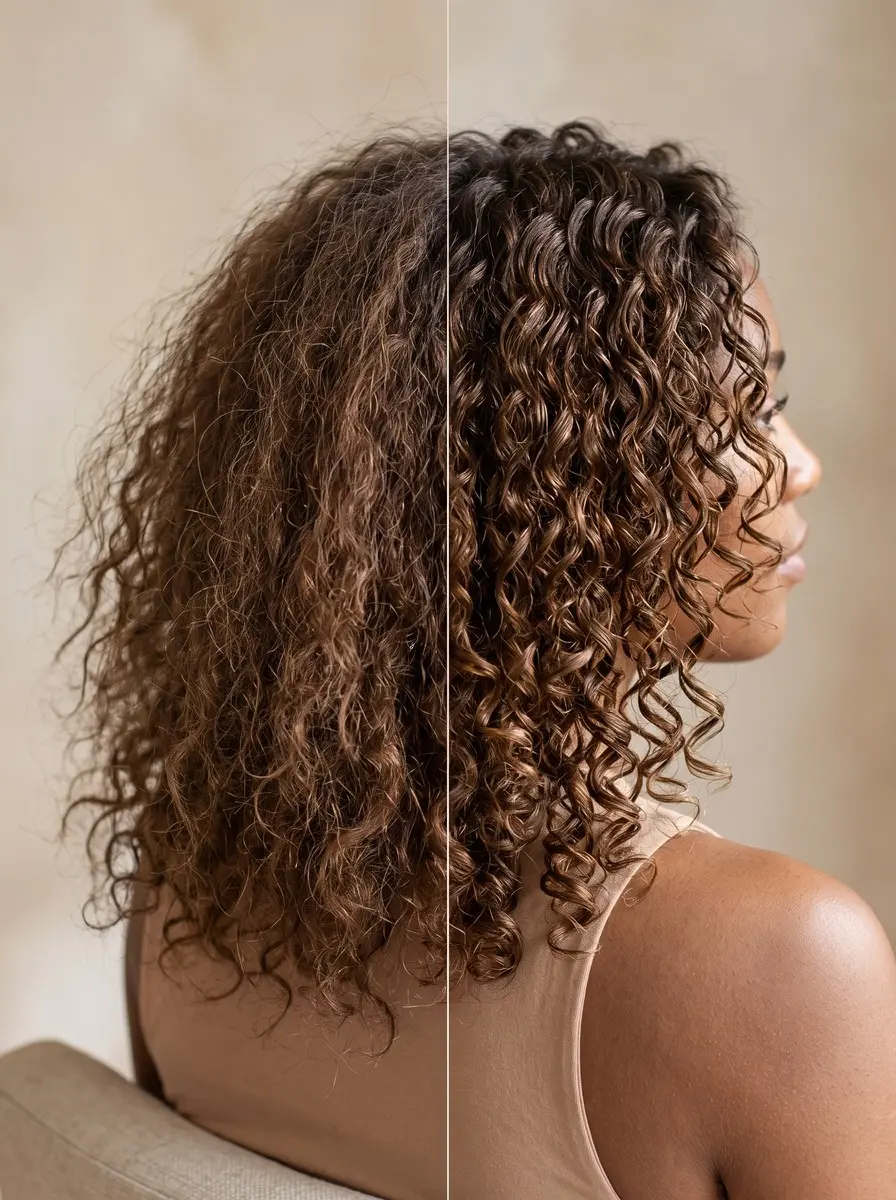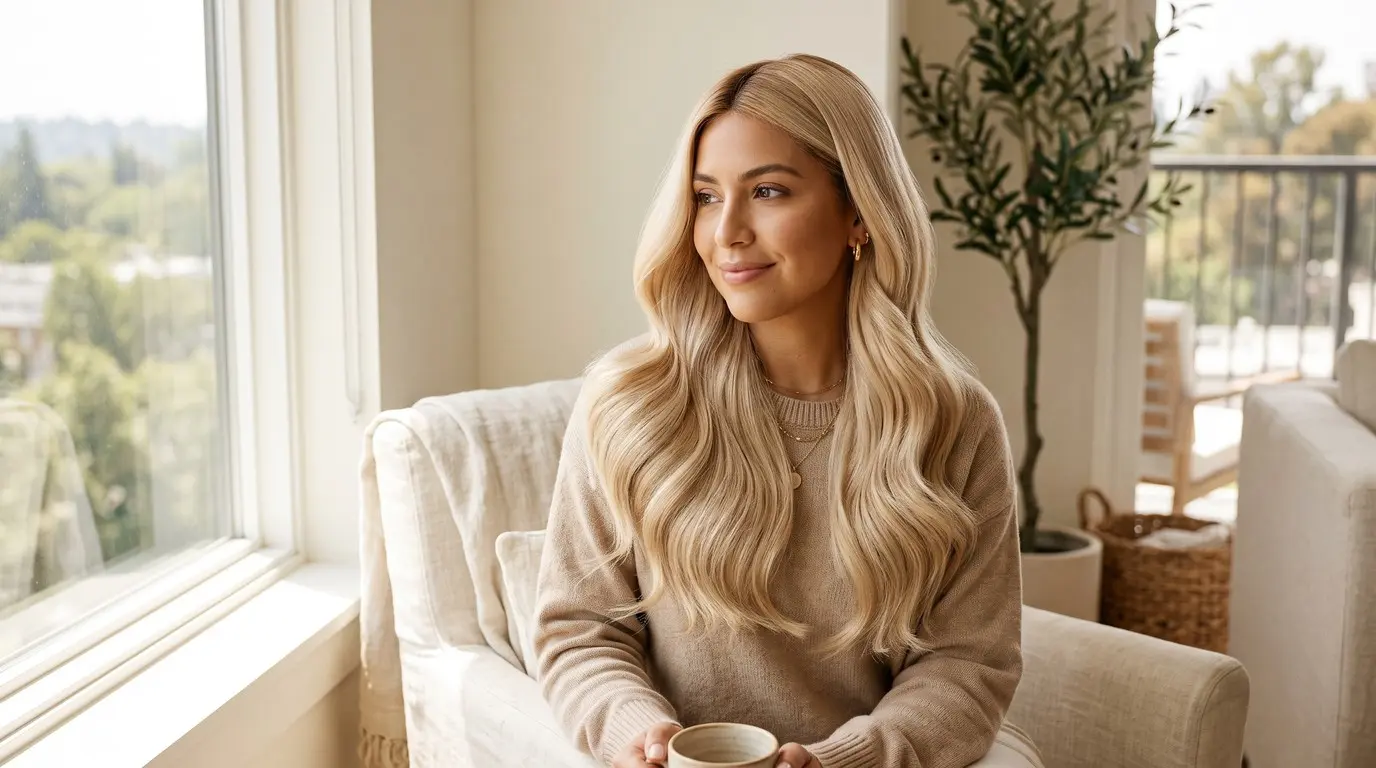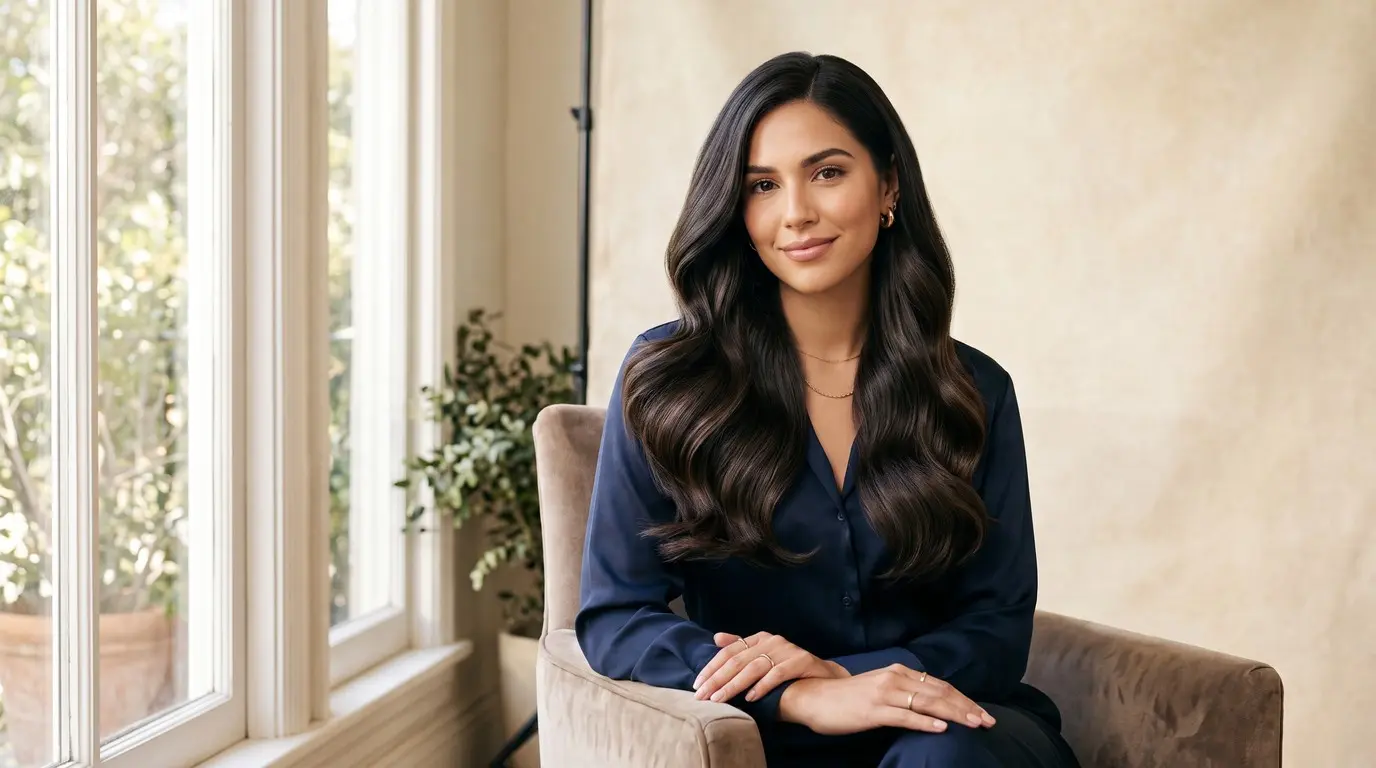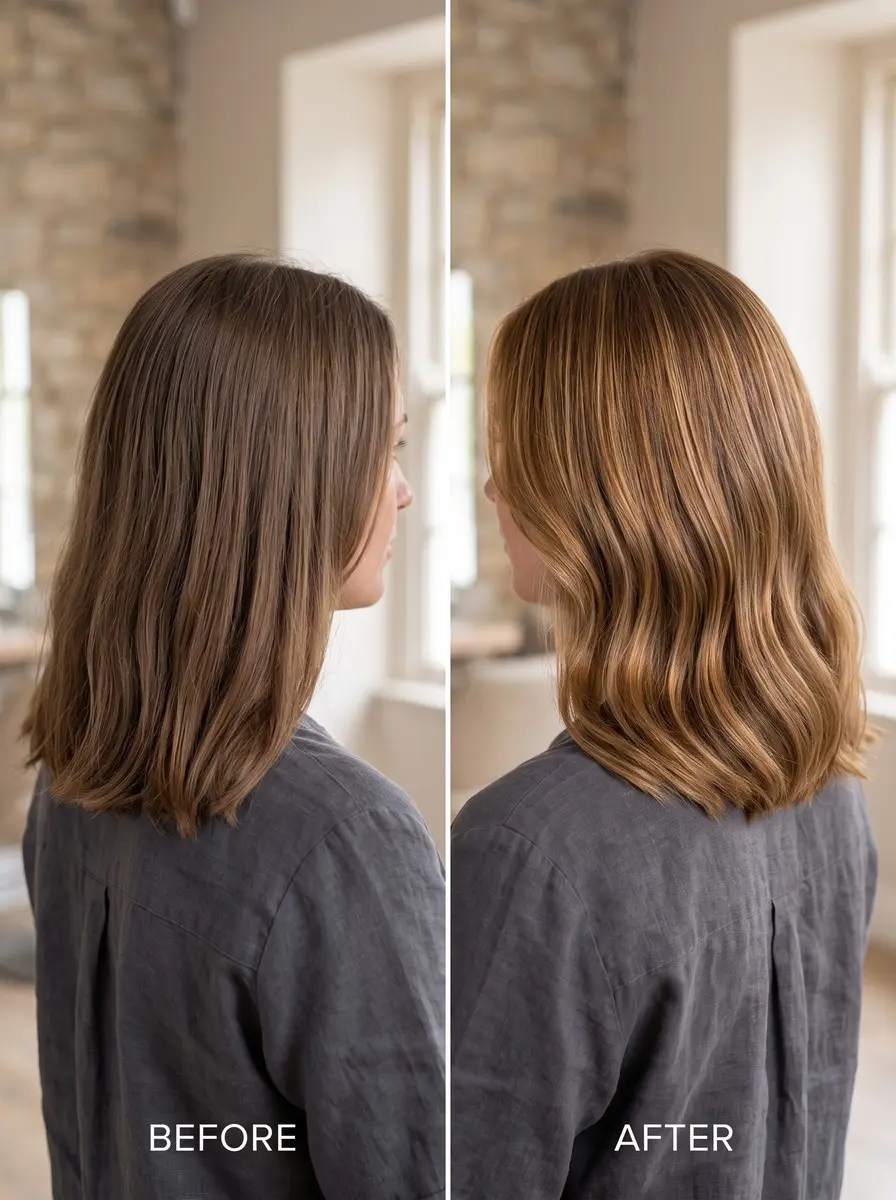
To go lighter without bleach, mist hair with 1 part lemon juice to 2 parts water and sit in the sun, pour on a strong chamomile rinse, or leave on raw honey diluted 1:4 with water for an hour or two. Expect about one level of gradual lift.
Maybe you want the soft, sun-lifted brightness your hair gets after a beach holiday, or maybe your hair just looks darker and flatter than it used to. Either way, bleach feels like too big a step: too harsh, too permanent, too much commitment for a subtle change. The good news is you really can go lighter without bleach using a few kitchen ingredients and some sunshine, as long as you’re working with your natural color.
Here’s the part most guides skip. Without bleach you can expect about one level of lift, not a jump from brunette to blonde. That’s enough for a warmer, lighter, sun-kissed version of your own color. This guide gives you the actual mix ratios for lemon, chamomile, honey and vinegar, which method suits which goal, how to protect your hair along the way, and when it’s smarter to book a colorist.
What You’ll Need
- Raw unpasteurized honey (natural lightening treatment) — Raw honey keeps its glucose oxidase enzyme, which produces mild peroxide once diluted with water; pasteurized honey may have lost it.
- Dried chamomile flowers or chamomile tea bags (herbal rinse) — A strong chamomile brew is the gentlest way to add golden brightness to blonde and light brown hair.
- Purple or blue toning shampoo — Violet cancels yellow and blue cancels orange, softening the warmth that natural lightening uncovers.
- Deep conditioning hair mask (moisturizing treatment) — Puts back the moisture that lemon juice and sun exposure pull out of hair after each session.
- Madison Reed Radiant Color Kit (permanent at-home color, one shade lighter) — The no-bleach option when you want an even one-level lift on uncolored hair in a single session.
As an Amazon Associate, HairAide earns from qualifying purchases. Some links above are affiliate links — they cost you nothing extra and help support free tutorials.
Step-by-Step
-
Find your starting level and pick one goal. Colorists rate natural hair from level 1 (black) to level 10 (lightest blonde), and without bleach you can realistically move about one level, so check your shade against a color chart in daylight before you start. Then match the method to the goal: lemon and sun for sun-kissed pieces on light brown to dark blonde hair, chamomile for a golden sheen on blonde, honey for soft all-over lift on light to medium brown, and a toning shampoo if brassiness is the real problem. Dark hair that lifts shows warm, coppery undertones rather than ash, so plan for warmth. You’re ready once you can name your level and your one goal.
-
Start with clean hair that has no buildup on it, so the lightener reaches every strand evenly. Wash with a clarifying shampoo, or follow your usual shampoo with a rinse of 2 tablespoons of apple cider vinegar in 1 cup of water, left on for 2-3 minutes and then rinsed out. Vinegar won’t lift pigment on its own, but it clears away the mineral and product film that makes light hair look dull, flat or brassy, so your hair reflects more light before you’ve lightened anything. Skip conditioner and oils before a lemon or honey session, because a coating on the hair slows the lightener down. When hair squeaks slightly under the water, it’s clean enough.
-
Before you commit, test your chosen mix on a hidden section underneath, at the nape. Apply it exactly as you plan to use it (same ratio, same timing, same sun exposure), then rinse, let it dry naturally and compare it with an untreated strand in daylight. The test shows what color your hair actually turns (golden, honey or coppery), whether it feels dry afterward, and whether your skin reacts to the mix. If the strand turns warmer than you want or feels straw-like, switch methods before you touch the rest of your head.
-
Method one, for sun-kissed pieces: mix 1 part fresh lemon juice with 2 parts water (1/4 cup juice to 1/2 cup water) in a fine-mist spray bottle. Mist it only where the sun would naturally lighten you, meaning the top layer and the pieces around your face, until the hair is damp but not dripping, then sit in direct sun for 30-60 minutes. UV light breaks down melanin, and the acidic juice is thought to speed that up, so the sun is doing most of the work. Wear sunscreen on your face and along your part and wipe any juice off your skin, because citrus plus sun can cause a blistering burn; afterward, rinse and condition. Repeat no more than once a week.
-
Method two, for a golden sheen on blonde to light brown hair: steep 4 chamomile tea bags or 3 tablespoons of dried chamomile flowers in 2 cups of boiling water for 30 minutes, until the tea is deep gold, then let it cool completely. After shampooing, lean over a bowl and pour the tea slowly over your hair, pour what you catch back over it two or three more times, and leave it in without rinsing. Chamomile’s natural yellow pigments brighten and warm light hair gradually, which makes it the gentlest of these methods, and sitting in the sun for 20-30 minutes while it dries boosts the effect. Use it after every wash for two to three weeks, but skip it if you’re allergic to ragweed, since the two plants can cross-react.
-
Method three, for soft all-over lift: stir 1 part raw honey into 4 parts distilled water (1/4 cup honey to 1 cup water) and let it stand for an hour. Honey contains the enzyme glucose oxidase, which makes a small amount of hydrogen peroxide once the honey is diluted. Undiluted honey barely lightens at all, which is why the water matters. Buy raw, unpasteurized honey, because pasteurizing can weaken the enzyme. Work the mix through damp hair, cover it with a shower cap for 1-2 hours or overnight, then shampoo it out; it’s the most hydrating of the three methods, which makes it a good choice for dry or fine hair.
-
After every lemon-and-sun session, and after any honey session that leaves your hair feeling dry, use a rich conditioning mask. Leave it on the mid-lengths and ends for 5-10 minutes. Acid and UV both pull moisture out of hair, and lightened strands tend to be more porous than before, so the mask puts back the softness the treatment took. If your hair feels rough or tangles more after a session, add a leave-in conditioner and wait longer before the next round. If your hair is lighter but still smooth and bouncy, you’re pacing it right.
-
If your hair lifts warmer than you like, tone down the warmth instead of chasing more lift. Purple shampoo cancels yellow, so it suits blonde and light brown hair that has turned brassy-gold. Blue shampoo cancels orange, the tone brown hair usually shows as it lightens. Once a week, use it in place of your regular shampoo, leave it on for 2-5 minutes and rinse when the warmth looks softer; on very pale hair, start at 2 minutes to avoid a lilac cast. Toning doesn’t make hair lighter, but cooler hair looks brighter and cleaner, which is often the result people actually wanted.
-
After three or four sessions over two to four weeks, compare your hair with a daylight photo taken before you started. If you’ve gained a level of soft brightness and warmth, stop there and keep it up with chamomile rinses and toning, because more rounds bring less lift and more dryness. If you want an even one-shade lift in a single sitting, an at-home permanent color one level lighter than your natural shade can do it on uncolored hair. Anything bigger, like brown to blonde, bright contrasting highlights, or lightening over old box dye, needs lightener, and that’s a job for a colorist.
Common Mistakes to Avoid
- Expecting ash blonde from brown hair: when dark hair lifts it shows warm copper and gold, so plan to tone rather than chase more lift.
- Using undiluted honey: the enzyme that makes peroxide only switches on once honey is mixed with water, so a straight honey mask brightens almost nothing.
- Letting lemon juice drip onto your forehead, neck or hands before sitting in the sun, because citrus on skin plus UV can cause a blistering burn.
- Spraying drugstore hydrogen peroxide straight onto your hair for faster results, which tends to leave it patchy, orange and dry.
- Doing lemon-and-sun sessions every day without conditioning, which leaves your ends straw-like long before you see any extra lift.
- Leaving purple shampoo on too long on very pale hair; start at two minutes to avoid a lilac cast.
Pro Tip
Only lighten the hair the sun would naturally reach, meaning the top layer and the pieces around your face, and leave the hair underneath alone. The contrast with the deeper color below is what makes a one-level lift look like real sun-kissed dimension rather than a flat, all-over change.
Frequently Asked Questions
How much lighter can you go without bleach?
About one level lighter than your current natural shade. That's enough to look sun-kissed or noticeably brighter, but not enough to take brown hair to blonde. Going five or more levels lighter requires bleach. Lemon, chamomile and honey all work gradually, so the change builds over several sessions rather than appearing all at once.
Does lemon juice and sun damage your hair?
It can dry hair out. Lemon juice is acidic and UV exposure dehydrates and weakens hair, so dilute the juice 1:2 with water, keep sun sessions to an hour or less, repeat no more than once a week, and deep condition afterward. Keep the juice off your skin too, because citrus plus sunlight can cause a painful, blistering rash.
Will honey or chamomile lighten hair that's already dyed?
Not much. These methods act on your natural pigment and are too mild to shift artificial dye, so colored hair usually stays the same or turns slightly warmer. Hair dye also can't lift other hair dye. To go lighter over existing color, see a colorist, who can use a color remover or lightener safely.
How long do natural lightening results last?
Lift from lemon, sun and honey is permanent in the hair it reaches, so those strands stay lighter until you trim them. Chamomile's golden tint is more of a sheen and fades over a few weeks of washing. Roots grow in at your natural shade at about half an inch a month, so a session or two every few months keeps the effect even.
Does apple cider vinegar lighten hair?
No. Vinegar doesn't break down pigment. A diluted rinse (2 tablespoons in 1 cup of water) removes mineral and product buildup, which can make hair look darker, duller or brassier than it really is. That's why hair often looks brighter afterward, and why the rinse is a useful first step before any lightening method.
You Might Also Like
- 20 balayage ideas to inspire your next look
- 20 money piece highlight ideas to inspire your next look
- how to remove hard water buildup from hair
- how to repair bleach-damaged hair
- how to do a root touch-up at home
- how to ask your stylist for exactly what you want
Done patiently, these methods give you a lighter, warmer, sun-kissed version of your natural color, about a level brighter, with soft edges that grow out gracefully because there’s no hard line at the root. The lightened lengths stay lighter until you trim them, and new growth comes in at your natural shade at roughly half an inch a month, so a refresh every few months keeps the look intentional.
Keep conditioning after every session, and use a toning shampoo once a week if warmth creeps in. If you want more than one level, crisp highlights, or lighter hair over existing dye, book a colorist. That’s lightener work, and a professional can plan how many sessions it will safely take.
Sources
- Honey contains the enzyme glucose oxidase, which produces hydrogen peroxide — a natural, mild bleaching agent — when mixed with water as a hair treatment. privatelabelextensions.com
- Without actual bleach, hair can only go up to about one level lighter than its current shade; more than five levels lighter requires bleach. aol.com
- Lemon juice diluted with water plus sun exposure, and chamomile tea rinses, are commonly cited safer at-home lightening methods for subtle lift. dermstore.com