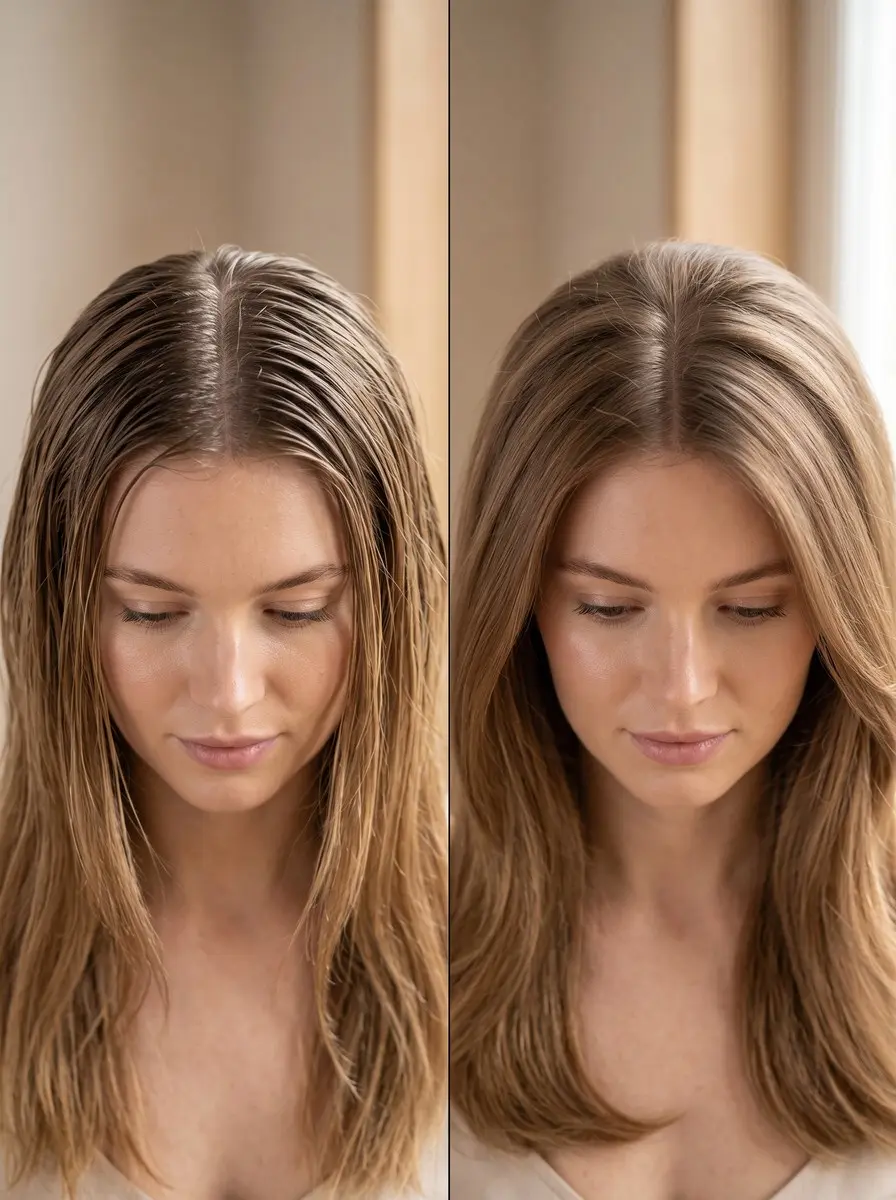
To fix greasy roots, focus shampoo on your scalp (lathering twice if it's oily), condition only the mid-lengths to ends, and choose a silicone-free formula. Between washes, spray dry shampoo 6-8 inches from sectioned roots around day two, before oil shows, then massage and brush through.
You wash your hair in the morning, and by the next afternoon your roots are flat, shiny and stringy while the ends still feel dry. It’s one of the most common hair complaints, and the usual advice, just use dry shampoo, only hides the symptom. The good news is that you can fix greasy roots by changing your routine rather than piling on more product. The wrong shampoo, conditioner in the wrong place, dry shampoo applied too late and small habits that move oil around all add up, and each one is easy to change.
This guide takes you through that new routine step by step. You’ll learn to tell product buildup from genuine oiliness, wash with a split routine that cleans the scalp without drying your lengths, and use dry shampoo the way stylists do. Everything here works at home with drugstore products and a few small changes to how you wash, dry and style.
What You’ll Need
- Clarifying shampoo (deep-cleansing, residue-removing formula) — Removes silicone, styling-product and dry-shampoo residue in the reset wash so you can tell buildup from genuine oiliness.
- Lightweight silicone-free shampoo (balancing or volumizing formula) — Cleans an oily scalp for everyday washing without leaving coating agents at the roots.
- Dry shampoo (tinted aerosol or powder for darker hair) — Absorbs oil between washes when applied around day two or three, before roots look greasy.
- Lightweight conditioner (for mid-lengths and ends) — Keeps lengths soft in the split routine without weighing down hair near the roots.
- Silicone scalp massager brush — Loosens oil and residue at the scalp while shampooing without the irritation of scrubbing with nails.
As an Amazon Associate, HairAide earns from qualifying purchases. Some links above are affiliate links — they cost you nothing extra and help support free tutorials.
Step-by-Step
-
Start by working out whether you’re dealing with oil, buildup or both, because they need different fixes. Oil looks shiny and feels slick: your hair seems clean after washing, then the roots go flat and stringy within a day or two. Buildup looks dull and feels coated, waxy or gritty. Roots can seem limp even straight out of the shower because silicones, styling products, dry shampoo or hard-water minerals are still sitting on the hair. If your hair never feels truly clean after a wash, treat the buildup first; if it feels clean and then turns slick, focus on the routine and habit steps below.
-
Read the ingredient list on your current shampoo, because formulas marketed as ‘hydrating’, ‘smoothing’ or ‘2-in-1’ are often the ones weighing roots down. Heavier silicones such as dimethicone, rich plant oils and butters (coconut oil, shea butter, argan oil) and heavy conditioning agents are there to coat the hair. That helps dry lengths but works against an oily scalp. Swap to a lightweight shampoo labelled clarifying, balancing or volumizing that doesn’t list these near the top. If you also have flaking, a shampoo with salicylic acid or zinc pyrithione can help lift scale from the scalp, though persistent flaking is worth showing a dermatologist.
-
Before judging any new routine, give your hair a clean slate with one clarifying wash. Massage a clarifying shampoo into the scalp, leave the lather on for a minute or two, rinse, and repeat, then condition only the ends, because clarifiers can leave lengths feeling dry. This lifts the silicone, styling-product and dry-shampoo residue that makes roots look greasy sooner than they should. If your roots stay fresh noticeably longer afterwards, buildup was part of the problem, so clarify every week or two from now on. If you have hard water, minerals may be part of that coating too.
-
Now wash with the split routine, starting with a scalp-focused cleanse. Apply a coin-sized amount of shampoo directly to the scalp at the front hairline, crown and nape, and massage with your fingertips or a soft scalp massager for about a minute. Don’t use your nails, which irritate the skin without cleaning any better. If your scalp is very oily, rinse and lather a second time: the first wash breaks down oil and residue and the second actually cleans, which is why it usually foams much more. Don’t scrub the lengths, because the suds that run through them as you rinse clean them enough.
-
Squeeze excess water from your hair, then apply conditioner from the mid-lengths down, keeping it about 5-8 cm (2-3 in) away from the scalp. Your roots get a steady supply of your scalp’s own oil, while the ends are the oldest, most weathered hair and the part that actually needs conditioning. This is the second half of the split routine: the scalp is cleansed thoroughly and the lengths are conditioned, so you stop putting slip agents where oil already builds up. Rinse until the hair feels smooth but not slippery, since leftover conditioner near the roots is a common cause of flat roots on the first day after washing.
-
When you dry, start at the roots rather than the ends. Rough-dry the scalp area first with a blow-dryer on medium heat, lifting sections up and away from the head. If you air-dry, flip your part to the opposite side while the roots are still damp. Roots that dry flat against the scalp stay in contact with fresh oil and tend to look greasy sooner, while lifted roots stay airy for longer. Keep leave-ins, oils and serums on the ends only, and if you need extra lift, use a lightweight root-lift spray rather than anything creamy.
-
Use dry shampoo before your roots look greasy, not after. Applied around day two or three while hair still looks clean, the powder absorbs oil as your scalp produces it, which works much better than trying to soak up a slick layer that’s already there. Part your hair into sections about 2.5 cm (1 in) wide and hold the can 15-20 cm (6-8 in) from the roots, spraying in short bursts along each part line, the hairline and the crown rather than across the top. Wait one to two minutes for the powder to settle, then massage it in with your fingertips and brush through to remove any white cast. Choose a tinted formula if your hair is dark, and remember that dry shampoo isn’t a cleanser: it stays on the scalp until you wash it out.
-
Between washes, cut the everyday habits that move oil to your roots faster. Your hands carry oil, so running your fingers through your hair or pushing it back from your face spreads it around the roots; if you do this without thinking, clip or tuck your hair out of the way. Tight ponytails press hair flat against the scalp and leave a dented band that looks greasy early, so switch to a loose low bun or a soft claw clip on the second day. Change or flip your pillowcase every few days and wash your brushes weekly, since both hold oil and residue and transfer it straight back onto freshly washed hair.
-
Once the routine is in place, you can stretch the time between washes gradually if you’d like to wash less often. Add one extra day between shampoos, cover it with preventive dry shampoo and a loose updo, and keep to that rhythm for a couple of weeks before adding another day. Be realistic about what this ‘scalp training’ does. Your oil output is driven largely by hormones and genetics, so the improvement usually comes from dropping heavy root products and late dry shampoo, not from reprogramming your oil glands. If your roots are still slick within a day despite a clean routine, washing daily with a gentle shampoo is perfectly fine; that is simply how your scalp works.
Common Mistakes to Avoid
- Waiting until roots are visibly slick before using dry shampoo, then spraying it too close so it clumps into white patches.
- Running conditioner, hair oil or leave-in cream up to the scalp, which puts slip agents exactly where oil already builds up.
- Using a rich ‘hydrating’, ‘smoothing’ or 2-in-1 shampoo whose silicones and oils coat the roots on every wash.
- Relying on dry shampoo for several days in a row without washing, so residue layers on the scalp and roots turn dull and heavy.
- Scrubbing the scalp with fingernails, which irritates the skin without cleaning any better than a fingertip massage.
Pro Tip
Spray dry shampoo on the evening of day two, before bed, rather than on the morning you need it. The powder then has hours to absorb oil as your scalp makes it, and a quick brush-through in the morning leaves roots matte with no white cast.
Frequently Asked Questions
How often should I wash greasy hair?
As often as your scalp needs; there's no fixed rule. Daily washing with a gentle, lightweight shampoo is fine for many people with oily scalps, especially if you condition only the ends. If you'd like to wash less often, add one day at a time and cover it with dry shampoo applied before your roots look greasy.
Can you train your scalp to produce less oil?
Only partly. Oil production is controlled mainly by hormones and genetics, so washing less won't reprogram your glands. What most people notice when they wash less often comes from dropping heavy root products, cutting habits that spread oil, and timing dry shampoo better. Add one day at a time, and if roots are still slick within a day, daily washing is fine.
Why are my roots greasy but my ends dry?
Scalp oil coats the hair nearest the scalp first and moves down each strand slowly. It moves fastest along fine, straight hair and slowest along curly or coily hair, so it seldom reaches the ends of longer hair. The ends are also the oldest, most weathered hair. The fix is the split routine: cleanse the scalp thoroughly, condition only mid-lengths to ends, and keep oils off the roots.
Is dry shampoo bad for your scalp?
Used occasionally, dry shampoo is fine for most people. It isn't a cleanser, though. It absorbs oil and stays on the scalp until you wash it out, so using it several days in a row can leave residue that feels itchy or gritty and makes roots look dull. Use it for a day or two between washes, shampoo it out thoroughly, and clarify every week or two.
When should I see a dermatologist about an oily scalp?
See a dermatologist if the oiliness comes with yellowish or greasy flakes, redness, itching or soreness. These are signs of seborrheic dermatitis, which needs medicated treatment rather than a new routine. Also get checked if your scalp suddenly becomes much oilier than usual or you notice more shedding than normal, since hormonal changes and some medications can affect oil production.
You Might Also Like
- 20 effortless messy bun ideas for second-day hair
- 20 polished low bun ideas to get more days from a wash
- how to remove hard water buildup from hair
- a wash-to-finish volume routine for thin hair
- dust away split ends at home
- how to ask your stylist for the cut you want
Fresh roots rarely need more than a better routine: shampoo aimed at the scalp, conditioner kept on the ends, lightweight formulas, and dry shampoo used early and correctly. Clarify every week or two, change your pillowcase often, and go longer between washes only as far as your scalp comfortably allows. If you blow-dry your roots for lift, mist a lightweight heat protectant over damp hair first, focusing it on the lengths.
If your roots turn slick within hours despite a clean routine, or the oil comes with flaking, itching or unusual shedding, see a dermatologist rather than trying product after product. And if a heavy one-length cut keeps flattening your roots, a stylist can add shape that holds hair up off the scalp.
Sources
- Applying dry shampoo before hair looks visibly greasy (around day 2-3) works far better than waiting until it's already oily. lorealparisusa.com
- A 'split routine' — thoroughly cleansing the scalp while conditioning only mid-lengths to ends — prevents root oil buildup without drying out lengths. lunalondon.com