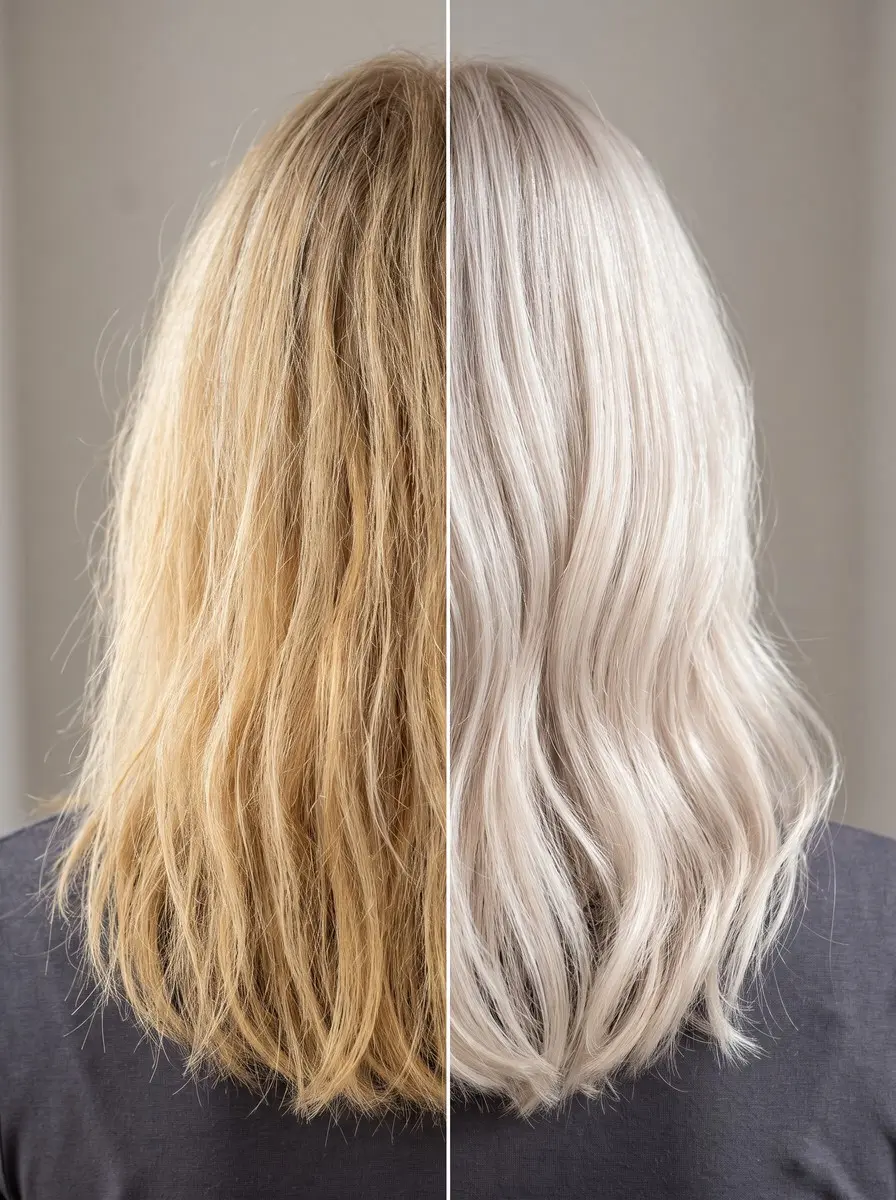
Quick answer To use purple shampoo, lather it into damp, towel-squeezed hair, starting on the brassiest areas, and leave it on 2-3 minutes for natural blonde, 5-15 for dyed blonde or up to 30 for silver. Rinse, condition, and repeat about once a week.
Knowing how to use purple shampoo is the easiest way to keep blonde, highlighted or silver hair from sliding into brass. The product itself is just as easy to get wrong. Leave it on too long and pale hair turns lilac. Use it every wash and blonde goes flat, gray and dry. Use it on the wrong problem, like orange or pool-green tones, and nothing happens at all.
Getting it right is mostly about timing. Below you’ll find how long to leave it on for natural blonde, dyed blonde, highlights, silver and porous hair, how often to repeat it, the wet-hair routine that tones evenly, and how to undo a lilac cast if you overshoot. Most sessions take under 20 minutes and need nothing more than a pair of gloves. You don’t need a salon.
Time 10-40 minutesDifficulty BeginnerSteps 9
Purple Shampoo Timing by Hair Type
| Your hair | Leave on | How often | First use |
|---|---|---|---|
| Natural blonde | 2-3 min | Once a week or less | 2 min |
| Dyed or brassy blonde | 5-15 min | Once a week | 5 min |
| Highlights | 5-10 min | Once a week | 5 min |
| Silver, gray or white | Up to 30 min | Once a week | 5-10 min |
| Very porous or damaged | 1-5 min | Every 1-2 weeks | Strand test first |
What You’ll Need
As an Amazon Associate, HairAide earns from qualifying purchases. Product links in this guide are affiliate links: they cost you nothing extra and help keep these tutorials free.
- Purple toning shampoo Deposits violet pigment that cancels yellow brass while it cleans, so it’s the main product in this routine.
- Purple toning conditioner A gentler way to tone dry, fragile or curly hair that can’t take an extra cleanse.
- Hydrating hair mask Puts back the moisture purple shampoo can strip from lightened mid-lengths and ends.
- Clarifying shampoo Lifts a lilac over-tone and clears the buildup that stops purple pigment from depositing evenly.
- Blue toning shampoo Cancels orange brass, which violet pigment can’t correct.
Step-by-Step
Step 1 Confirm the brass is yellow
Look at your hair when it’s dry, in daylight, and be honest about which warm tone you see. Purple shampoo carries violet pigment, and violet sits opposite yellow on the color wheel, so it cancels yellow and pale yellow-orange. It does not lift or lighten hair at all.
If the brass is true orange, which is common when darker hair has been lightened, you need a blue shampoo instead. If it’s green from pool water, you need a chelating shampoo, because violet does nothing to green. You’re ready when you can name a lemon or straw cast rather than a copper or khaki one.
Step 2 Choose shampoo, conditioner or mask
Pick the format based on how much toning you need and how dry your hair already is. Purple shampoo cleans and tones in one short step, so it’s the everyday choice for mild yellowing. A purple conditioner deposits pigment while it softens, which suits dry, fragile or curly hair that can’t spare an extra cleanse.
A purple mask usually stays on longer for a stronger deposit, so save it for stubborn yellow. Keep a blue shampoo for orange tones, and use only one toning product per wash so you can tell which one did the work.
Step 3 Strand test porous or damaged hair
If your hair is very damaged or highly porous, which is often the case right after heavy bleaching, test before you tone your whole head. Porous hair has a roughened cuticle that takes in pigment much faster than healthy hair, so a time that suits someone else’s blonde can turn yours lilac in a minute or two.
Lather a little into a hidden underneath section, rinse it after one minute, and check it once dry. Repeat on fresh sections at three and five minutes if needed. The time that removes the yellow without leaving a violet tinge is your leave-on time.
Step 4 Wet your hair and glove up
Wet your hair thoroughly, then squeeze or blot out the extra water until it’s damp rather than dripping. Too much water dilutes the pigment and lets it run, which causes patchy toning. Too little, and the thick formula is hard to spread evenly.
If your hair is coated in oil, dry shampoo or styling product, wash it once with your regular shampoo first so the violet lands on clean strands. Put on gloves before you open the bottle, because the pigment stains nails and cuticles and can stay on skin for a day or two.
Step 5 Start on the brassiest sections
Use about a tablespoon, or more for long or thick hair, and work it into the yellowest areas first. These are usually the lightened pieces, the mid-lengths or the hairline around the face. Lather it there before spreading the rest through to the ends, so the hair that needs the most correction gets the longest contact.
If your ends are lighter and more porous than your roots, put product on them last so they don’t overtone. Stop when every strand is evenly coated and you can’t see any bare patches through the lather.
Step 6 Time it to your hair
Start a timer once your whole head is coated, because time decides whether you end up with bright blonde or lilac. Living Proof advises about 2-3 minutes for naturally blonde hair, 5-15 minutes for dyed or brassy blonde, and up to 30 minutes for silver, gray or white hair. For highlights, 5-10 minutes on the lightened pieces is usually enough.
Keep very porous or damaged hair to the 1-5 minutes your strand test showed. The first time, start at the low end of your range (5-10 minutes for silver), and unless your hair is white or gray, never go past 15 minutes, which is where a lilac tint sets in.
Step 7 Rinse and condition straight after
Rinse with cool to lukewarm water until it runs completely clear, lifting the hair at the nape where lather hides. The water temperature is about comfort, not chemistry: lukewarm-to-cool water is just gentler on a scalp the shampoo has already dried.
Purple shampoos can be more drying than regular ones, so follow straight away with a hydrating conditioner or mask on the mid-lengths and ends, and leave it on for a few minutes. Your hair should feel slippery and detangle easily before you rinse the conditioner out.
Step 8 Judge the tone once dry
Dry your hair the way you usually do and check the color by a window in daylight. Wet hair looks darker, and warm bathroom lighting exaggerates both brass and violet. You want a clean, neutral-to-cool blonde, or a bright white on silver, with no visible lavender tint.
If yellow is still showing, add two or three minutes next time while staying within your range; if it looks dull, gray or lilac, cut back. Most lighter hair holds its tone with purple shampoo about once a week. Go less often, every week or two, if your hair is porous or tends to turn dull, lilac or dry.
Step 9 Fix a lilac cast or no change
A lilac or gray cast means the pigment overshot, but it sits on the surface, so it fades with washing. Wash once or twice with a clarifying shampoo, go back to your regular shampoo, and next time either halve the time or mix the purple shampoo 50/50 with your regular one.
If nothing changed at all, look at the tone again. Orange needs blue shampoo.
Pool-green needs a chelating or clarifying shampoo to remove the copper deposits that cause it, plus a red- or rose-toned product for any leftover cast. Heavy buildup needs clarifying first. Blonde that is still yellow after a full 15 minutes usually needs a salon toner or gloss rather than more purple.
Common Mistakes to Avoid
- Leaving it on for 20-30 minutes on blonde hair for a stronger result. On anything but white or gray hair, going past 15 minutes is where lilac starts.
- Using it every wash. Violet builds up, so blonde turns flat, dull or grayish and feels drier over time. Once a week is plenty for most lighter hair.
- Reaching for purple when the brass is orange or green. Violet only cancels yellow, so orange needs blue shampoo and pool-green needs a chelating wash.
- Applying it to soaking-wet hair, or to hair coated in product without washing first. Both leave patchy, uneven toning.
- Skipping conditioner afterward, which leaves lightened hair dry, rough and tangly.
Pro tip If your ends are lighter and more porous than your roots, mix the purple shampoo 50/50 with regular conditioner for the ends only. Use the same session and the same timer: the ends get half the pigment and finish level with the rest of your hair instead of turning lilac first.
The Bottom Line
Done right, purple shampoo gives you clean, bright blonde or crisp silver without a trip to the salon. Pick the right product for the tone, time it to your hair, condition straight after, and judge the result dry in daylight. For most lighter hair, once a week keeps brass away, and less is better whenever your hair starts looking dull, lilac or dry.
It’s a maintenance product, though, and it can’t fix everything. If your brass is deep orange or red, your hair is still yellow after a full 15 minutes, or a lilac cast won’t clarify out, a colorist’s toner or gloss will get you there faster and more evenly than another round of purple.
Frequently Asked Questions
How long should you leave purple shampoo on your hair?
It depends on your hair. Living Proof suggests about 2-3 minutes for naturally blonde hair, 5-15 minutes for dyed or brassy blonde, and up to 30 minutes for silver or gray. Start at the low end the first time. Unless your hair is white or gray, don't go past 15 minutes, which is where a lilac tint tends to appear.
How often should I use purple shampoo?
About once a week is enough for most lighter hair, and many people need it less. Use your regular color-safe shampoo for the other washes. If your blonde starts looking dull, flat or lilac, or feels dry, space sessions out to every two weeks. If yellow comes back sooner, add a couple of minutes to the timer rather than using it more often.
How do I fix hair that turned purple from purple shampoo?
A lilac or lavender tint from purple shampoo sits on the surface, so it usually fades within a few washes, though it can take longer on porous hair. To speed it up, wash once or twice with a clarifying shampoo and follow with a hydrating conditioner. Next time, halve the leave-on time or dilute the purple shampoo 50/50 with your regular shampoo.
Why isn't my purple shampoo working?
Usually it's because the warm tone isn't yellow. Violet only cancels yellow, so orange brass needs a blue shampoo, and green from pool water needs a chelating or clarifying shampoo. Heavy product buildup can also block the pigment, so clarify first. If clean, pale yellow hair still won't change after 15 minutes, book a salon toner or gloss instead of leaving it on longer.
Can you use purple shampoo on gray or white hair?
Yes, and it's a staple for keeping silver bright. White hair has no natural pigment to mask the violet, so it shows both yellowing and any purple tint more clearly than blonde does. Start at 5-10 minutes and build toward a maximum of about 30 only if yellow persists. Clarify first if the yellowing comes from hard water or product buildup.
Keep Reading
Sources
- How to use purple shampoo livingproof.com
- How to use purple shampoo curlcentric.com
- How to remove chlorine from your hair swimoutlet.com