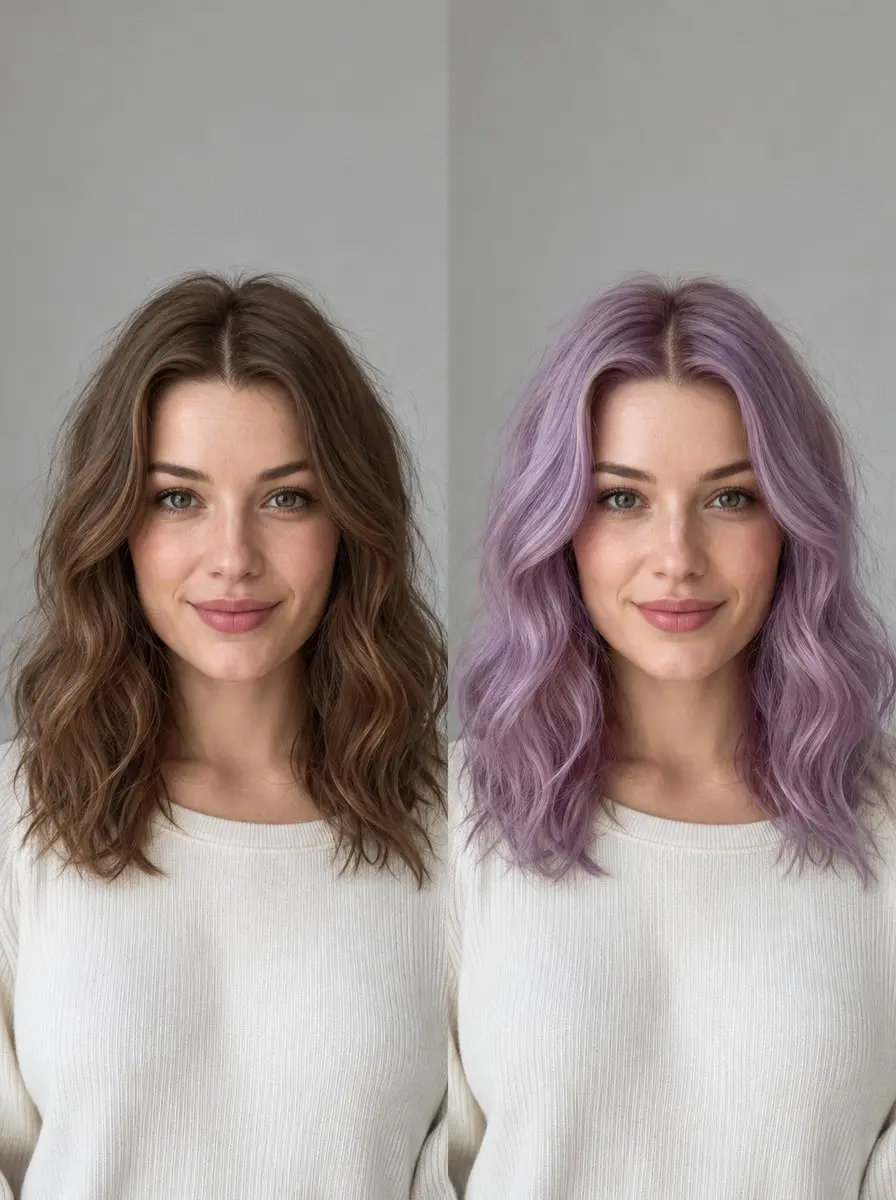
Quick answer To dye hair pastel or vivid at home, patch and strand test first. Lighten to level 9-10 for pastels or level 7-8 for deep vivids, and tone any leftover yellow with a purple shampoo. Then apply semi-permanent dye to clean, towel-dried hair for 15-30 minutes and rinse cool.
Here’s how to dye hair pastel or vivid at home without ending up with green or muddy color. Pastel and vivid shades look effortless on Pinterest, but the result depends almost entirely on the hair underneath. Semi-permanent fashion dyes only add color.
They can’t lighten, so a baby blue painted over golden blonde turns green and a lilac over orange looks muddy. So work backward: choose the color, find the blonde level it needs, then lighten and tone to that base before any dye goes on.
The good news is that the dyeing itself is the easy, low-risk part. The care goes into the lightening. This guide takes you through each stage with its own safety check: patch and strand tests, a timed four-quadrant bleach, toning, stain prevention and application. It also covers the maintenance routine and how to fade the color out gracefully when you’re ready for the next one.
Time 2-3 hours, plus a 24-48 hour patch test beforehandDifficulty AdvancedSteps 7
Which Blonde Level Each Shade Needs
| Target shade | Lighten to | Before dyeing |
|---|---|---|
| Lilac, baby blue, mint, silver | Level 10, white-blonde | Tone out all yellow |
| Pastel pink, peach, rose gold | Level 9-10, pale yellow | Tone if strong yellow shows |
| Vivid blue, teal, green | Level 8, gold with no orange | Lift past any orange |
| Vivid purple, magenta, red, hot pink | Level 7-8 | No toner needed |
What You’ll Need
As an Amazon Associate, HairAide earns from qualifying purchases. Product links in this guide are affiliate links: they cost you nothing extra and help keep these tutorials free.
- Bleach powder and developer, plus a tint bowl, application brush and sectioning clips These lift your hair to the level your shade needs, and the bowl, brush and clips let you mix accurately and work in four quadrants.
- Nitrile gloves, petroleum jelly and an old dark towel Gloves protect your hands from lightener and dye, and the jelly barrier and towel keep pigment off your skin, ears and fabric.
- Semi-permanent pastel or vivid hair dye This deposit-only fashion color tints the lightened base; patch test it first and preview it on your test strand.
- Purple toning shampoo Its violet pigment cancels the yellow left after lightening, so cool pastels go onto a clean base.
- Clarifying shampoo It leaves hair free of oil and silicone when you dye on a different day from toning, and it speeds fading when you want the color gone.
- Sulfate-free shampoo and color-depositing conditioner A gentle wash plus a matching-shade conditioner tops up pigment every wash and stretches a pastel’s 2-4 week life.
- Color remover for semi-permanent dye Optional: only for a stubborn stain or a clash with your next shade; check that the label covers semi-permanent dye and strand test it first.
- Heat protectant spray Optional: for days you blow-dry or use an iron instead of air-drying, since heat speeds fading.
Step-by-Step
Step 1 Match your shade to a starting level
Hair color is measured in levels from 1 (black) to 10 (the palest blonde). Fashion dyes only add color, so the level underneath decides what you see. Cool pastels such as lilac, baby blue, mint and silver need level 10, a white-blonde with almost no yellow, because leftover gold mixes with the dye and yellow plus blue reads as green.
Warmer pastels like pink, peach and rose gold work on level 9-10, where a little pale yellow can stay.
Deep vivids carry enough pigment for level 7-8: purple, magenta, red and hot pink cover a warm base, but vivid blue, teal and green need a clean level 8 gold with no orange. Compare your dry hair in daylight with the level chart on your lightener box, then check the quick-reference table above to see how far you need to lift.
Step 2 Patch test and strand test first
At least 48 hours before you color, patch test the lightener and the dye exactly as each package directs: a coin-sized dab behind the ear or inside the elbow. Watch the spot for 24-48 hours. Any itching, redness or swelling means that product is out.
For the strand test, clip up a pencil-width section underneath at the nape, put on gloves, brush on a little mixed lightener and check it every 10 minutes to learn how long your hair takes to reach the level you need. If it hasn’t got there by 45 minutes, rinse anyway. It won’t get there in one session, and pushing past that point is where breakage starts.
Once the strand is dry, brush your dye onto it too. This preview shows a greenish blue or a muddy lilac before it’s on your whole head. It’s also the only way to know how old box dye or henna will behave, since both often lift unevenly.
Step 3 Lighten in four quadrants, roots last
Before mixing anything, wet a strand and stretch it gently. Hair that springs back can be lightened. Hair that feels gummy, snaps or stays stretched is already damaged or brittle and should not be bleached at all. Mix the bleach powder and developer as your kit directs.
Manic Panic’s guide pairs natural levels 5-7 with 30-volume developer; levels 1-4 need stronger developer and several rounds, which is a job for a colorist. Clip dry, unwashed hair into four quadrants and work one quadrant at a time in thin sub-sections.
Apply to the mid-lengths and ends first and the roots last, because heat from your scalp makes roots lift faster. Aim to have the whole head covered within about 30 minutes, so every section processes for a similar time.
Check a strand every 10 minutes and rinse as soon as it reaches your target level, or straight away if your scalp burns. Never leave lightener on for more than 45 minutes. If you still need more lift, wait a couple of weeks before a second round rather than reapplying the same day.
Step 4 Tone the base to pale blonde
Lightened hair almost always keeps some yellow, and violet is the color that cancels yellow. Wash with a purple toning shampoo, leave it on for the time on the label, then rinse. Cool pastels need all visible yellow gone. Warm pastels only need toning if strong yellow shows.
Deep purple, magenta, red and hot pink need no toner at all because they cover warmth on their own. Purple shampoo can’t fix orange; blue is the tone that cancels orange. If you see orange, the base is too dark for pastels, so either lift more on another day or switch to a deep purple, magenta or red.
You’re done when the hair is a pale, neutral blonde with no gold showing once it’s dry. Stop there, because too much violet leaves a lilac cast that will tint a pink or mint.
Step 5 Prep for stains, then apply dye
Start on clean hair. If you toned today, it already is. If not, wash with a clarifying shampoo and skip conditioner, so the dye reaches bare strands instead of a film of oil or silicone. If your scalp feels tender after lightening, wait a day or two before dyeing.
Fashion dyes are concentrated pigment that stains skin and anything porous, so prepare before you open the jar. Smooth petroleum jelly along your hairline, over the tops of your ears and down the back of your neck; it forms a barrier the dye can’t grip.
Put on nitrile gloves, drape an old dark towel over your shoulders and clear the counter. Towel-dry until hair is damp but not dripping, since extra water dilutes the pigment and leaves patchy spots. Check your jar too, because a few brands call for fully dry hair instead. Re-clip into four quadrants and apply the dye generously with the tint brush in thin sub-sections.
Work it through with your gloved fingers until every strand is saturated, then go back over the nape and behind the ears, the two places most often missed. Rinse any splash off the sink, tub or tile straight away, before it sets. Grout stains fastest.
Step 6 Process, then rinse cool
Leave pastels on for 15-30 minutes. Check a strand at the lower end of that range, because a pale shade can go from soft to saturated quickly. For deep vivids, follow the time on the jar.
Rinse with cool water, not hot, until it runs nearly clear: hot water pulls more of the dye out, while cool water leaves the most pigment in the hair. Don’t shampoo in this rinse, and wait a day or two before the first wash. Let it air-dry if you can, and judge the shade only once it’s dry.
Wet hair looks darker, so a pastel that seems too strong in the shower often settles into the soft shade you wanted. For the first few washes, expect some color to rub off onto pillowcases and light towels, so keep your good linens out of the way.
Step 7 Maintain the color, then fade it out
Expect a pastel to last about 2-4 weeks, and only if you wash it as little as possible. Shampooing more than twice a week shortens that, and hot water and heat tools speed up fading. On wash days, use a gentle sulfate-free shampoo with cool water, then a color-depositing conditioner in a matching shade.
The conditioner tops up the pigment every time you use it, so you can go longer between redyes. Between washes, clip your hair up in the shower so it stays dry, and air-dry whenever you can. Deep vivids usually last longer than pastels because there’s more pigment to lose.
As the dye washes out, the tone underneath shows through again. That’s why blue over a slightly yellow base drifts toward green and pinks soften toward peach; it’s expected, not a mistake. To fade a color on purpose, drop the color-depositing conditioner and wash more often with a clarifying shampoo, since each wash lifts out more pigment.
Use a color remover only if a stain survives a few weeks of that, or if what’s left would clash with your next shade. Green under pink, for example, turns a muddy brown because red and green cancel each other.
Check that the remover’s label says it works on semi-permanent dye, as many are made for permanent color. Leftover red or brassy warmth muddies blue and green in the same way. If those undertones keep showing through, the fix is cleaner lightening or a colorist, not another coat of dye.
Common Mistakes to Avoid
- Putting a cool pastel over yellow or orange blonde and expecting the swatch shade. Blue on gold turns green, and lilac on orange goes muddy.
- Applying lightener to the roots first or leaving it on past 45 minutes, which causes hot roots and breakage.
- Skipping the 24-48 hour patch test because the dye says it’s semi-permanent or conditioning.
- Bleaching hair that already feels gummy, snaps or stays stretched when you pull it wet.
- Washing daily in hot water and then wondering why a pastel is gone within a week.
Pro tip Judge every stage (the lightened base, the toner and the dyed test strand) dry, in daylight, held against something white. Wet hair looks darker and warm bathroom bulbs hide gold, which is exactly the tone that turns a cool pastel green.
The Bottom Line
Do the steps in order (the right level, a clean toned base, careful application and a cool rinse) and pastel or vivid color comes out close to the swatch instead of green or muddy. After that it’s all maintenance. Wash no more than twice a week, refresh with a color-depositing conditioner, and plan to redye pastels every 2-4 weeks, or let them fade on purpose when you want a change.
Take re-lightening seriously. For new growth, lighten only the roots and never overlap onto lengths that are already bleached. If your hair is very dark, has old box dye or henna in it, or fails the stretch test, a colorist will get you to a clean pale base more safely than a second round at home.
Frequently Asked Questions
How long does pastel hair dye last?
Pastels last about 2-4 weeks with minimal washing; deep vivids usually last longer. Shampooing more than twice a week, hot water and heat tools all shorten that. Air-dry when you can, and apply a heat protectant before any blow-dryer or iron. Irons go on completely dry hair only, at no more than about 150C/300F for fine or bleached hair (180-200C/355-390F is the ceiling for coarse, unlightened hair).
Can I dye my hair pastel without bleaching it?
Only if your hair is already a very pale blonde. Semi-permanent fashion dyes add color but can't lighten, so they can't make hair any lighter than it is. Pastels need a level 9-10 base, and even deep vivids only show properly from level 7-8 up. On brown hair, a pastel simply won't show.
Does semi-permanent pastel or vivid dye damage hair?
Most fashion semi-permanents are deposit-only, use no developer and come in a conditioning base, so the dye itself does little harm. The damage in this process comes from lightening. That's why the strand test, the 45-minute limit and refusing to bleach gummy or brittle hair matter far more than which dye brand you pick.
How do I get pastel or vivid dye out of my hair?
Start by washing more often with a clarifying shampoo and dropping the color-depositing conditioner; most pastels fade noticeably within a few weeks. If a stain lingers or would clash with your next shade, use a color remover labeled for semi-permanent dye and strand test it first. Deep blues and greens can stain lightened hair stubbornly, so a colorist is the safer route for those.
When should I see a colorist instead of dyeing at home?
Book a colorist if your hair is level 1-4, since it needs stronger developer and several lightening rounds. Do the same if it fails the wet stretch test or has old box dye or henna in it. A pro is also the better choice for an even white-blonde base for silver or lilac. If your scalp burns or the lift comes out patchy, stop and get professional help.
Keep Reading
Sources
- To bleach or not to bleach manic-panic.co.uk
- How to create pastel hair color at home crazycolor.co.uk