Quick answer To bleach knots on a lace wig, turn it inside out on a block. Mix bleach powder and 20-volume developer into a thick paste and dab it onto the front knots only. Rinse once they're light enough to blend with your skin, 30 minutes at most, then neutralize and air-dry.
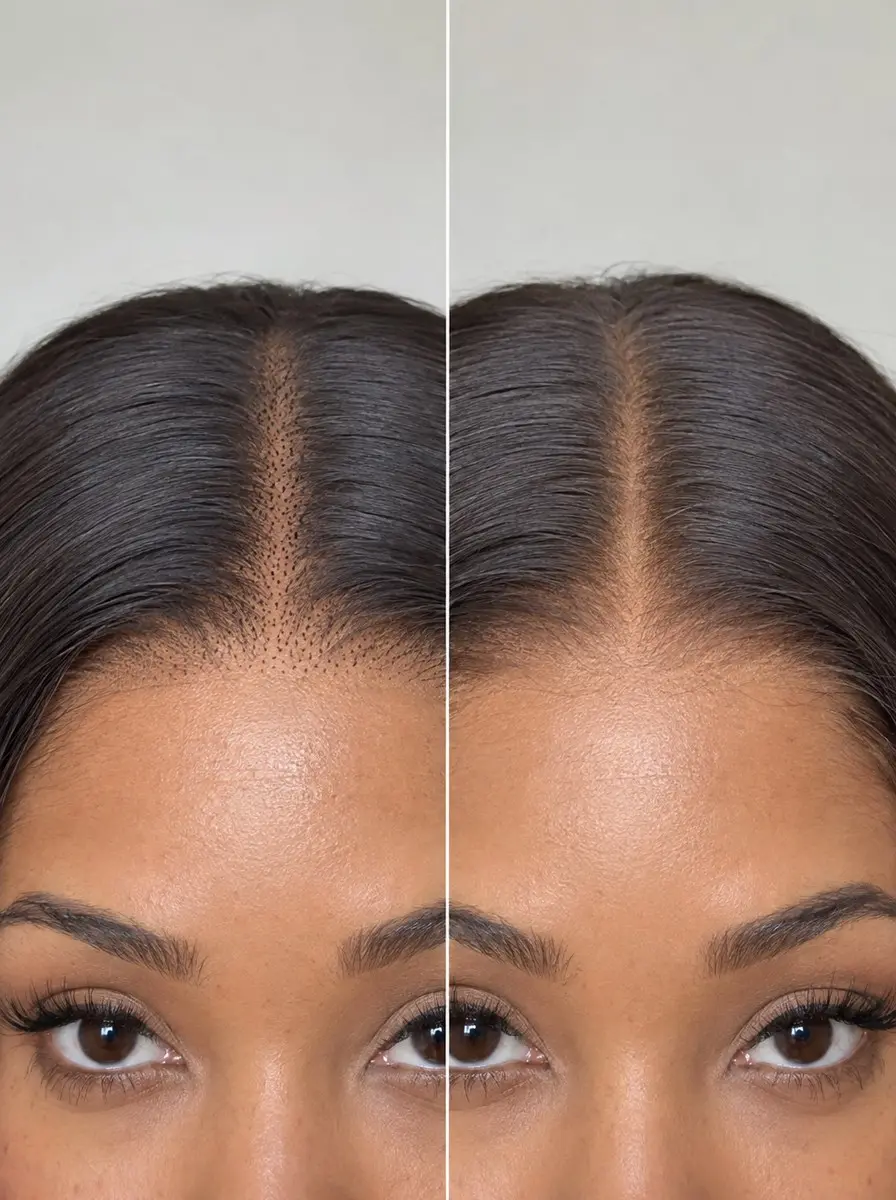
Those tiny dark dots along a lace wig’s hairline are knots, the points where each strand is tied through the mesh. Up close they show as a grid of pinpricks against your skin. They are the most common sign that a hairline isn’t growing from your scalp. Bleaching lightens only the knots, so the lace looks like skin along the hairline and part while the hair keeps its color.
This is a chemical job on a delicate mesh, and brand guides disagree on timing and brush strokes, so it’s easy to feel nervous. Here is how to bleach knots on a lace wig without damaging the lace or the hair: test a hidden spot, use a thick low-volume mix, bleach only what shows, work against a timer and air-dry.
You’ll see what the knots look like as they lighten, and how to fix orange knots, damaged lace and shedding. It’s doable at home with patience.
Time 1-1.5 hours, plus several hours of air-dryingDifficulty IntermediateSteps 8
What Your Knots Look Like as They Lighten
| Time | What the knots look like | What to do |
|---|---|---|
| Before 15 minutes | Dark, then reddish brown | Check every 2-3 minutes; deep skin may already blend |
| 15-20 minutes | Golden honey brown | Rinse for most skin tones |
| 20-30 minutes | Pale gold | Only if your test needed it |
| Past 30 minutes | Lace stiffening, knots loosening | Rinse now |
What You’ll Need
As an Amazon Associate, HairAide earns from qualifying purchases. Product links in this guide are affiliate links: they cost you nothing extra and help keep these tutorials free.
- Gentle shampoo and conditioner Washes product and residue out of a worn wig before bleaching, and the conditioner softens the front lengths after you neutralize.
- Canvas block head and T-pins Holds the lace smooth and inside out so the knots face up and nothing shifts while you dab.
- Nitrile gloves Protect your hands from the lightener while you mix, apply and rinse.
- Plastic tint bowl, whisk and applicator brush Let you whisk the paste to a thick, even consistency without metal, then dab it onto the knots instead of pressing it through the lace.
- Measuring spoons or small scoops Measure roughly equal parts powder and developer: a teaspoon of each for the test and about a tablespoon of each for the hairline.
- Bleach powder and 20-volume creme developer Lighten the dark knots slowly enough that you can check every 2-3 minutes and stop at the right shade.
- Neutralizing shampoo Counters the alkaline bleach left behind so the lightener stops working after the rinse.
- Knot sealer spray Adds a thin hold around the freshly bleached knots to reduce shedding at the hairline.
- Lace tint spray Optional: evens out knots that stayed warm or orange and helps the lace match your skin.
Step-by-Step
Step 1 Decide whether your knots need bleaching
Bleach only lightens human hair, so skip this on a synthetic wig: the fiber won’t lighten and can be damaged. Check the listing as well. Many wigs ship with pre-bleached knots, and blonde units such as 613 already have pale knots, so another round only adds shedding risk.
HD lace is thinner and more fragile than transparent lace, so it needs a shorter session that you watch closely, while transparent and light-brown lace are more forgiving.
Then map your zone: if you wear one part or sweep the hair back, only the first inch or two behind the hairline and along the part needs bleaching, and every other knot keeps its full strength.
Step 2 Prep the wig, block and workspace
Start with a clean wig. If it has been worn, wash out product and adhesive residue with a gentle shampoo, because buildup blocks the bleach and leaves spotty knots. Let it dry completely. Turn the wig inside out, stretch the lace smoothly over a canvas block and pin it at the ear tabs and nape with T-pins, so the knots face up and nothing shifts.
The lace must be dry, because damp mesh wicks the mix through to the hair on the other side. Put on nitrile gloves and open a window or run a fan, since bleach powder and fumes irritate the nose and lungs.
Step 3 Mix a thick, creamy lightener
Mix in a plastic or glass bowl, not metal, and use 20-volume developer. A 30- or 40-volume developer lightens faster than you can watch, which is how knots end up over-processed and loose.
Start with roughly equal scoops of powder and developer, then whisk in more powder a pinch at a time. A teaspoon of each is enough for your test, and about a tablespoon of each covers a lace front’s hairline.
Stop when the paste is thick and creamy, like cake frosting, and holds on the upturned brush without dripping. That thickness is your main safety measure, because a runny mix seeps through the lace and lightens the hair roots on the other side.
Step 4 Test a hidden spot first
Before you touch the hairline, dab a pea-sized amount onto a corner of lace near an ear tab, or onto a spare wig with similar lace, and start a timer. Check every 2-3 minutes. Note how long the knots take to reach a shade that would blend with your skin, then rinse the spot well.
This tells you your real processing time, and whether this lace stiffens or frays, before you risk the part everyone sees. Mixed lightener loses strength as it sits, so throw away the test batch and mix a fresh one for the hairline.
Step 5 Dab the paste onto the knots only
Load a small amount of paste onto the tint brush and dab it straight down onto the knots, staying inside the hairline and part zone you chose. Skip the back-and-forth strokes some guides show, because they work the paste through the mesh.
Don’t press either: you want a thin, even coat sitting on top of the lace, not pushed into it. Start a few millimeters behind the very front edge, where the finest baby hairs sit and the bleach reaches their lengths most easily. Start your timer as soon as the first dab goes on, because those knots begin to lighten right away.
Step 6 Time it and check every few minutes
Leave the paste uncovered so you can watch it. Foil and plastic trap warmth and moisture, which speeds up lightening. That is one reason some brand guides quote 30 minutes under foil while others stop at 15-20.
Developer strength, mix thickness, room temperature and how dark the knots start also change the timing, so trust your test time over any guide’s number. Check every 2-3 minutes by lifting a little paste off one spot with the clean edge of the brush.
The knots barely change at first, then turn from dark brown to reddish brown, usually before the 15-minute mark, and on to golden honey brown and finally pale gold. Most reach honey brown in 15-20 minutes. Rinse as soon as they will blend with your skin through the lace, and never go past 30 minutes.
Step 7 Rinse, neutralize and condition
Hold the lace paste-side down under lukewarm running water, so the water flows from the hair side through the lace and carries the bleach away from the strands. Keep rinsing until the water runs clear and the lace no longer feels slippery. Lather neutralizing shampoo over the lace area and squeeze it through gently without rubbing.
Its low pH counters the alkaline bleach left behind, so the lightener stops working instead of quietly carrying on. Rinse, smooth conditioner through the front lengths, leave it two or three minutes and rinse it out completely: soft, slippery lengths detangle without tugging on knots you have just weakened.
Step 8 Air-dry, then seal the knots
Gently squeeze out the water, put the wig back on the block and let it air-dry completely instead of speeding it up with heat, because the hair at the knots is weakest while wet.
Once it’s dry, check the result from the hair side against your skin. If a few knots still look warm, a light mist of lace tint spray on the inside of the lace evens them out.
Finish with knot sealer: mist it lightly and evenly on the inside of the lace and let it dry before you pluck, style or install. It adds a thin hold around the bleached knots and reduces shedding at the hairline you just worked on.
Common Mistakes to Avoid
- Leaving the bleach on past 30 minutes or until the knots go blonde. Over-processed knots loosen and shed, and lace that turns stiff or tears can’t be repaired.
- Using a runny mix, pressing the brush into the mesh or bleaching damp lace. All three push lightener through to the roots and leave blonde spots along the hairline that then need dyeing back to match.
- Bleaching a synthetic wig or one with pre-bleached knots. Synthetic fiber won’t lighten, and a second round on pre-bleached knots only adds shedding.
- Treating orange knots with purple shampoo. Violet cancels yellow, not orange, and a light mist of lace tint hides them faster with no extra chemical stress.
- Bleaching the whole cap when only the hairline and part show. Every extra knot you weaken is one more that can shed.
Pro tip Use the hidden-spot test to find your stopping shade, not just your time. Rinse the test patch, let it dry and hold it against your forehead in daylight with the hair side out. Knots only need to disappear against your skin, so deeper skin tones are often done well before the honey stage, and every minute you skip is shedding you avoid.
The Bottom Line
Done carefully, bleaching stops the knots from showing as dots and lets the lace pass for scalp. Because the lightening is permanent, you only do it once per wig. Look after the result by washing the lace gently, detangling the front with your fingers and refreshing lace tint when it fades, so the knots you worked on stay put.
Hand the job to a stylist who customizes wigs if your test spot stiffened or frayed, if it’s an HD unit you’d rather not risk, or if your knots came out patchy. A pro can bleach, tone and pluck a unit in a single visit. Patchy knots are also easier to fix before a second round than after one.
Frequently Asked Questions
How long should I leave bleach on wig knots?
With 20-volume developer left uncovered, most knots reach a golden honey brown in 15-20 minutes. Never go past 30 minutes. Brand guides differ because foil, stronger developer, a thinner mix and warmer rooms all speed things up. Time a hidden spot first, check every 2-3 minutes, and rinse as soon as the knots blend with your skin.
Do HD lace wigs need their knots bleached?
Often not. Many HD lace wigs ship with pre-bleached or very small knots, so check the listing before you start. HD lace is thinner and more fragile than transparent lace, so if yours does need bleaching, test a hidden spot, keep the session short and stop at the first shade that blends. Lace tint is a gentler alternative.
How do I fix orange knots?
Don't rebleach the same day. Mist lace tint spray on the inside of the lace to bring the knots closer to your skin tone, which hides them without more chemical stress. Purple shampoo won't help, since violet cancels yellow while orange needs blue. If they still show after the wig's next wash, a stylist can judge whether a second short round is safe.
Will bleaching the knots make my wig shed?
It can if the knots are over-processed, because bleach weakens the hair right where it's tied to the lace. A few loose hairs on the first brush-through are common, but steady shedding means the bleach stayed on too long. Keep to the shortest time that works, detangle the front gently with your fingers, and seal the knots once the lace is dry.
How long do bleached knots last, and will I need to re-bleach?
The lightening is permanent on that hair, so the knots won't darken again and you shouldn't need to re-bleach. If they look darker after a few washes, the cause is usually lace tint washing out or product buildup, not the bleach fading. Refresh the tint instead, because re-bleaching adds shedding risk for no gain.
Keep Reading
Sources
- How to bleach knots stylecraze.com
- How to bleach knots on a lace front wig mshair.com
- How to bleach knots on a wig step by step hermosahair.com