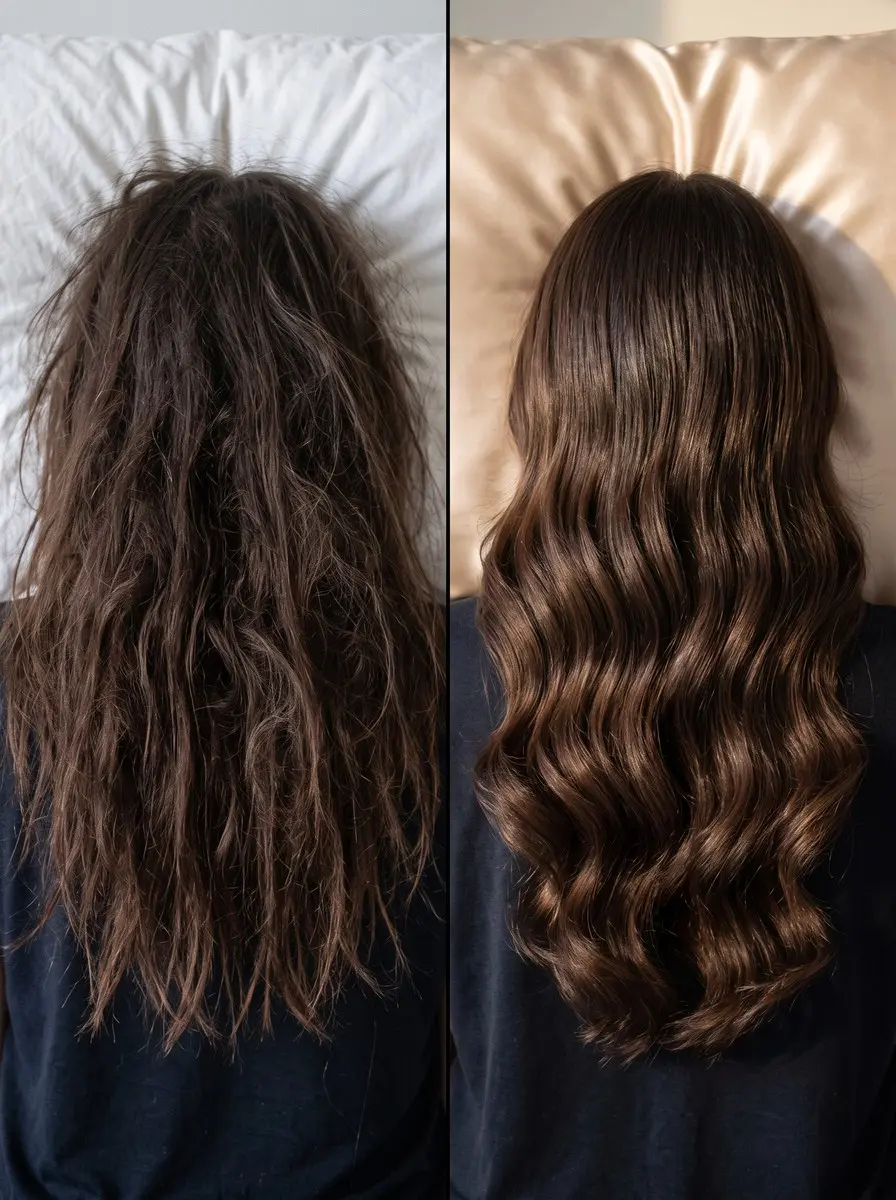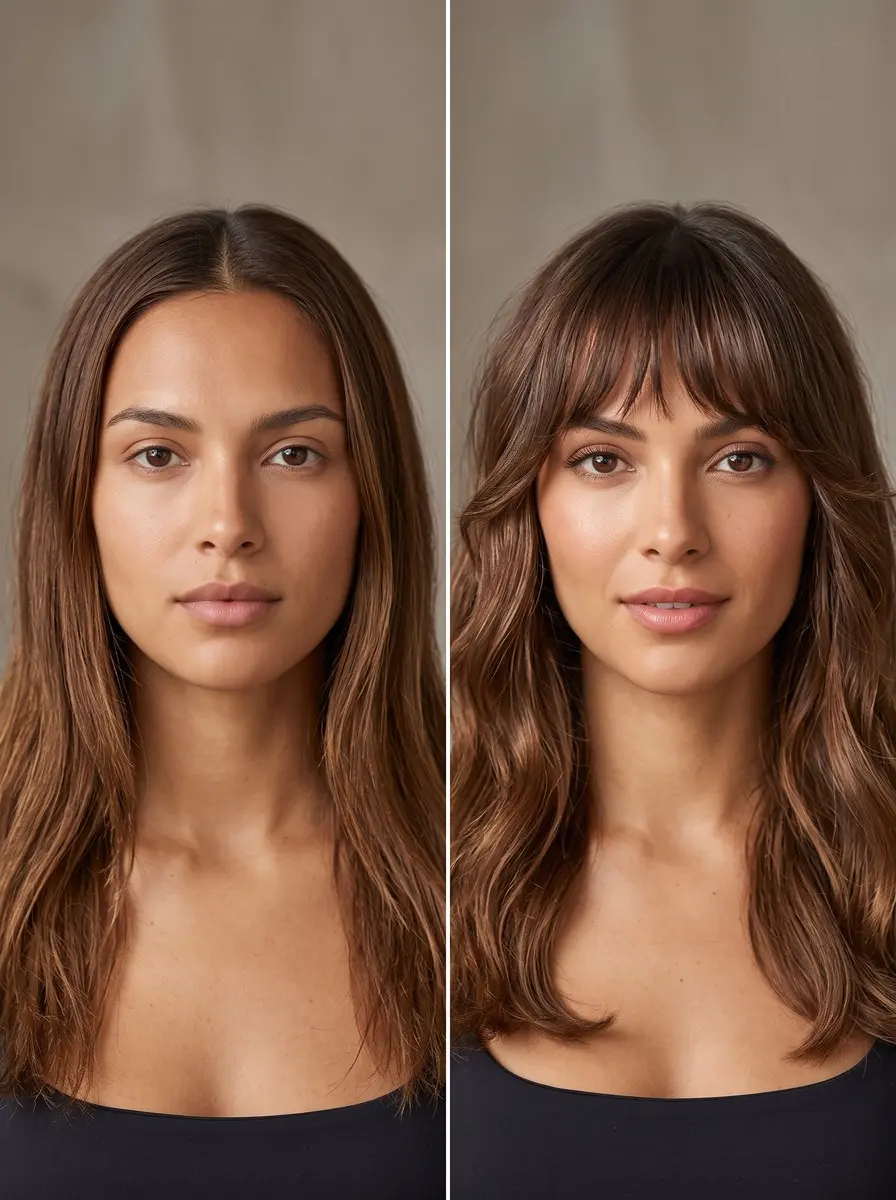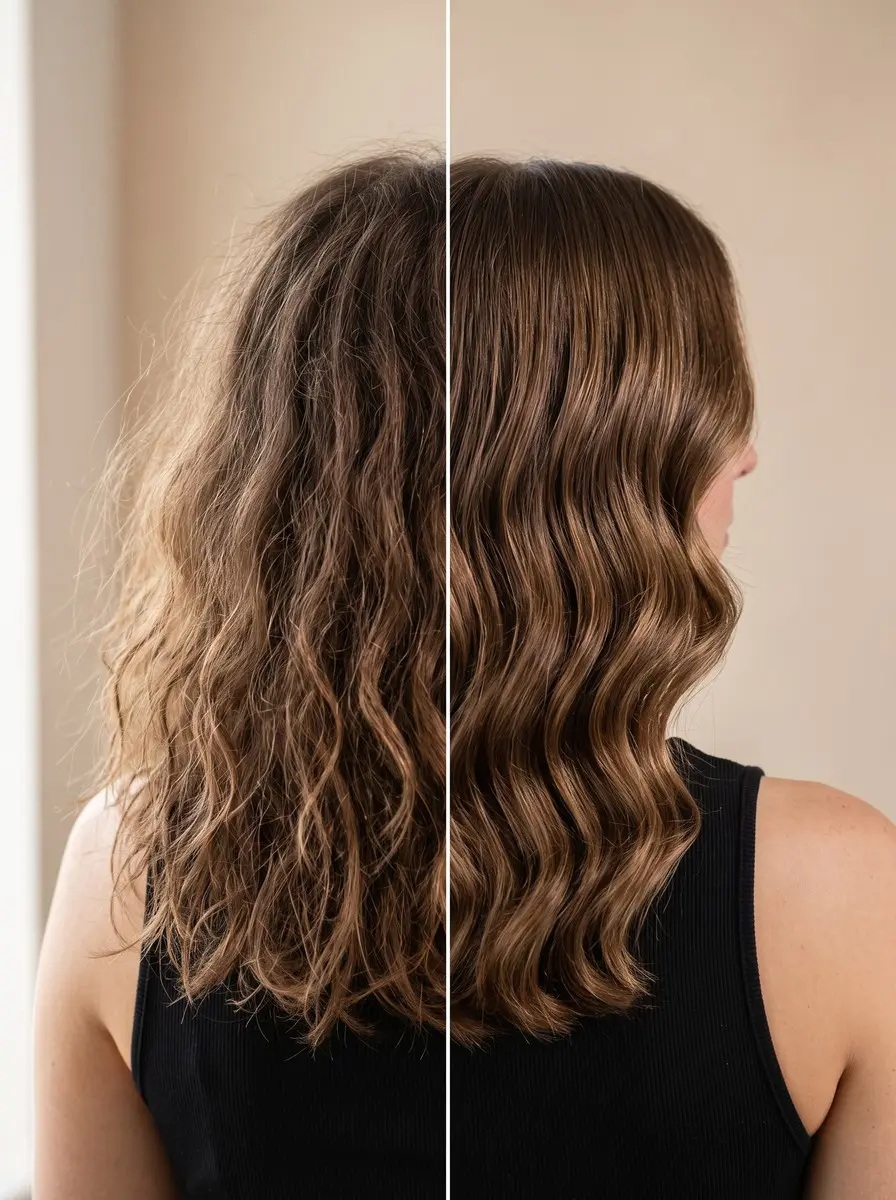
To air dry hair without frizz, blot it with a microfiber towel or cotton T-shirt instead of rubbing, apply a leave-in while it's damp, detangle with a wide-tooth comb, add gel or cream if you have waves or curls, then leave it alone until it's 70–80% dry.
Skipping the blow-dryer to air dry hair should be the easy option. For a lot of people, though, it ends in a fuzzy halo on top, crunchy or puffy ends and a crown that dries flat. Usually the hair isn’t the problem. The trouble comes in the twenty minutes after the shower: a hard rub with a terry towel, a leave-in that gets skipped or overdone, fingers going through damp lengths ‘just to check’, and a dash outside before anything has set.
What fixes it is a routine, not one miracle product. This guide takes you from the first blot to the final scrunch, with the changes that matter for straight, wavy and curly hair. It covers how long to leave a towel on, when plopping helps and when it flattens, and what to do on cold or damp days. The hands-on part takes about ten minutes. After that, you wait.
What You’ll Need
- Microfiber hair towel (plopping towel) — Soaks up water when you blot, without the snagging loops of a terry towel, so the cuticle stays smoother.
- Lightweight leave-in conditioner (spray or cream) — Makes damp hair easier to detangle and gives it a smooth coating before it dries.
- Wide-tooth comb — Detangles fragile wet hair ends-first without the pull of a brush.
- Curl-defining gel or mousse — Forms the cast that holds waves and curls together while they dry and keeps humidity from frizzing the surface.
- Flat duckbill clips (no-crease) — Hold straight roots up off the scalp so they dry with lift instead of lying flat.
As an Amazon Associate, HairAide earns from qualifying purchases. Some links above are affiliate links — they cost you nothing extra and help support free tutorials.
Step-by-Step
-
Squeeze the water out with your palms before you step out of the shower. Then blot with a microfiber towel or an old cotton T-shirt, pressing it against one section at a time instead of rubbing. Rough towel-drying breaks open the cuticle, and the loops of a terry towel snag the strand. That leaves a raised, uneven surface that shows up as frizz once hair dries. How much to blot depends on texture: curly and coily hair should stay wet enough to feel slippery so the styler can spread, while straight or fine hair can be blotted until it’s damp but no longer dripping. You’re done when water stops running down your neck.
-
Work a leave-in conditioner through damp hair. Start at the mid-lengths and ends, where hair is oldest and most worn, and skim only what’s left on your palms over the roots. Match the formula to your hair: a few spritzes of a lightweight spray for fine, straight hair, a nickel-sized amount of leave-in cream for medium or thick straight-to-wavy hair, and plenty of cream applied section by section for curly and coily hair. The leave-in helps the comb glide in the next step, and conditioned hair lies flatter and dries smoother than bare hair. Hair should feel slick and coated, never greasy or tacky.
-
Detangle with a wide-tooth comb, starting at the ends and working up toward the roots in short strokes. Combing ends-first loosens each knot from below instead of dragging it down into a bigger tangle. Wide teeth also separate hair without the pull of a brush, which matters because wet hair is more fragile than dry hair. Set your part now while hair moves easily, because moving it later roughs up the roots and leaves a kink. If you have curls, this is the last time a comb goes through until your next wash, because combing a curl that has already formed splits it into frizz. You’re done when the comb glides from root to tip without catching.
-
If you have waves or curls, put a hold product over the leave-in and scrunch it in. Wavy hair usually does best with a lightweight mousse or light gel. Curly and coily hair often needs a curl cream for softness with a gel on top for hold, smoothed over each section and then scrunched upward toward the scalp. Gel dries into a firm film, called a cast, that holds each curl clump together while it dries and stops humid air from roughing up the surface. That’s why curls dry defined with product and fluff out without it. Straight hair can skip the gel completely; a pea-sized drop of smoothing serum on the ends is enough.
-
Plop waves and curls for 15–30 minutes, but skip it for straight hair and very fine, loose waves. To plop, lay a microfiber towel or T-shirt flat, lower your hair onto it, gather it on top of your head and tie the fabric at the nape. The fabric soaks up extra water while the curls stay supported instead of hanging and stretching under their own weight. Leave it on about 15 minutes for medium waves and up to 30 for thick, dense curls. Much longer and the crown flattens and the curls set in whatever shape the wrap pressed them into. On straight or very fine hair the wrap tends to press in a bend and flatten the roots, so a quick blot is all you need.
-
For straight hair, clip the roots for lift and twist the lengths if you want a bend. While hair is still damp, lift the top section at the crown and slide flat duckbill clips in at the base so the roots dry standing up instead of lying against your scalp. Hair sets in the shape it dries in, so roots that dry pressed flat stay flat all day. For a soft bend instead of poker-straight ends, twist the lengths loosely away from your face and pin each twist with a clip; leave them loose if you want it sleek. Take the clips out only when the roots are completely dry, or the lift drops within the hour.
-
Now leave it alone until it’s 70–80% dry. Every touch while hair is wet breaks curl clumps into smaller strands and disturbs the smooth film your products are forming, and each broken clump dries as fuzz. That includes scrunching to check, tucking it behind your ears, running your fingers through it and pulling on a hat or hood. Ends dry first, so check the roots at your crown and the nape of your neck. If they still feel cool and damp, keep waiting.
-
On cold or rainy days, change when you wash instead of heading out with wet hair. In winter, wash in the evening early enough to be mostly dry by bedtime, or in the morning with enough time to dry before you leave. A hat, collar or scarf over wet hair rubs it into frizz and flattens the roots. On humid or rainy days, frizz comes from hair pulling moisture out of the air, so use a firmer-hold gel or mist an anti-humidity spray over your styler to slow that down. If you’re short on time either way, use the speed-up in the next step instead of leaving the house damp.
-
Speed up the last stretch without a diffuser, then finish once hair is completely dry. When your styler has set and hair is 70–80% dry, sit somewhere warm with a fan on low a few feet away, or use a blow-dryer on low speed on the roots only, with the nozzle pointed down the hair. Roots dry slowest, and gentle airflow aimed there speeds them up without disturbing the lengths, which have already set. When hair is 100% dry, scrunch upward to break the gel cast, or rub a drop of lightweight oil between your palms and press it over the surface. Hair should feel soft and look defined, with no crunch and no halo.
Common Mistakes to Avoid
- Rubbing hair with a terry towel or wringing it out. The friction roughs up the cuticle and creates frizz before you’ve even started.
- Touching, scrunching or re-parting hair before it’s 70–80% dry, which breaks up curl clumps and the smooth film your products are forming.
- Using heavy creams or oils on fine, straight hair. It dries limp and stringy, and the urge to add more only makes it worse.
- Leaving a towel turban or plop on for an hour or more, which flattens the crown and leaves dents.
- Going to bed or heading outside with soaking-wet hair, where a pillow, hat or scarf rubs and flattens it as it dries.
Pro Tip
Glaze before you scrunch. Smooth a little extra gel flat over the top layer with open palms before you scrunch, because the outer layer everyone sees is where frizz shows first. A thin glaze gives it a protective film without weighing down the curls underneath.
Frequently Asked Questions
How long does it take for hair to air dry?
It depends on length, density and how humid the room is. Fine, shoulder-length hair is often dry in about an hour, while long, thick curls can take several hours. Blotting well and plopping for 15–30 minutes shorten that noticeably, but the frizz-safe rule stays the same: keep your hands off until it is 70–80% dry.
Is it bad to sleep on wet hair?
It's best avoided. Wet hair is more fragile than dry hair, and hours of rubbing against a pillow roughen the surface and press in dents and frizz. If you wash at night, aim to be 70–80% dry by bedtime; if you can't, braid straight or wavy hair loosely, gather curls into a loose high ponytail, and sleep on a silk or satin pillowcase.
Should I plop straight or fine hair?
Usually not. Plopping is meant to support waves and curls while a towel soaks up water, and on straight hair the wrap tends to press in a bend and flatten the roots. Very fine, loose waves can flatten too. For those textures, blot with a microfiber towel or T-shirt for a minute or two and clip the roots instead.
Can I use a blow-dryer to speed up air-drying without causing frizz?
Yes, if you keep it to the roots. Once your styler has set and hair is 70–80% dry, use low speed with the nozzle pointed down the hair so the airflow doesn't whip the lengths. Blow-dryers are made for damp hair, so there's no need to wait until it's fully dry; just mist on a heat protectant first. For the whole head, a diffuser is the better tool.
Why is my hair still frizzy after air-drying?
Usually the cause is humidity, touching or too little product. Hair pulls moisture from damp air, so on humid days use a firmer-hold gel or an anti-humidity spray over your styler. Rubbing with a towel or touching before it's 70–80% dry undoes the rest. If the frizz sits mainly at dry, split ends, that's damage no product can reverse, and a trim is the fix.
You Might Also Like
- 20 curly hairstyles for women over 50 to inspire your next look
- 20 soft hush cut ideas to inspire your next look
- how to diffuse curly hair at home
- how to get rid of thick hair frizz
- heatless beachy waves for fine hair
- how to style a shag haircut for every hair type
Do it in order (blot, leave-in, comb, style, then hands off) and air-drying stops being a gamble. Straight hair comes out smooth with lift at the crown, waves dry soft instead of fuzzy, and curls keep their clumps instead of puffing into a halo. Repeat the routine every wash day. On day two, a light mist of water and a little leave-in revives the shape without starting over.
If you follow every step and still get frizz in the same spots, see a stylist. Technique can’t fix damaged ends or a cut that fights your natural texture. A stylist who cuts curly or wavy hair dry can shape it to fall the way it air-dries.
Sources
- Rough towel-drying breaks open the cuticle; blot with a microfiber towel or cotton T-shirt instead. naturallycurly.com
- Plopping with a microfiber towel is commonly left on for about 15–30 minutes depending on hair thickness. curlcentric.com
- Apply leave-in or serum to wet hair, detangle with a wide-tooth comb, and avoid touching it until it is 70–80% dry. api.copychief.com