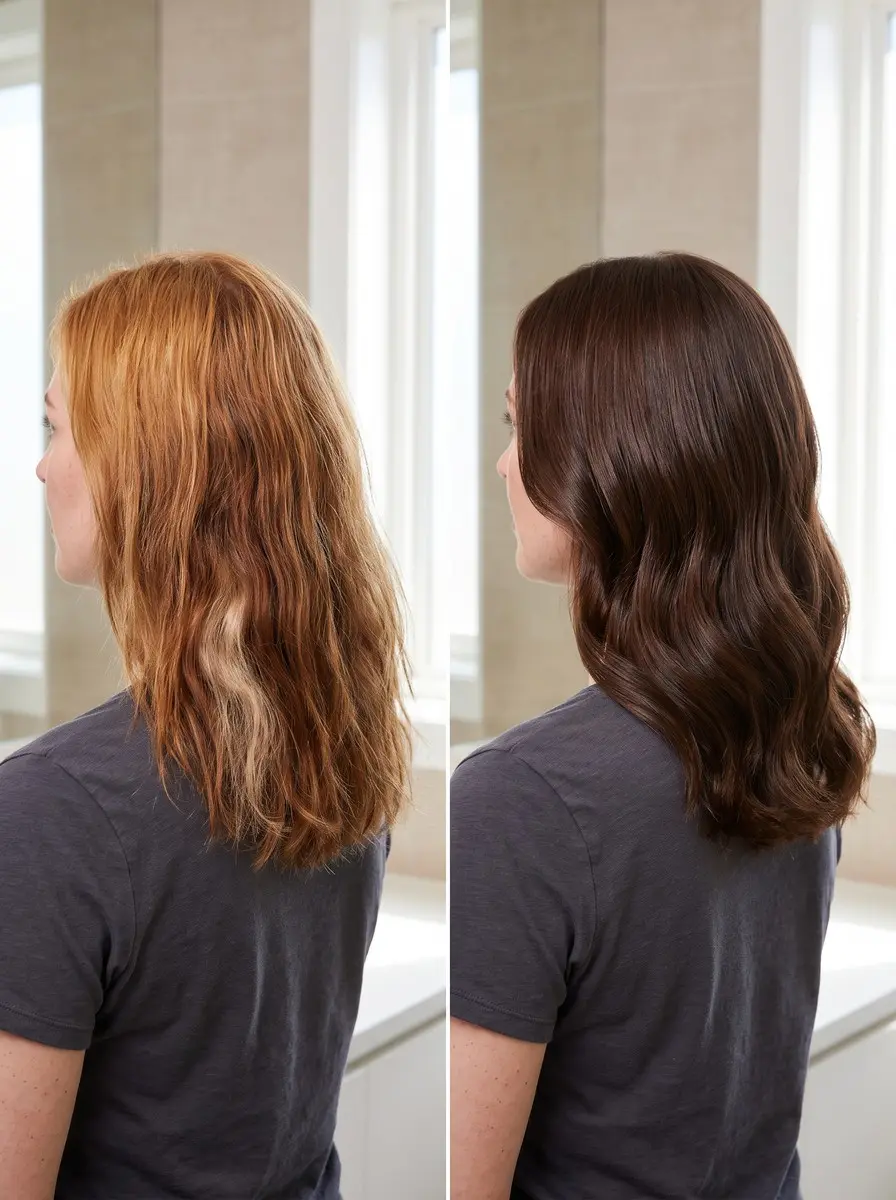
Quick answer Choose semi-permanent color to test a shade with no developer and no commitment (about 3-6 washes), demi-permanent to blend gray, go darker or refresh faded color (about 24-28 shampoos), and permanent for full gray coverage or lifting natural hair lighter, since it stays until it grows out.
Every box of hair dye asks you one question before you open it: how long do you want this color to stay, and what do you need it to do?
Semi vs demi vs permanent hair color is not a simple weak-to-strong ladder: each works differently inside the strand, so each does some jobs well and others not at all. Pick the wrong one and you get the classic disappointments: a brown that barely touched your gray, or a trial color you now can’t wash out.
The good news is that choosing is simple once you answer three questions: do you need to go lighter, how much gray do you want covered, and how long are you willing to live with the result? This guide walks through each decision, explains developer in plain language, and ends with a patch and strand test, so your next at-home color is a deliberate choice rather than a gamble.
Time 10 minutes to decide, plus a 48-hour patch test before you colorDifficulty BeginnerSteps 7
Semi vs Demi vs Permanent Hair Color at a Glance
| Feature | Semi | Demi | Permanent |
|---|---|---|---|
| Developer | None | Low-volume | Stronger, per the line |
| How it works | Coats the surface | Slight cuticle lift, light deposit | Opens the cuticle, deep pigment |
| Can it lighten? | No | No | Natural hair, a few shades |
| Gray coverage | Minimal | Blends lightly | Full |
| How long it lasts | About 3-6 washes | About 24-28 shampoos | Until it grows out |
| Damage | Lowest | Low | Highest of the three |
| Best for | Testing a shade, fashion colors | First color, going darker, refreshing | Full gray coverage, going lighter |
What You’ll Need
As an Amazon Associate, HairAide earns from qualifying purchases. Product links in this guide are affiliate links: they cost you nothing extra and help keep these tutorials free.
- At-home permanent color kit with gray coverage Gives full, opaque gray coverage and comes with its matched developer, so there is no guessing at volume or mixing ratio.
- Demi-permanent color kit The forgiving choice for a first color, soft gray blending or going a shade darker, since it fades out gradually instead of leaving a regrowth line.
- Semi-permanent conditioning color Lets you test a trend or fashion shade with no developer, and it washes out in about 3-6 washes if you don’t love it.
- Sulfate-free color-safe shampoo Gentler cleansing slows fading for all three types, which stretches the time between colors.
- Tint bowl and applicator brush set Measuring and brushing color on in sections gives even saturation and keeps permanent color on regrowth only.
Step-by-Step
Step 1 Learn how each type works
Start with the chemistry, because it explains everything else. Semi-permanent color needs no developer and contains no ammonia: its pigment simply coats the outside of the strand, which is why it is usually applied to freshly shampooed hair and fades in about 3-6 washes.
Demi-permanent color is ammonia-free and mixed with a low-volume developer; a mild alkaline ingredient lifts the outer cuticle slightly so a little pigment settles inside, and it lasts about 24-28 shampoos.
Permanent color is usually formulated with ammonia, which opens the cuticle so pigment travels deep into the hair shaft, where it fades slowly but never washes out. You have this step down when you can look at any box and say where its pigment ends up.
Step 2 Decide whether you need to go lighter
This single question rules out two of the three types. Semi- and demi-permanent color only deposit pigment, so neither can lighten your hair; a lighter shade from either simply won’t show on darker hair.
Permanent color can lift natural, never-colored hair a few shades, because its developer lightens your own pigment while the new color develops. It cannot lift hair that is already dyed, though, because color does not lift color: going lighter over old dye needs a color remover or lightener, and a big jump belongs in a salon.
Lifting also exposes warm undertones, which is why lightened hair often needs toning (violet cancels yellow, blue cancels orange). If your goal is lighter than your hair is now, your shortlist is permanent color or lightener.
Step 3 Match the type to your gray
Gray hair has no pigment of its own, so it shows exactly how much a dye can deposit. Semi-permanent color gives minimal coverage: grays pick up a sheer tint at best and are back within a few washes.
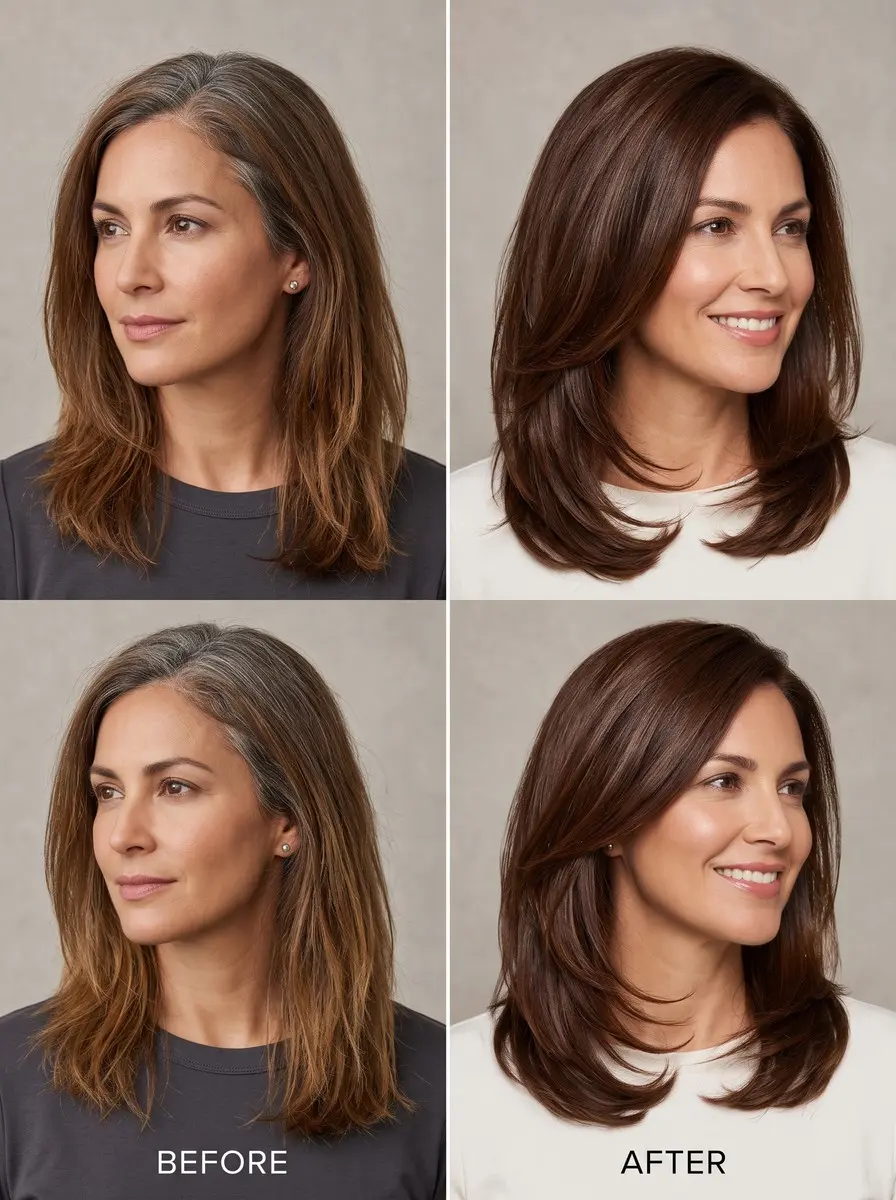
Demi-permanent blends gray lightly, softening the contrast so silver strands read as highlights rather than vanishing, and its gradual fade keeps regrowth soft instead of striped.
For full, opaque gray coverage you need permanent color, so choose a shade labeled for gray coverage, usually from a natural or neutral series rather than an ash or vivid one. If you only want scattered grays to look less obvious, demi is the gentler pick; if you want them gone, go permanent.
Step 4 Choose how long you want it
Be honest about commitment, because the fade is part of the product. Semi-permanent’s 3-6 washes make it ideal for testing a trend shade, a one-off look, or refreshing a fashion color; vivid semis show strongly only on light or pre-lightened hair, and on dark hair a pink or blue reads as a faint tint.
Demi-permanent lasts about 24-28 shampoos, so how often you wash decides how many weeks you get, and it fades gradually with no harsh regrowth line.
Permanent color does not wash out: it fades slowly, the dyed lengths stay until they are cut off, and your roots show more each month as new hair grows in. That is the trade-off, because the longest-lasting result is also the hardest to undo.
Step 5 Understand developer before you mix
Developer is a hydrogen peroxide cream, and its volume number tells you its strength: 10 volume is 3%, 20 volume is 6%, 30 volume is 9% and 40 volume is 12%. Semi-permanent color uses none at all.
Demi-permanent pairs with a low-volume developer because it is designed to deposit, not lift, while permanent uses a stronger one, and the higher the volume, the more lift and the more stress on the hair.
The exact volume, mixing ratio and timing must come from the instructions of the color line you bought, because each formula is built around its own developer. A box kit already includes the right one, so never swap in a stronger bottle hoping for a brighter or faster result.
Step 6 Weigh the damage and upkeep
Semi-permanent color is the gentlest option: with no developer and no ammonia it sits on the surface, and many formulas double as conditioners. Demi-permanent is low-damage thanks to its ammonia-free formula and low-volume developer, and its soft fade makes touch-ups forgiving.
Permanent color does the most work, since opening the cuticle and lightening natural pigment both stress the strand, and repeated applications over the same lengths add up. If you cover gray with permanent color, plan root touch-ups every four to six weeks and apply it to new growth only. For all three types, a sulfate-free, color-safe shampoo slows fading, so you color less often.
Step 7 Pick by goal, then run your tests
Now put it together. For a first color, demi-permanent is the most forgiving, and semi lets you audition a shade risk-free.
To go a shade or two darker, demi does the job with an easy exit; to refresh faded color, use a demi gloss or a semi in the same tone; for a fashion shade, use semi on light or pre-lightened hair; for full gray coverage or going lighter, choose permanent color or lightener.
Before any of them, do the patch test your instructions describe 48 hours ahead, every time, even with a brand you have used before, because sensitivity to dye can develop at any point. Then strand test a hidden section to confirm the shade and timing before you commit your whole head.
Common Mistakes to Avoid
- Buying a lighter semi or demi shade to brighten dark hair: neither can lighten, so the color either won’t show or only adds a slight tint.
- Expecting a lighter permanent shade to lift old dye: color doesn’t lift color, so you end up with dark, banded lengths. Going lighter over previous color takes a color remover or lightener.
- Using permanent color for a shade you’re unsure about: it won’t wash out, so audition the color with a semi or demi first.
- Assuming ‘ammonia-free’ means demi: some permanent colors swap ammonia for another alkaline ingredient, so check that the box says demi-permanent and how many shampoos it lasts.
- Going from bleached blonde straight to dark brown: lightened hair is missing warm pigment, so the result can turn murky or greenish without a warm filler first. That correction is a job for a colorist.
- Swapping in a stronger developer than the line specifies, or skipping the 48-hour patch test because you’ve used the brand before.
Pro tip When you touch up permanent color, apply permanent to the regrowth only and refresh faded mid-lengths and ends with a demi-permanent gloss in the same shade. Pulling permanent through to the ends at every touch-up darkens them shade by shade and piles on damage, while the demi brings back shine without the build-up.
The Bottom Line
Choosing well comes down to matching the chemistry to the job: semi for a no-commitment test or a fashion shade, demi for a forgiving first color, soft gray blending, going darker or reviving faded lengths, and permanent for full gray coverage or lifting natural hair a few shades.
Keep any of them looking fresh with a sulfate-free, color-safe shampoo, and if gray coverage is your goal, plan permanent root touch-ups every four to six weeks.
See a colorist instead if you want to go more than a few shades lighter, lift old dye, jump from very light to very dark, or your hair is already bleached and fragile. Those corrections are where at-home color goes wrong, and one professional appointment can leave you with a shade you maintain yourself.
Frequently Asked Questions
How long does semi-permanent hair color last compared with demi and permanent?
Semi-permanent color lasts about 3-6 washes because it only coats the surface of the strand. Demi-permanent lasts about 24-28 shampoos, since a little pigment settles just inside the cuticle. Permanent color doesn't wash out: it fades slowly and the colored lengths stay until they are cut, so you touch up the roots as new hair grows in.
Will demi-permanent color cover gray hair?
Demi-permanent blends gray rather than covering it: silver strands take on a softer, translucent version of the shade and read more like highlights. That suits scattered gray and anyone who wants a low-commitment, soft-fading result. For full, opaque coverage, especially at the part and temples, you need permanent color in a shade labeled for gray coverage.
Can I use semi- or demi-permanent color to go lighter?
No. Semi- and demi-permanent formulas only deposit pigment, so neither can lighten your natural color or previous dye. Permanent color can lift natural, never-colored hair a few shades, but it cannot lift existing dye. Going lighter over colored hair, or by more than a few shades, needs a color remover or lightener, ideally applied by a colorist.
Which type of hair color is best for a first-timer?
Demi-permanent is usually the safest first color: it is ammonia-free, low-damage, fades out gradually over about 24-28 shampoos and leaves no harsh regrowth line. If you only want to test a shade, semi-permanent washes out in about 3-6 washes. Whichever you choose, do a patch test 48 hours ahead and a strand test first.
Is permanent hair color bad for your hair?
Permanent color is the most demanding of the three, because ammonia or a similar alkaline ingredient opens the cuticle and its developer lightens natural pigment. Used as directed, with the developer the line specifies, permanent color on regrowth only and a color-safe routine, it is manageable for most people. Hair that is already bleached or breaking is a reason to see a colorist first.
Keep Reading
Sources
- Semi permanent vs demi permanent esalon.co.uk
- Differences between semi and demi permanent hair color wella.com