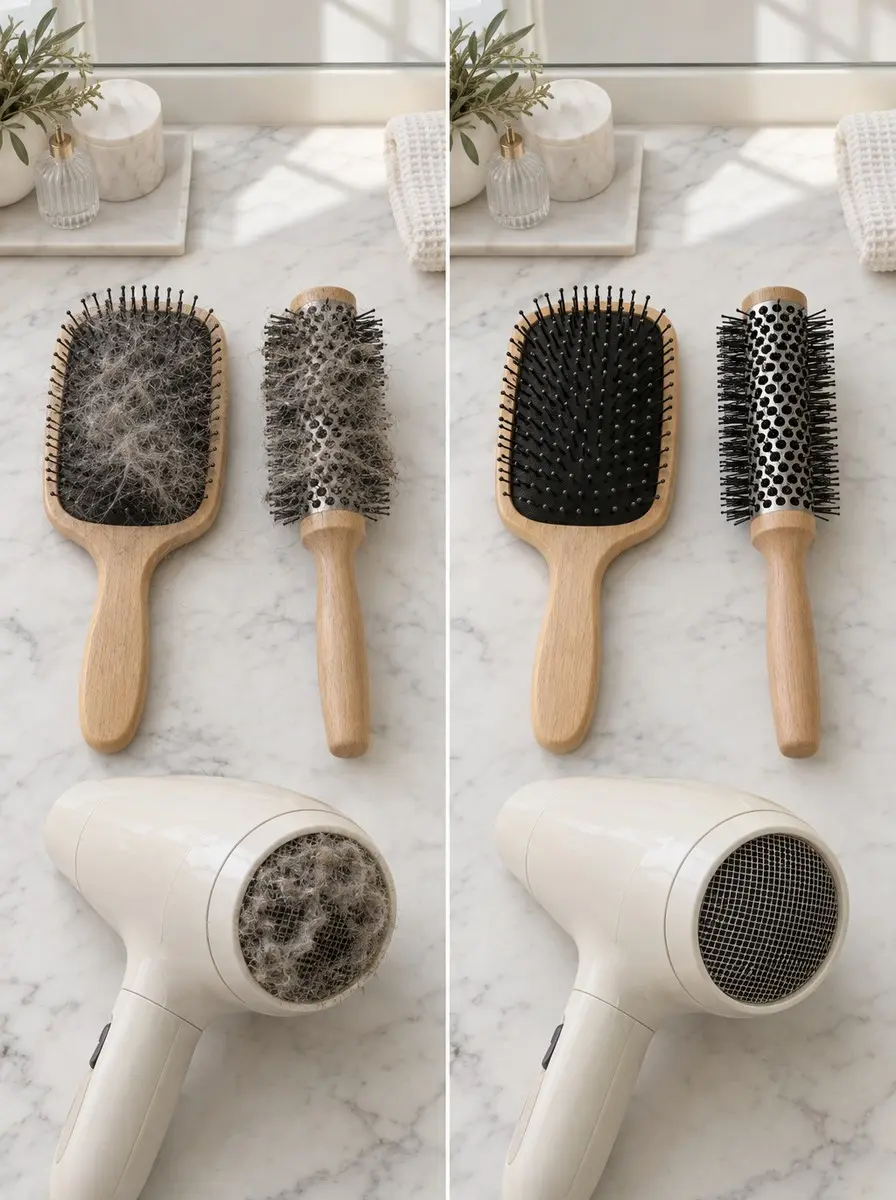
Quick answer To clean hair brushes and hot tools, first unplug the electric tools and let them cool. Pull the trapped hair out of your brushes, wash them in warm water with shampoo and dry them bristles-down. Clear lint from the dryer filter monthly, let it dry completely, and wipe cool barrels with a damp cloth.
Your hairbrush touches your hair every day, yet most of us rarely wash it. Over a few weeks it collects shed hair, scalp oil, dry shampoo and styling product, and every pass puts some of that film back onto freshly washed hair.
Your hair dryer has its own hidden problem. The filter on the back slowly fills with lint until air can barely get in. A dryer starved of air runs hotter, can smell scorched, and some models shut themselves off partway through a blow-dry.
The fix takes less than an hour of hands-on time, and you need nothing more specialised than shampoo, an old toothbrush and a cloth. This guide shows you how to clean hair brushes, combs and clips, the dryer filter and diffuser, hot air brushes and wand barrels. Each step explains why it works, and a schedule shows what needs weekly attention and what can wait a month.
Time About 45 minutes hands-on, plus overnight dryingDifficulty BeginnerSteps 8
Hair Tool Cleaning Schedule
| Tool | How often | Key step |
|---|---|---|
| Hairbrushes | Weekly (monthly at minimum) | Remove hair, shampoo, dry bristles-down |
| Combs and clips | Monthly | Warm shampoo soak, dry metal fast |
| Dryer filter | Monthly, or at warning signs | Lift lint, dry fully before refitting |
| Diffuser and nozzles | Monthly, or when tacky | Wash if no electrics, dry fully |
| Hot air brush | Hair weekly, inlet monthly | Unplugged and cool, never submerge |
| Curling wand barrel | As needed, when residue shows | Wipe cool barrel with damp cloth |
What You’ll Need
As an Amazon Associate, HairAide earns from qualifying purchases. Product links in this guide are affiliate links: they cost you nothing extra and help keep these tutorials free.
- Brush cleaning rake Its fine tines lift the mat of shed hair out of the brush base so shampoo can reach the residue underneath.
- Small blunt-tip scissors Snip hair wound tightly around round-brush barrels so it pulls free without bending the bristles.
- Clarifying shampoo Cuts through the oil, dry shampoo and styling buildup on brushes, combs, clips and diffusers.
- Old soft toothbrush Scrubs between bristle rows and comb teeth and lifts lint off dryer filters and inlets.
- Microfiber cloths Blot and dry brushes bristles-down, dry metal clips, and wipe residue off cool barrels and filters.
- Fine-point tweezers Pull out hair and lint threaded through the dryer filter mesh.
- Isopropyl rubbing alcohol Optional: dissolves stubborn baked-on product on hot air brush and wand barrels where the manual allows it.
Step-by-Step
Step 1 Unplug everything and let it cool
Unplug the hair dryer, hot air brush and curling wand, and leave them until every barrel and grille is cool to the touch, usually 20-30 minutes. Never submerge an electric tool or hold it under the tap. Water trapped in the handle or motor housing can cause a short or a shock the next time you plug it in.
Before you start, check your model’s manual. Dyson and Shark, among other brands, publish model-specific filter-cleaning instructions, and some filters are designed to come off while others are fixed. You’re ready when every tool is cold and unplugged and you know which kind of filter your dryer has.
Step 2 Pull trapped hair from every brush
Work a brush cleaning rake through the bristles from the base upward to lift out the mat of shed hair. Use small scissors to snip any strands wound tightly around a round-brush barrel, then pull them free. Do this every week, even in weeks you don’t wash the brush.
The hair mat holds oil, scalp flakes and product, and shampoo can’t reach the residue underneath it. On vented and round brushes, check the gaps around the barrel holes, where hair packs in tightest. You’re done when you can clearly see the brush base or cushion between every row of bristles.
Step 3 Wash plastic brushes, combs and clips
Fill the sink with warm water and a squeeze of clarifying shampoo, then soak all-plastic brushes, combs and clips for about 10 minutes. Clarifying shampoo is made to strip buildup, so it loosens the oily film faster than a moisturising formula would.
Scrub the base of each brush and between every comb tooth with an old toothbrush, because residue left there ends up back on clean hair.
Rinse under warm running water until no suds remain, and dry metal clips straight away with a microfiber cloth so their springs don’t rust. Wash brushes weekly if you use a lot of product (monthly at the minimum), and combs and clips once a month.
Step 4 Go gentle on cushion and boar brushes
Never soak a paddle brush with a rubber cushion or a natural boar bristle brush. Water seeps through the cushion’s small air hole and sits inside, where it can loosen the glue and turn musty. Natural bristles are usually set into wood, which can swell, crack or shed bristles when waterlogged.
Instead, hold the brush bristles-down, dip only the bristles into warm water with a little shampoo, and work the toothbrush along each row. Rinse the same way, bristles-down under a gentle stream so the water runs out of the brush rather than into it, and stop once the bristles look clean.
Step 5 Dry every brush bristles-down
Shake out excess water, blot the bristles with a microfiber cloth, then lay each brush bristles-down on a dry microfiber cloth to air-dry overnight. Gravity pulls water out of the bristle base and away from any cushion or wooden handle. That prevents mildew and the musty smell damp brushes pick up.
Don’t speed things up with the hair dryer on high heat, because hot air can warp plastic bristles and soften glued pads. A brush is ready when the base feels completely dry and smells clean, which can take a full day for a cushion brush.
Step 6 Clear the hair dryer filter
Find the filter on the back or base of the dryer and follow your manual. Many filters twist or slide off, Dyson- and Shark-style dryers have their own model-specific steps, and some filters are fixed and can only be brushed clean from the outside.
Lift the lint with the toothbrush and pull out any threaded hair with tweezers. If the manual allows it, rinse the filter or wipe it with a damp microfiber cloth, and let it dry completely before you refit it, because a wet filter sends moisture toward the motor and heating element.
Do this about once a month, and sooner if the airflow weakens, you smell burning or the dryer runs hot or cuts out, since a clogged filter starves the dryer of air until it overheats.
Step 7 Wash the diffuser and nozzles
Diffusers and concentrator nozzles collect a sticky film of mousse, gel and hairspray, and that residue transfers onto damp curls the next time you diffuse. Detach them, and if the manual confirms they contain no electrical parts, soak them in warm water with a little shampoo.
Scrub the prongs and vents with the toothbrush, rinse well, and dry them completely inside and out before you snap them back on. Do this monthly, or whenever the prongs feel tacky. They’re clean when the plastic feels smooth and every vent is clear.
Step 8 Wipe hot air brush and wand barrels
With the hot air brush or curling wand unplugged and cool, pull the trapped hair from the hot air brush’s bristles every week, just as you did with your other brushes.
Whenever you see a film or feel drag, wipe the barrel with a damp microfiber cloth to lift hairspray and heat-protectant residue, which bakes on with each use and can snag hair. For stubborn buildup, and only if your manual allows it, dampen a corner of the cloth with rubbing alcohol and rub until the barrel looks even.
Alcohol is flammable, so let it evaporate fully before you plug the tool back in. Hot air brushes also pull air through an inlet, usually at the end of the handle, so brush the lint off it monthly as you would a dryer filter.
Common Mistakes to Avoid
- Soaking a cushioned paddle brush or a wooden boar bristle brush, which traps water in the pad or base and leads to mildew, loosened glue and shedding bristles.
- Refitting a rinsed dryer filter while it’s still damp, which sends moisture toward the motor and heating element.
- Cleaning a dryer, hot air brush or wand while it’s still plugged in or warm, or rinsing any electric tool under the tap.
- Washing a brush without removing the hair mat first, so the shampoo never reaches the oil and product trapped underneath.
- Prying off a dryer filter the manual describes as fixed, which can crack the housing and void the warranty.
Pro tip After cleaning, hold the removed dryer filter up to a window. If light doesn’t pass evenly through the mesh, a thin film of lint and hairspray is still blocking airflow, so brush it again before you refit it.
The Bottom Line
Once your brushes are washed and the dryer filter is clear, less old residue ends up back on your hair and your dryer moves air the way it was designed to. Keep the routine simple: pull hair out of your brushes weekly, wash them weekly or at least monthly, and clear the dryer filter, diffuser and hot air brush inlet once a month.
If a dryer still smells of burning, sparks or cuts out after a clean, stop using it and contact the manufacturer, because that needs a repair, not a cleaning. When you style again, use a heat protectant and blow-dry on damp hair. Use irons and wands only on completely dry hair, at no more than about 150°C/300°F for fine or bleached hair or 180-200°C/355-390°F for coarse hair.
Frequently Asked Questions
How often should I clean my hair dryer filter?
Most guides say to clean it about once a month if you use your dryer regularly. Clean it sooner if the airflow feels weaker, you notice a burning smell, or the dryer gets unusually hot or shuts itself off. Those are signs of a clogged filter, which restricts airflow and makes the dryer overheat.
Why does my hair dryer smell like burning?
Usually lint, hair or dust is blocking the filter, which cuts airflow and lets the debris heat up near the element. Unplug the dryer, let it cool, and clear the filter with a toothbrush and tweezers. If the smell continues after a thorough clean, or you see sparks or smoke, stop using the dryer and contact the manufacturer or replace it.
Can I put my hairbrush in the dishwasher?
It's safer not to. Dishwasher heat can warp plastic bristles and loosen glued cushions or bristle tufts, and cushion and wooden brushes absorb water they can't easily release. Washing by hand in warm water with shampoo, then drying bristles-down on a cloth, takes only a few minutes and keeps the brush in shape longer.
How do I clean a boar bristle brush without ruining it?
Remove the trapped hair first. Then dip only the bristles in warm water with a small amount of shampoo and scrub gently along each row with a soft toothbrush. Don't soak it, because wooden bases and glued bristles can swell or loosen. Rinse bristles-down, blot with a microfiber cloth, and leave it bristles-down to air-dry overnight.
Can I use my hair dryer while the filter is still damp?
No. A rinsed filter must dry completely, usually overnight at room temperature, before it goes back on. Running the dryer with a wet filter draws moisture toward the motor and heating element, which is a safety risk. If you need the dryer the same day, brush the lint off dry instead of rinsing.
Keep Reading
Sources
- How to clean hair tools reviewed.com
- How to clean your styling tools hair accessories maids.com
- How to clean dyson hairdryer dyson.com