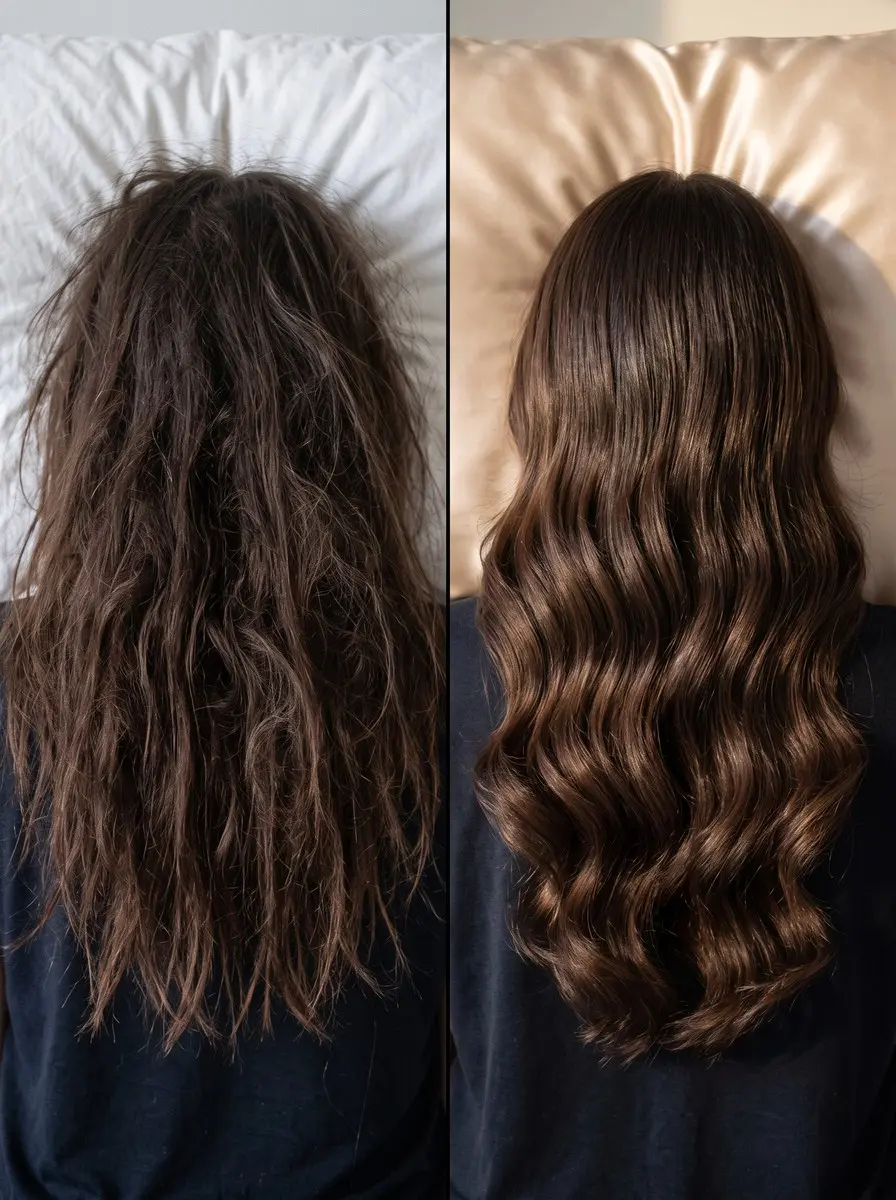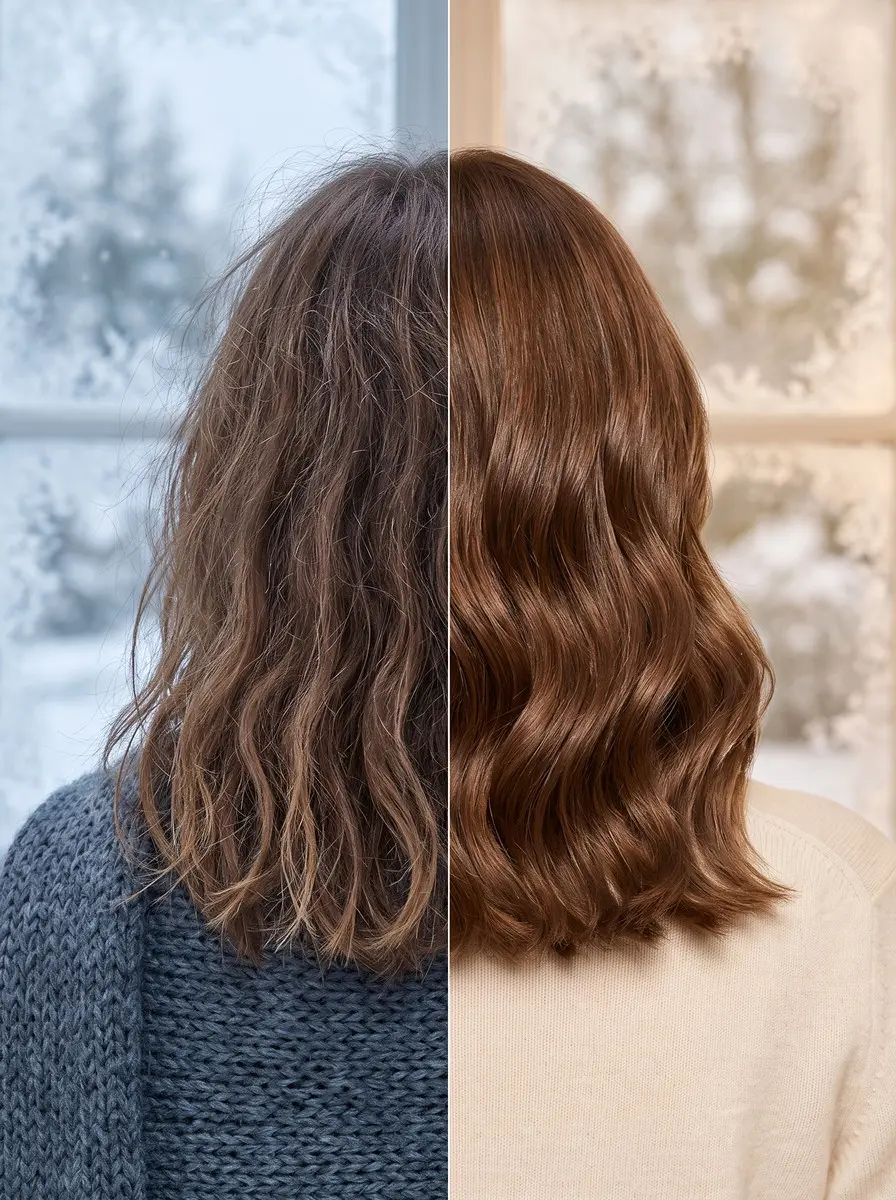
To protect hair from winter dryness, wash less often with a gentle shampoo in lukewarm water and finish with a cool rinse. Deep-condition once a week and put a leave-in and a few drops of oil on damp hair. Run a humidifier and sleep on silk.
The first cold snap shows up in your hair fast. Your ends feel like straw, static lifts your hair every time you pull off a hat, and color that looked glossy a month ago suddenly looks flat. Cold outdoor air holds very little moisture, and indoor heating dries it out further. Long hot showers and daily shampoos also strip away the natural oils your hair relies on to stay soft.
The good news is that you can fix winter hair dryness with your routine, without a salon visit. Use cooler water, wash less often, do a weekly mask, and follow your leave-in with oil. Then add a humidifier and a friction-free night’s sleep, and your hair can stay soft and shiny until spring. Below is the full routine in order, with the reason each step works, so you can adapt it to your hair type and to whether your hair is colored.
What You’ll Need
- Sulfate-free moisturizing shampoo (color-safe) — Cleans the scalp with milder cleansers so less of the natural oil your dry winter lengths need is stripped away.
- Deep-conditioning hair mask — The weekly treatment that stands in for your regular conditioner to soften rough, dry ends and make them slippery again.
- Leave-in conditioner (spray or cream) — Keeps a light conditioning layer on your hair between washes and can be misted onto the ends on non-wash days.
- Cool-mist humidifier (bedroom size) — Adds moisture back into dry, heated indoor air so your hair isn’t losing water all night.
- Mulberry silk pillowcase — Cuts overnight friction so dry hair glides instead of tangling, frizzing and snapping.
As an Amazon Associate, HairAide earns from qualifying purchases. Some links above are affiliate links — they cost you nothing extra and help support free tutorials.
Step-by-Step
-
Stretch the time between washes and switch to a gentle, sulfate-free shampoo. Shampoo is made to lift away oil, and in winter that includes the sebum your scalp produces to soften your lengths, so washing daily removes it before it can travel down the strand. Add one or two days between washes, use dry shampoo at the roots in between if you need it, and choose a moisturizing, sulfate-free formula for the days you do wash. Concentrate the lather on your scalp, because the suds that rinse through are enough to clean the lengths. You’ve got it right when your ends feel soft the day after washing rather than squeaky and rough.
-
Wash in lukewarm water and finish with a cool final rinse. Hot water feels wonderful on a freezing morning, but it strips your hair’s natural oils and moisture, the same way a long hot shower leaves your skin feeling tight. That’s why dermatologists recommend switching to cool water for the final rinse. Keep the water comfortably warm for shampooing, never steaming, then turn it to cool for the last 20 to 30 seconds after conditioning. If you love a hot shower, clip your hair up and wash it at the sink instead. The water should feel barely warm on the inside of your wrist, and your scalp shouldn’t feel tight afterward.
-
Once a week, use a deep-conditioning mask instead of your regular conditioner. A mask is a richer blend of conditioning agents and oils than everyday conditioner, and it needs several minutes on the hair to soften it. That’s why a weekly deep-conditioning treatment is one of the core recommendations for fighting winter moisture loss. After shampooing, squeeze out excess water so the mask isn’t diluted, then work it through your mid-lengths and ends and comb it through with a wide-tooth comb. Leave it on for the time on the label, usually 5 to 20 minutes, and wear a shower cap to stop drips, then rinse until your hair feels slippery and smooth but not coated.
-
Put a leave-in conditioner on damp hair, then follow with oil on the ends. A leave-in keeps a light conditioning layer on your hair between washes, and using one daily is the other half of the standard winter-moisture advice, so mist your ends lightly on non-wash days too. On wash days, blot until your hair is damp rather than dripping, spread the leave-in from mid-lengths to ends and comb it through. Then warm two or three drops of a lightweight oil such as argan or jojoba between your palms and press it onto the last few inches. The oil adds no water on its own, but it forms a thin film that slows moisture escaping into dry air, and your ends should feel soft rather than greasy.
-
Dry your hair gently, and never head outside with it damp. Wet hair stretches further and snaps more easily than dry hair, so rubbing it with a rough towel or tucking it wet under a wool hat causes breakage and frizz. Blot and squeeze with a microfiber towel or an old cotton T-shirt and let your hair air-dry most of the way indoors. Then finish with a blow-dryer on a medium setting, keeping the nozzle moving and pointed down the lengths. Wash early enough in the evening to be fully dry before bed, or leave time in the morning so your hair is dry before it meets cold wind and a scarf, and check the nape of your neck, which is the last spot to dry.
-
Run a humidifier in the room where you spend the most time. Cold outdoor air holds little moisture, and heating it indoors drops the relative humidity further, so your hair loses water all day and all night. An indoor humidifier adds moisture back into that dry heated air. A cool-mist model in the bedroom does the most good, since that’s where you spend the longest uninterrupted stretch. Aim for roughly 30 to 50 percent relative humidity, which an inexpensive hygrometer will show, and empty and clean the tank as the manufacturer directs so it doesn’t grow mold or bacteria. Less static when you brush your hair in the morning is the sign it’s working.
-
Protect your hair overnight with silk and loose, low-tension styles. Cotton pillowcases create friction as you turn over and can soak up the leave-in and oil you just applied, which roughens hair that’s already dry. Sleep on a silk or satin pillowcase, or wear a satin bonnet or scarf. Keep night styles loose, like a soft, low braid or twist held with a silk scrunchie, rather than a tight elastic or high ponytail that pulls on one spot for hours. By day, choose a hat with a silk or satin lining so wool and acrylic don’t rub against your hair and charge it with static, and smoother hair with fewer tangles at the nape in the morning tells you it’s working.
-
Adjust the routine for color-treated or uncolored hair. Colored, highlighted and especially bleached hair is more porous, so it absorbs water quickly and loses it just as fast in dry air. If that’s your hair, use a color-safe, sulfate-free shampoo, mask twice a week instead of once, and consider a bond-building treatment, which helps reduce breakage in chemically lightened hair. Uncolored hair usually needs less, and a once-weekly mask with a lighter leave-in is often enough. Texture matters as much as color: scalp oil travels easily down straight strands but slowly along curls and coils, so curly and coily hair benefits from a richer cream leave-in and oil every day, while fine hair does best with a spray leave-in and oil only on the last inch so it stays soft without going flat. You’ll know you’ve got the balance right when colored hair stays glossy without the ends feeling stripped between mask days, and curly or fine hair feels soft and holds its shape without being weighed down.
Common Mistakes to Avoid
- Taking long, hot showers with your hair under the stream. The heat strips natural oils, so wash your hair in lukewarm water or separately at the sink.
- Shampooing daily out of habit, or using a clarifying shampoo every week, which removes the scalp oil your dry ends depend on.
- Using oil as your only moisturizer. Oil slows water loss but adds no water, so on bone-dry hair with no leave-in underneath it just sits on top and looks greasy.
- Walking out into the cold with damp hair tucked under a wool hat, which stretches and rubs your hair when it’s at its weakest.
- Piling on more masks when your hair feels rough and coated rather than dry. That’s often hard-water or product buildup, which needs one chelating or clarifying wash, not more conditioner.
Pro Tip
In the depths of winter, try a ‘pre-poo’: smooth conditioner or a few drops of oil over your mid-lengths and ends before you shampoo. The lather still cleans your scalp, but the oldest, driest part of your hair is protected from being stripped.
Frequently Asked Questions
How often should I wash my hair in winter?
Most people with straight or wavy hair can stretch to every two to three days in winter, and curly or coily hair often does well washed once a week. If your scalp gets oily or itchy quickly, keep washing more often but use a gentle, sulfate-free shampoo, lukewarm water and conditioner every time. Dry shampoo at the roots can get you through the days in between.
Does a humidifier actually help dry hair in winter?
Yes. An indoor humidifier adds moisture back into the dry, heated air that pulls water out of your hair and skin. Aim for roughly 30 to 50 percent relative humidity, checked with an inexpensive hygrometer, and put it in the bedroom where you spend the longest stretch. Clean the tank regularly, and don't go much above 50 percent, which invites condensation and mold.
Should I stop using heat tools in winter?
You don't need to stop, just use less heat. Let your hair air-dry most of the way, then blow-dry it while it's still damp on a medium setting, with a heat protectant applied first. Only use flat irons and curling wands on completely dry hair, never damp. Keep them no hotter than about 150°C/300°F for fine or bleached hair, or 180-200°C/355-390°F for coarse hair.
How often should I use a hair mask in winter?
Once a week suits most hair in winter. Use the mask in place of your regular conditioner and leave it on for the time on the label, usually 5 to 20 minutes. Bleached, highlighted or very porous hair can handle a mask twice a week. If your hair starts to feel limp or overly soft, drop back to once a week or alternate with a lighter conditioner.
Why is my hair so staticky in winter, and how do I stop it?
Static builds up when the air is dry because there's little moisture around to carry the charge away, and friction from wool hats, scarves and synthetic sweaters adds more. A leave-in conditioner with a drop of oil on the ends, a humidifier at home and a silk- or satin-lined hat all reduce flyaways without weighing your hair down.
You Might Also Like
- 20 candlelit winter wedding hairstyles to inspire your next look
- 20 polished low bun ideas to inspire your next low-tension look
- 20 cozy fall hair refresh ideas to inspire your next look
- how to remove hard water buildup from hair
- how to repair bleach-damaged hair at home
- how to dust split ends without losing length
- heatless curls you can set overnight
Stick with this routine and your hair should feel noticeably softer within a couple of weeks. Wash less often and in cooler water, do a weekly mask, use a leave-in and oil after every wash, run a humidifier at home and sleep on silk. Keep it up for as long as the heating is on, then ease back to your usual routine once spring brings the humidity back. Split ends can’t be repaired, so if a few have appeared, a light dusting will tidy them without costing you length.
See a stylist if your hair keeps snapping after a month of consistent care. See a dermatologist for heavy shedding, patchy hair loss, or a scalp that flakes, itches or burns, because those need more than a moisture routine.
Sources
- Dermatologists recommend switching to cool water for the final rinse, since hot water strips hair's natural moisture and protein bonds. health.clevelandclinic.org
- Weekly deep-conditioning treatments plus daily leave-in conditioner are recommended to counter winter moisture loss. redken.com
- Running an indoor humidifier during winter adds moisture back into the dry heated air that dehydrates hair. greatclips.com