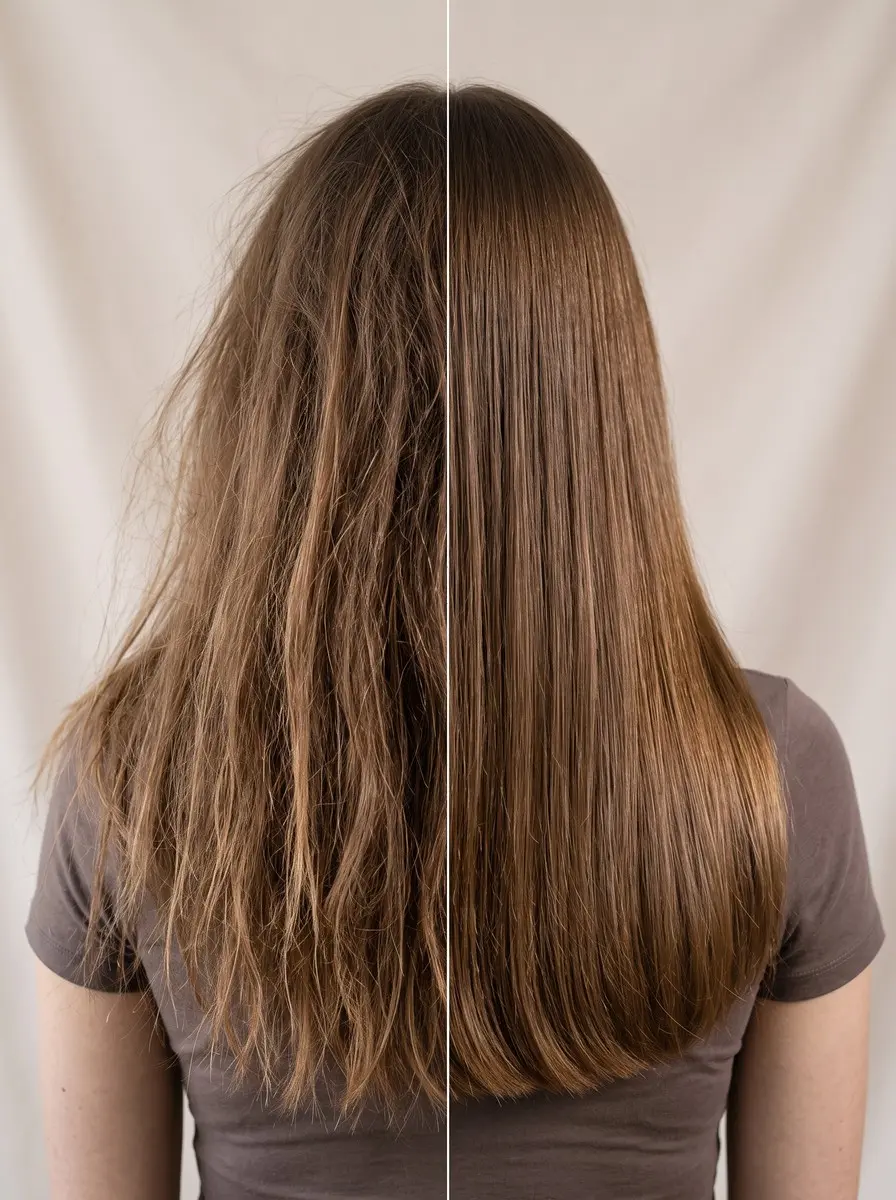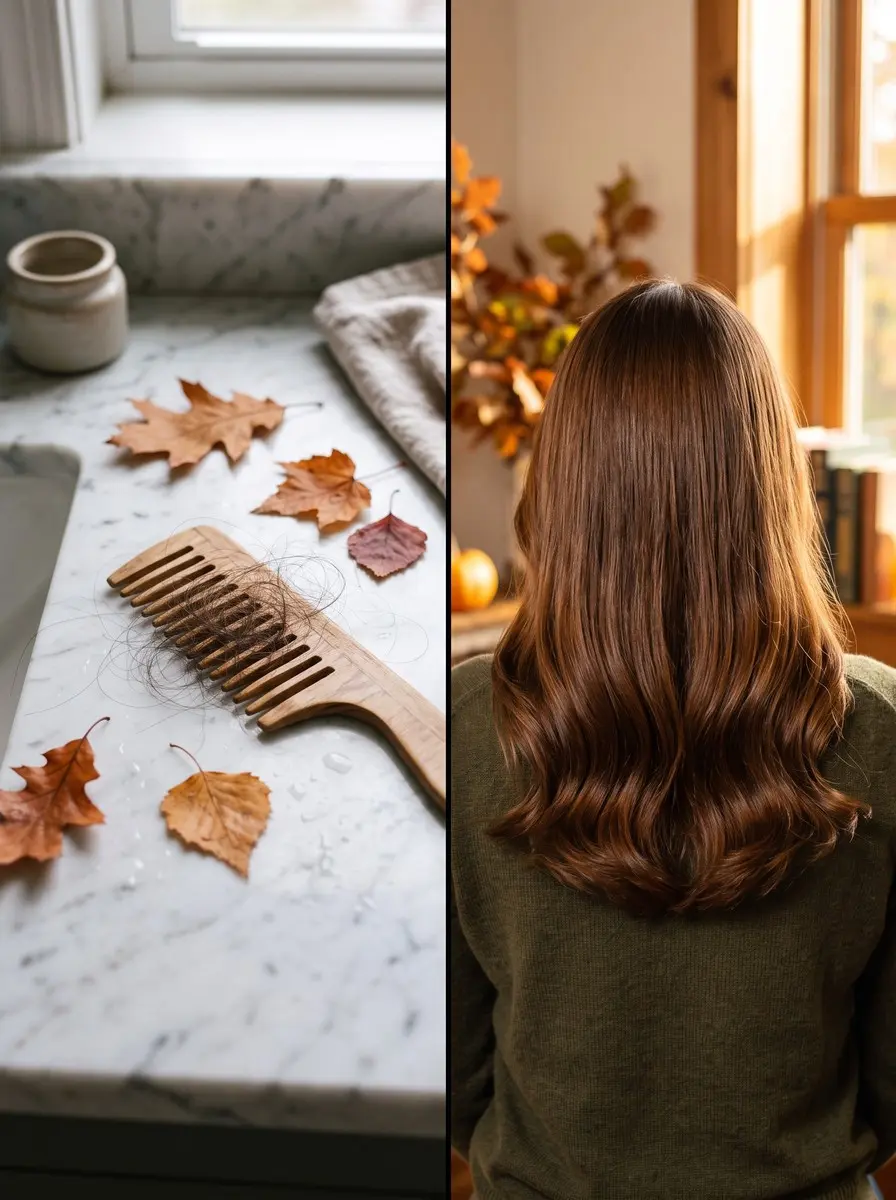
Hair often sheds more in fall because extra follicles enter the resting (telogen) phase together around summer, then release those hairs. It's usually normal and eases within 6-8 weeks: keep washing normally, detangle gently, loosen tight styles, and see a doctor if it lingers or comes out in patches.
If your brush, shower drain and sweater collars suddenly seem covered in hair as the weather cools, you are not imagining it. Fall hair shedding is real and common: it tends to peak from late summer through early fall, and a wash day that leaves a clump in the drain can feel frightening.
The explanation is plain biology. Each hair cycles between growing and resting, and the resting (telogen) phase lasts about 100 days before the hair lets go. More follicles seem to enter that resting phase together around summer, so more hairs release together as fall arrives. Researchers haven’t settled on one cause; theories include changing daylight and UV exposure and the hormonal shifts, including melatonin, that follow the light. The extra shedding usually settles within six to eight weeks, and you can handle it gently at home. Here’s how, plus the signs that mean it’s time to see a doctor.
What You’ll Need
- Wide-tooth comb (seamless detangling comb) — Its widely spaced, smooth teeth separate shed strands from attached hair without snagging, which keeps breakage out of the shed.
- Leave-in detangling conditioner (spray or cream) — Adds slip so the comb glides through knots formed by shed hairs instead of snapping healthy strands.
- Gentle sulfate-free shampoo (scalp-friendly cleanser) — Lets you keep your normal wash schedule and clean the scalp thoroughly without roughing up lengths you’re already handling more often.
- Satin or mulberry silk pillowcase — Creates less friction than cotton overnight, so fewer strands rough up and snap while you sleep.
- Claw clips and spiral coil hair ties (no-tension accessories) — Hold hair back securely without the constant pull that tight elastics put on the follicle.
As an Amazon Associate, HairAide earns from qualifying purchases. Some links above are affiliate links — they cost you nothing extra and help support free tutorials.
Step-by-Step
-
Start by checking whether you’re seeing shedding or breakage, because they have different causes and different fixes. Pull a few hairs from your brush and look at one end: a shed hair is usually full length with a tiny white or translucent bulb at the root, a sign it finished its resting phase and released naturally. Short, snapped pieces with no bulb are breakage, which comes from friction, heat, tension or chemical damage rather than the hair cycle. If most of what you find has a bulb, it’s shedding; if it’s mostly fragments, lean hardest on the gentle-handling steps below and condition your lengths well.
-
Look back about three months, then start a simple shed log. Because the resting phase lasts about 100 days, shedding appears roughly three months after whatever nudged hairs into rest, so a fever, surgery, childbirth, crash diet, major stress or new medication in early summer can also surface as shedding in fall; that’s a different situation worth mentioning to a doctor. For the next two weeks, jot down on your phone roughly how much hair gathers in your brush and drain on wash days. A log turns a vague worry into a trend you can actually read, and it gives a doctor useful detail if you need one.
-
Keep washing on your usual schedule instead of stretching out wash days to ‘save’ hair. Resting-phase hairs are already loosened in the follicle and on their way out, so they fall whether you shampoo or not; skipping washes only lets them collect until they come out in one alarming clump that makes the shed look worse than it is. Massage a gentle shampoo into the scalp and condition from mid-lengths to ends so strands slide apart easily. Fitting a drain catcher now keeps plumbing clear and gives you an honest week-to-week read for your log.
-
Detangle gently and from the ends up, because shed hairs wrap around attached ones and form knots that snap healthy strands if you rip through them. Work on hair coated in conditioner in the shower, or on damp hair misted with a leave-in detangler if your hair is curly or coily, and use a wide-tooth comb or flexible detangling brush. Smooth the bottom few inches first, move higher only once that section is free, and finish at the roots. You’re done when the comb glides from root to tip without catching. The hairs left in the comb were already shedding; combing just collects them.
-
Keep your scalp clean and comfortable, and be realistic about what that achieves. Shampoo with the pads of your fingers rather than your nails, and if hard water or product buildup leaves a film or flakes, use a clarifying shampoo once, then go back to your gentle one. A clean, calm scalp lets hair lift at the root instead of lying flat under residue, and it makes real changes such as redness or scaling easier to spot. What scalp care cannot do is stop a seasonal shed: no massage, serum or oil can hold on to hairs that have already entered the resting phase.
-
Loosen tight styles and go easier on hot tools while the shed runs its course. Snug ponytails, slicked-back buns, tight braids and heavy extensions pull constantly on the follicle, and over time that tension can cause traction alopecia, a gradual, preventable hair loss you don’t want layered on top of a seasonal shed. Swap in claw clips, spiral ties or loose braids, and vary where you position them so the same spot isn’t pulled every day. Reaching for flat irons, curling wands and high blow-dryer heat less often for a few weeks also cuts breakage, so what lands in your brush is only the shed.
-
Protect your lengths overnight and through the day. A satin or silk pillowcase creates less friction than cotton, so fewer strands rough up and snap as you turn over, and a loose braid, or a loose high pineapple for curls, stops long hair from knotting while you sleep. During the day, keep hair from rubbing under bag straps, scarves and seatbelts, which wear on the same spot for hours. None of this changes how many hairs are resting, but it keeps breakage low so your hair looks as full as possible while the shed runs its course.
-
Watch for regrowth over the following months. A shed hair is typically followed by a new one growing from the same follicle, and because hair grows at a steady half inch or so per month, that new growth shows up as short, fine strands along your hairline and part that are easy to mistake for frizz or flyaways. Spotting them is a good sign the cycle is working as it should. A dab of light smoothing cream or a soft brush keeps them tidy while they catch up with the rest of your hair; no product makes them grow in faster.
-
Know when to stop self-diagnosing and see a doctor. Seasonal shedding is spread across the whole scalp, comes out as full-length hairs with bulbs and eases within six to eight weeks. Book a doctor or board-certified dermatologist if heavy shedding lasts beyond about two months, if you notice round bald patches, a widening part or a receding hairline, or if your scalp is itchy, painful, red or scaly. Do the same if the shedding lines up with a trigger from step two or comes with fatigue or other changes in how you feel. These signs don’t necessarily mean something serious; they mean a professional should take a look.
Common Mistakes to Avoid
- Skipping wash days to ‘save’ hair: resting-phase hairs come out anyway, so they just build up and fall out in one alarming clump.
- Starting high-dose biotin or ‘anti-shedding’ supplements without a blood test; most people aren’t deficient, and biotin can skew some lab results, including thyroid tests.
- Ripping a brush through dry, tangled hair from the roots down, which snaps healthy strands and adds breakage on top of the shed.
- Scraping hair into a tight ponytail or bun to hide the shed, which adds tension at the hairline and can lead to traction alopecia over time.
- Assuming every autumn shed is seasonal when it began about three months after an illness, childbirth, new medication or crash diet, or when it shows up as patches.
Pro Tip
Photograph your part and hairline in the same window light once a week during the shed. Seasonal shedding is spread across the whole scalp, so your part usually looks much the same week to week even when the drain looks dramatic; a part that visibly widens across those photos is your cue to book a dermatologist rather than buy another serum.
Frequently Asked Questions
Why does hair shed more in the fall?
More hair follicles appear to shift into the resting (telogen) phase at the same time around summer, and because that phase lasts about 100 days, those hairs release together from late summer into early fall. Researchers haven't pinned down one cause; theories include changing daylight and UV exposure and the hormonal shifts, including melatonin, that follow the light.
How long does seasonal hair shedding last?
The extra shedding usually settles on its own within six to eight weeks. If you're still losing noticeably more hair after about two months, see a doctor or dermatologist to rule out other causes. Replacement hairs grow from the same follicles at the usual pace of about half an inch a month, so fullness returns gradually rather than overnight.
Can any product or supplement stop seasonal shedding?
No product can hold on to hairs that have already entered the resting phase; they will release regardless. Gentle detangling, loose styles and a clean scalp reduce breakage, which keeps hair looking fuller in the meantime. Supplements only help if you're actually deficient, so ask your doctor about a blood test first, and mention any biotin you take, since it can interfere with some lab results.
Does washing or brushing make fall shedding worse?
No. Resting-phase hairs are already loosened and will come out anyway; washing and brushing simply collect them, which is why wash day looks dramatic, especially after skipping a few. Rough handling does cause breakage, though, so detangle conditioned hair with a wide-tooth comb, working from the ends up to the roots.
How do I know if my hair loss is more than seasonal shedding?
Seasonal shedding is diffuse, comes out as full-length hairs and fades within about two months. See a doctor or board-certified dermatologist for round bald patches, a widening part or receding hairline, an itchy, painful or scaly scalp, shedding that lasts longer, or hair loss that follows illness, childbirth, a new medication or rapid weight loss.
You Might Also Like
- 20 cozy fall hair refresh ideas to inspire your next look
- 20 polished low bun ideas to inspire your next look
- remove hard water buildup from your hair
- make thin hair look thicker while it regrows
- dust away split ends without losing length
- repair bleach-damaged hair at home
Fall shedding looks dramatic, but it is usually the hair cycle doing its job: resting hairs let go together, new ones grow in behind them, and the extra shedding eases within six to eight weeks. Until then, wash on schedule, detangle from the ends up and keep styles loose. If you heat-style, use a heat protectant, blow-dry damp hair on medium, and keep flat irons and curling wands for completely dry hair only, at about 150C/300F for fine or bleached hair and 180-200C/355-390F for coarse hair.
Many people notice a similar shed each year, so your log makes the next one less stressful. If shedding lasts past two months, appears in patches or a widening part, or comes with scalp itching or pain, see a doctor or dermatologist.
Sources
- Seasonal shedding peaks from late summer through early fall as more follicles enter the telogen (resting) phase together; the telogen phase lasts about 100 days. therighthairstyles.com
- Contributing theories include reduced sunlight/UV exposure changes and hormonal shifts tied to daylight/melatonin changes. hairandme.com
- The extra shedding typically resolves on its own within 6-8 weeks in most cases. skyparlorsalon.com