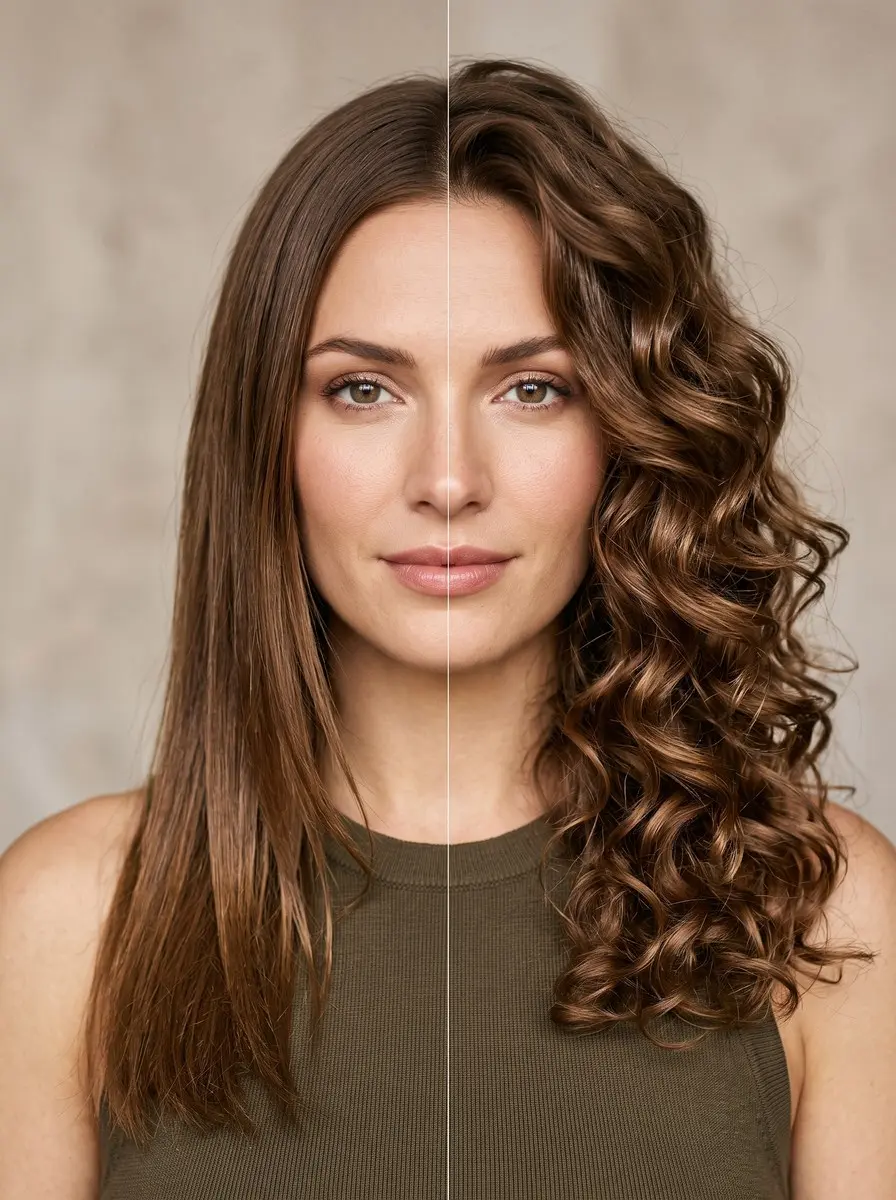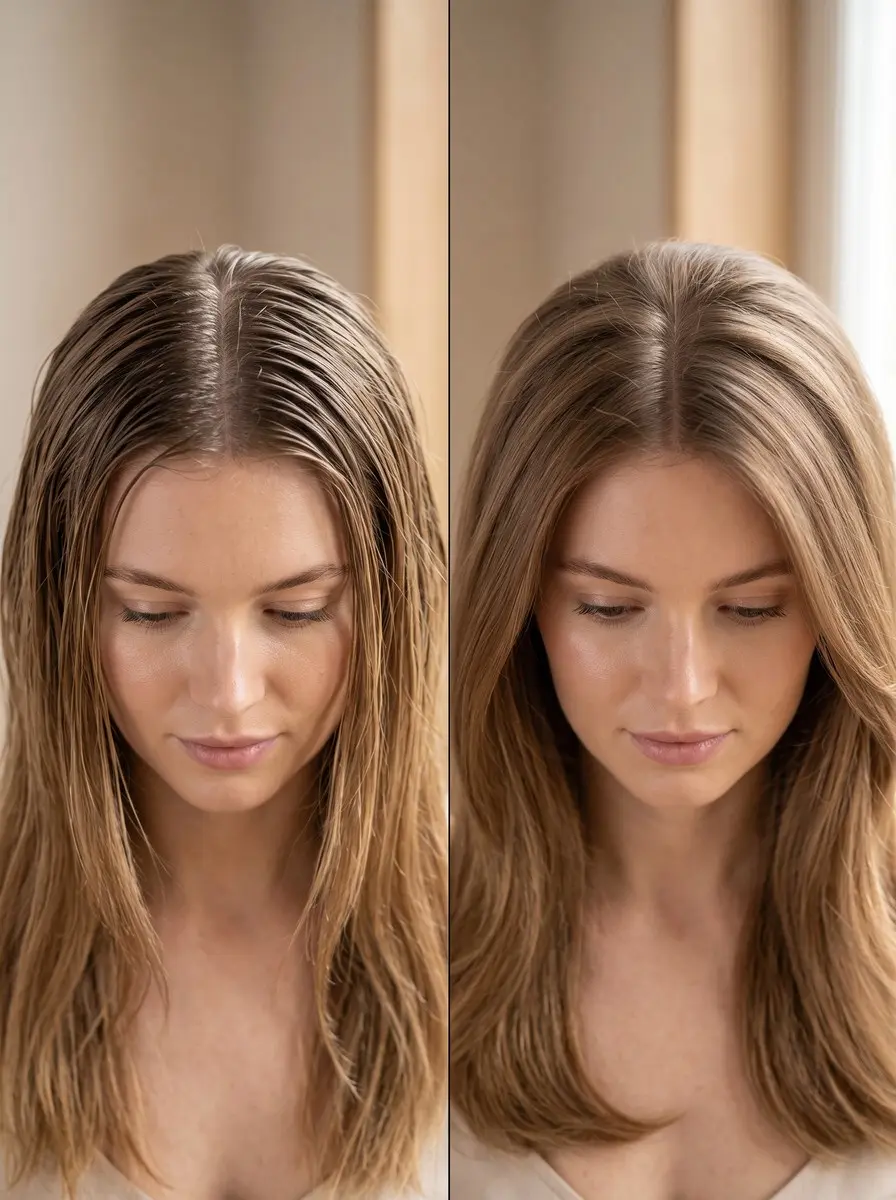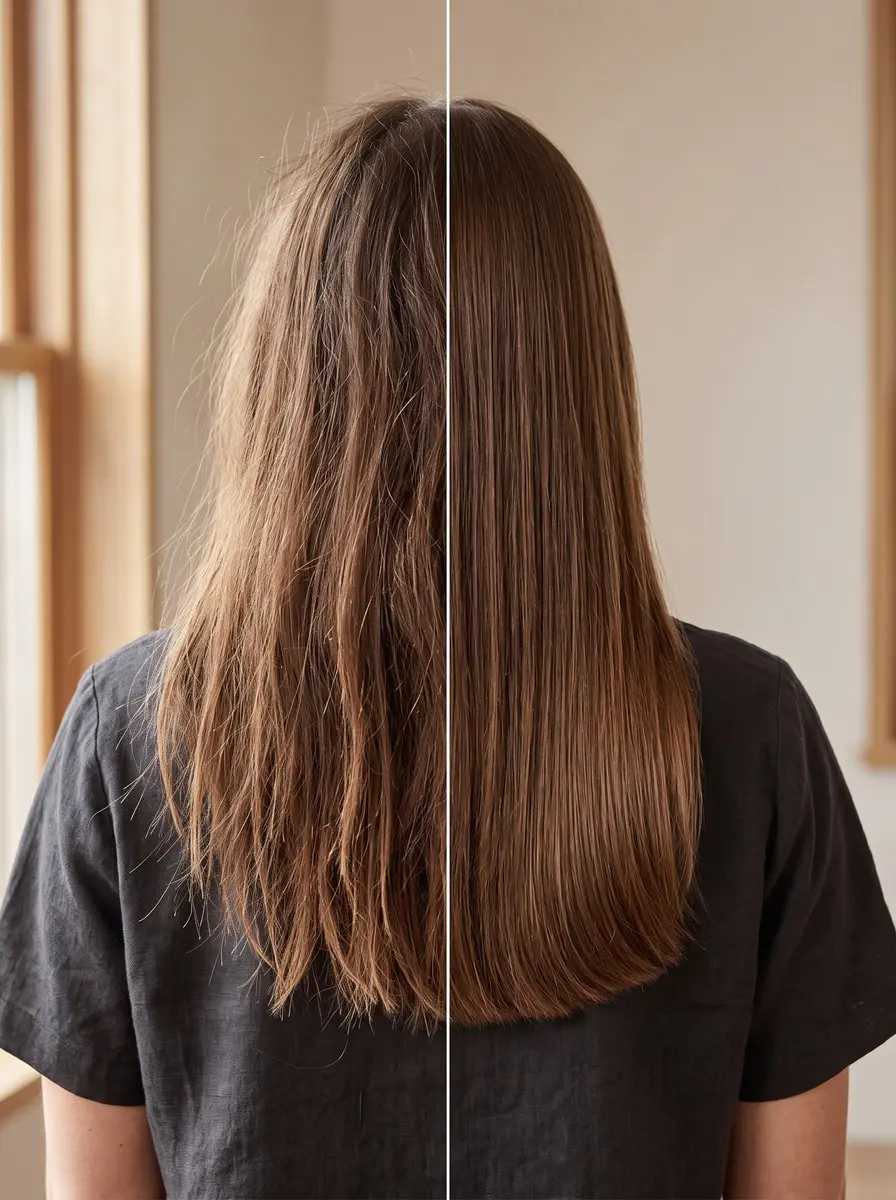
To stop hair breakage, match the fix to the cause: detangle from the ends up in small sections, sleep on a silk or satin pillowcase, loosen tight ponytails and braids, lower hot-tool heat, and space out bleach or chemical services so damage never stacks.
Short, frizzy pieces sticking up along your part. A ponytail whose ends look thinner than they did last year. Little snapped hairs on the bathroom counter. That’s breakage, and it rarely has just one cause. Hair snaps when heat, chemical treatments, friction or rough handling wear down the cuticle until the strand loses its flexibility. Once that protective outer layer is compromised, an ordinary brush stroke or a tight elastic can break it.
The good news is that you can stop hair breakage at home, and none of the fixes cost much. This guide goes cause by cause (friction, tension, heat and chemical) with one change for each. It starts with a quick check to confirm you’re seeing breakage and not shedding. Hair that has already broken won’t mend, but you can stop adding to it today.
What You’ll Need
- Silk or satin pillowcase (sleep friction protection) — Its smooth surface reduces the friction between hair and fabric that causes overnight breakage.
- Wide-tooth comb and flexible detangling brush — Lets you work out knots from the ends up in small sections without dragging tangles down the shaft.
- Spiral coil hair ties and fabric scrunchies — Hold a ponytail or sleep braid without the metal clasps and tight bands that snap strands where the tie sits.
- Heat protectant spray — Goes on before blow-drying or ironing as part of the heat routine in the FAQ.
- Bond-building treatment (pre-shampoo or in-salon add-on) — Reduces breakage in lightened or colored hair by adding new crosslinks, though it can’t undo damage bleach has already done.
As an Amazon Associate, HairAide earns from qualifying purchases. Some links above are affiliate links — they cost you nothing extra and help support free tutorials.
Step-by-Step
-
Before changing anything, make sure you’re dealing with breakage. For three or four days, collect the hairs from your brush, shower drain and pillow and lay them on a dark towel. A shed hair is full length with a tiny white bulb at one end, because it let go of the follicle at the end of its natural growth cycle; a broken hair is shorter, has no bulb and ends in a blunt, split or frayed tip. If you see mostly bulbs, that’s shedding, which the fixes below won’t change, and a sudden jump in shedding, a widening part or bare patches means it’s time to see a dermatologist, not to buy more products. If you see mostly short pieces without bulbs, that’s breakage, and where they come from narrows down the cause: snapping at the hairline and temples points to tension, a band of breakage partway down the lengths often lines up with an old color or bleach line, and frayed ends and crown flyaways usually come from brushing, friction and heat.
-
Brushing is where most everyday friction happens, so change how you detangle first. Work in small sections and start at the ends. Ease knots out a few inches at a time and only move up toward the roots once the section below is clear, instead of raking a brush from scalp to tips. Brushing from the top drags every tangle down the shaft and snaps the strands caught in the knot, while working from the ends up means each stroke only meets the tangle right in front of it. Detangle wet hair with conditioner still in and a wide-tooth comb, because wet hair is more fragile and the slip reduces drag; a section is done when the comb glides from root to tip without catching.
-
Next, cut the friction that happens when you aren’t styling at all. After washing, press the water out with a microfiber towel or a soft cotton T-shirt instead of rubbing with terry cloth, whose loops catch and rough up wet, fragile strands. At night, swap a cotton pillowcase for silk or satin, since the smoother surface reduces the friction between hair and fabric that causes overnight breakage as you turn in your sleep. Long hair does best in a loose braid or a soft, low bun held with a scrunchie, so the lengths don’t rub against the pillow all night. You’ll know it’s working when you wake up to fewer tangles and less frizz at the nape.
-
Tight styles snap hair where the tension sits, and over time they can pull it out at the follicle. Loosen high ponytails, slicked-back buns and tight braids, and move your ponytail a little each day so the same strands aren’t carrying the load. Swap metal-clasp elastics for spiral coil ties or fabric scrunchies that hold without digging in. For braids, weaves and extensions, ask for installs that don’t pull at the edges and don’t add more weight than your hair can comfortably carry, and give your hair a rest between installs instead of re-braiding straight away. Soreness, headaches, small bumps along the hairline or thinning at the temples mean a style is too tight: take it down, because repeated tension in the same place can lead to traction alopecia, which can become permanent.
-
Heat damage builds up with every hot pass, so the goal is fewer passes, not giving up styling. Let hair air-dry partway before blow-drying, keep the dryer moving on a medium setting, and try heatless curls or a braid-out on alternate days to give the lengths a break. When you do use a flat iron or curling wand, set it to the lowest temperature that holds your style and make one slow pass per section instead of several quick ones, because repeated passes keep drying out and roughening the same stretch of hair. A burnt smell or a rough, straw-like feel afterward means the tool is too hot. The FAQ below gives the exact temperature limits and prep.
-
Bleach, permanent color, relaxers, perms and chemical smoothing treatments all change the hair’s internal structure, and they all use up the same limited reserve of strength. Space services out instead of booking them back to back, and don’t combine two chemical processes on the same day unless your stylist approves it. Ask for a bond-building treatment during any lightening; it reduces breakage, though it can’t undo damage that’s already done. Watch out most for stacking: freshly bleached or relaxed hair can take much less, so a daily flat iron that did no harm before can now be what snaps it. For the first few weeks after a chemical service, use hot tools as little as you can, and strand-test any at-home color or lightener first; if the test strand turns gummy or snaps when you gently stretch it, skip the process and talk to a colorist.
-
Well-conditioned hair breaks less because conditioner smooths the cuticle and reduces friction between strands, so combs and fingers glide instead of catching. Use conditioner after every shampoo, focusing on the mid-lengths and ends where the hair is oldest, and add a weekly mask if your ends feel rough or look dull. Shampoo mainly at the scalp and let the suds rinse through the lengths instead of scrubbing them, since scrubbing is just more friction. Then dust off split ends every couple of months, or whenever you spot them. A split left in place can keep splitting further up the shaft, and a small trim removes it before it becomes a snapped, frizzy strand.
-
Give the changes a few weeks, then repeat the collection check from step one. Fewer short pieces without bulbs in your brush and on your pillow means the fixes are working. Take a photo of your ponytail ends and your part in the same light each month, since slow improvement is easy to miss in the mirror. If breakage continues after a couple of months of gentler habits, book a trichologist, a hair and scalp specialist who can work out which cause is still at work. See a dermatologist sooner if you notice bald patches, a receding hairline at the temples, scalp pain, scaling or redness, or sudden heavy shedding. Dermatologists are medical doctors who can run blood tests and diagnose scalp conditions, and these signs point to a problem at the follicle, not just the strand.
Common Mistakes to Avoid
- Brushing from the roots straight down through a knot, which drags the tangle down the shaft and snaps the strands caught in it.
- Wearing the same tight high ponytail or slicked bun in the same spot every day, so one line of hair takes all the tension.
- Yanking out a snagged elastic or rubbing wet hair hard with a terry towel, when you could unwind the tie and blot the hair dry.
- Getting bleach, a relaxer or a smoothing treatment and then going straight back to daily hot tools, which stacks chemical and heat damage on the same lengths.
- Treating shedding or thinning at the scalp as breakage and buying more repair products instead of seeing a dermatologist.
Pro Tip
At touch-ups, ask your colorist to put lightener only on the new regrowth and keep it off lengths that are already lightened. Overlapping bleach onto hair that’s already lightened is a classic reason hair snaps in a neat line partway down the lengths.
Frequently Asked Questions
How can I tell if my hair is breaking or shedding?
Look at the end of the hair. A shed hair is full length with a small white bulb at the root end, because it came out of the follicle naturally. A broken hair is shorter, has no bulb and ends in a blunt or frayed tip. Some shedding every day is normal, but lots of short pieces without bulbs point to breakage.
What temperature should I use on a flat iron to avoid breakage?
Apply a heat protectant before any hot tool. Keep flat irons and curling irons to about 150°C (300°F) for fine or bleached hair and 180-200°C (355-390°F) for coarse hair. Only use an iron on completely dry hair, because ironing wet or damp hair is what does real damage. Blow-dryers and diffusers are made for damp hair; just keep them moving.
Can tight ponytails and braids cause permanent hair loss?
Yes. Constant pulling on the same spot can cause traction alopecia. It starts as thinning along the hairline and temples and can become permanent if the tension goes on long term. Caught early, it usually improves once the tension stops, so loosen your styles, move them around, and see a dermatologist if your edges keep thinning.
How long does it take for hair breakage to grow out?
Gentler habits stop new breakage right away, but hair that has already snapped won't repair itself. Hair grows about half an inch a month, so short broken pieces take several months to blend back into your lengths. Regular trims tidy up uneven, frayed ends in the meantime. No product speeds up the growth itself.
When should I see a trichologist or dermatologist about hair breakage?
See a trichologist, a hair and scalp specialist, if breakage continues after a couple of months of gentler habits and you can't find the cause. See a dermatologist, who is a medical doctor, for bald patches, a receding hairline, scalp pain, itching or scaling, or sudden heavy shedding. These can signal an underlying condition, such as a thyroid or nutritional issue, that needs a blood test.
You Might Also Like
- 20 polished low bun ideas that are easy on your hairline
- 20 half-up half-down ideas to inspire your next low-tension look
- 20 relaxed messy bun ideas to inspire your next look
- how to repair bleach damaged hair
- split-end dusting at home
- heatless curls overnight
- remove hard water buildup from hair
- how to ask your stylist for what you want
Stopping hair breakage comes down to finding the cause and removing the strain: gentler detangling, a smoother pillowcase, looser styles, fewer hot passes and well-spaced chemical services. These are habits, not a one-time treatment, so keep them up. The lengths you protect now are the ones you’ll still have next year.
Hair that has already snapped won’t grow back together, so trim it away gradually as healthier hair grows in, and ask your stylist to look over your color and styling routine at each appointment. If breakage continues despite the changes, or you notice bald patches, a receding hairline or sudden heavy shedding, see a trichologist or dermatologist instead of trying more products.
Sources
- Hair breakage happens when heat, chemical treatments, friction, or harsh handling damage the cuticle until the strand loses flexibility and snaps. trichology.com
- Correct brushing works upward from the ends in small sections rather than raking top-to-bottom through tangles. whowhatwear.com