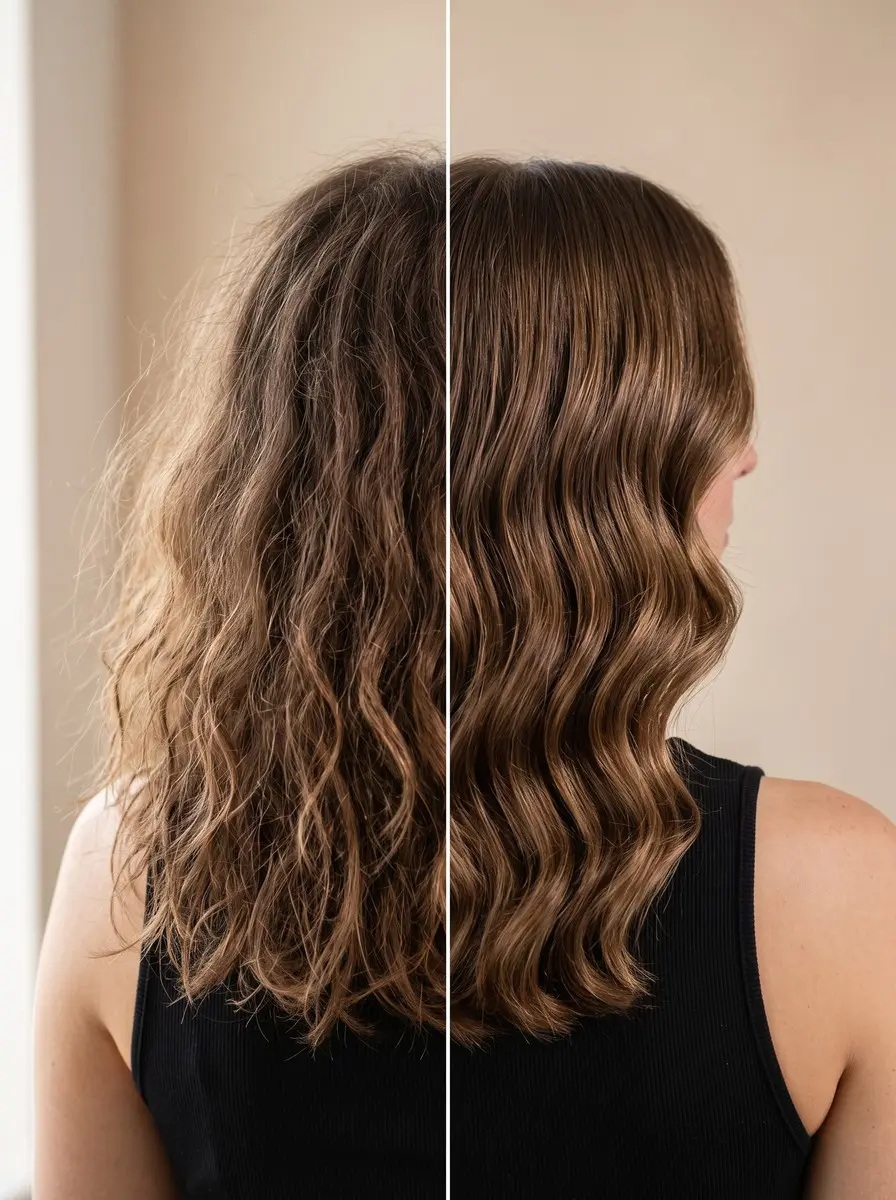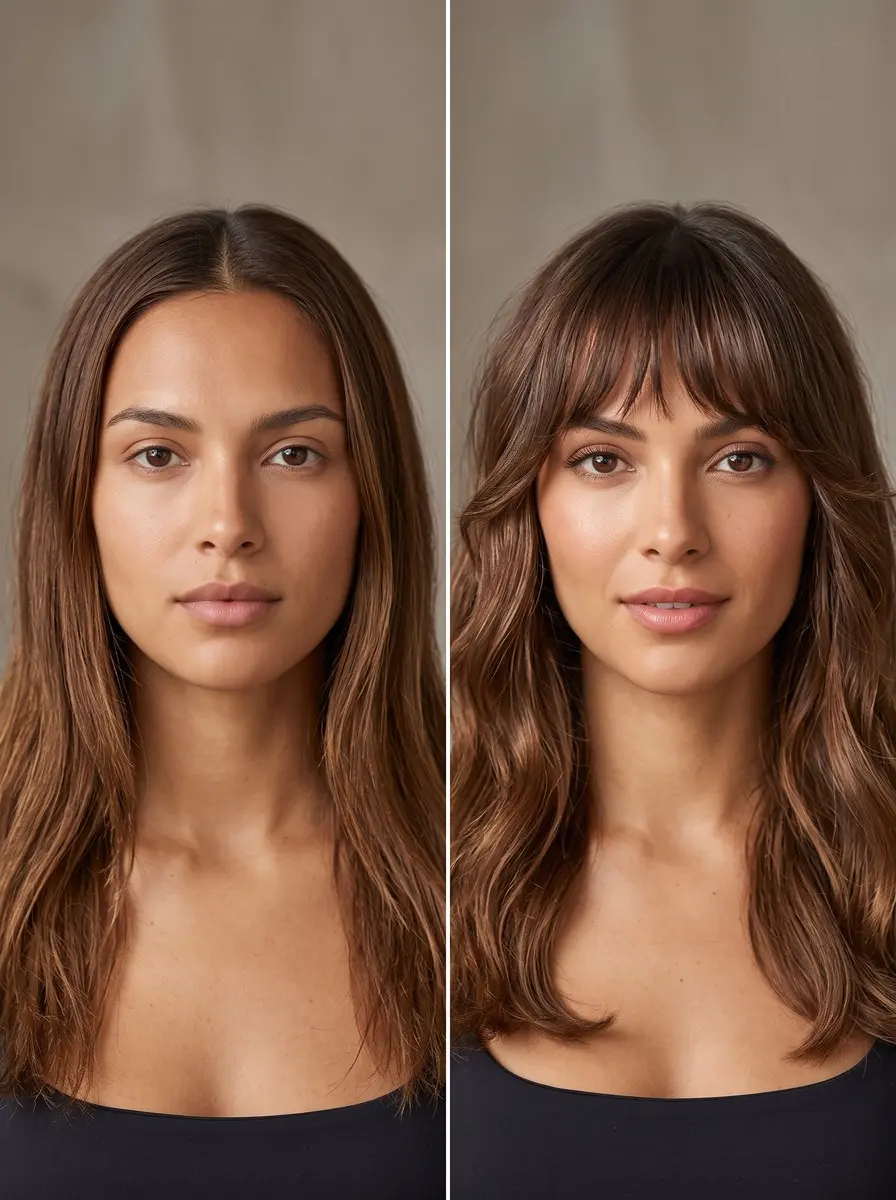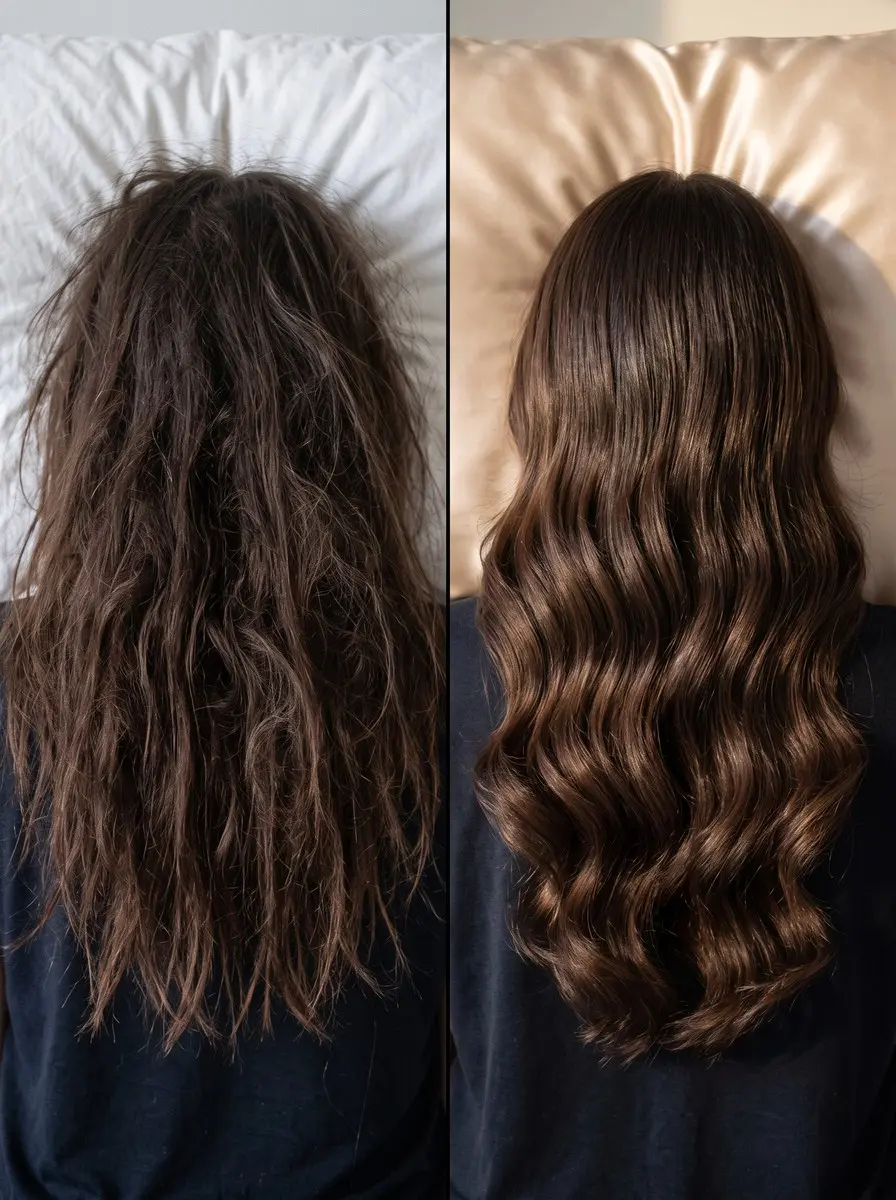
To sleep with long hair without damage, go to bed with it fully dry and detangled. Smooth a little leave-in onto the ends, set it in a loose braid or pineapple with a soft scrunchie, then sleep on silk or satin.
Knowing how to sleep with long hair matters, because seven or eight hours of turning over drags it across the pillow, rolls loose ends into knots and leaves a crease where the hair tie sat. Going to bed with damp hair raises the risk, because hair is at its weakest when it’s wet. That’s how you get the familiar morning: frizz at the crown, matted ends and snapped strands in the brush.
No single pillowcase fixes this. What works is a short bedtime routine matched to your hair: dry it first, detangle, add a little leave-in, use the right tie, pick a sleep style that suits your texture and lie on a smooth surface. Below is the routine step by step. It covers straight, wavy, fine, curly, coily and very long hair, plus braids and extensions, and ends with a morning refresh that needs no heat. It takes about ten minutes, and you can do all of it yourself.
What You’ll Need
- Mulberry silk pillowcase (or a polyester satin pillowcase on a budget) — Lets hair glide instead of catching, and doesn’t soak up oils and leave-in the way cotton does.
- Satin-lined bonnet or satin sleep scarf — Keeps curls, coils, braids, extensions and very long hair contained and off the pillow all night.
- Silk scrunchies or spiral coil hair ties — Hold a sleep braid or pineapple without a metal clasp to snag strands or a tight grip at the root.
- Wide-tooth detangling comb — Removes small tangles before bed with far less drag than a fine-tooth comb or paddle brush.
- Lightweight leave-in conditioner spray — Adds slip and seals in moisture on the ends overnight without weighing fine hair down.
As an Amazon Associate, HairAide earns from qualifying purchases. Some links above are affiliate links — they cost you nothing extra and help support free tutorials.
Step-by-Step
-
Wash early enough that your hair is completely dry by bedtime. Long, thick hair can take several hours to air-dry, so a morning or early-evening wash is easiest. Water breaks the temporary hydrogen bonds inside each strand and makes the fiber swell, which is why wet hair stretches further and snaps more easily as it rubs against a pillow. If you have to wash at night, blot your hair with a microfiber towel or an old cotton T-shirt instead of rubbing, then air-dry or blow-dry on a medium setting. You’re ready when the roots, the ends and the hair at your nape all feel dry, with no cool dampness left.
-
Detangle first, then condition the ends. Run a wide-tooth comb through your hair, starting at the ends and working up to the roots one section at a time. Small knots left in overnight get rolled tighter every time you turn over, so a tangle that would slip out in seconds at bedtime can become a matted knot by morning that you’ll be tempted to rip through. Straight and wavy hair can be combed dry; curly and coily hair breaks less if you first mist the lengths with a spray leave-in and loosen knots with your fingers. Detangling is done when the comb glides from root to tip without catching. Then smooth a small amount of leave-in conditioner or a few drops of hair oil over the mid-lengths and ends, the oldest and most fragile part of long hair. A light coat lets strands slide against each other and the pillow instead of catching, and it seals in moisture overnight, so ends wake up soft rather than dry and staticky. Fine hair needs only a pump of lightweight spray or a single drop of oil on the last few inches, while thick, curly or coily hair can take a richer cream. Keep it away from the roots, where it can leave fine hair flat by morning, and stop when the ends feel soft rather than slick or wet.
-
Tie your hair with something that has no metal and doesn’t grip, such as a silk or satin scrunchie, a fabric ribbon or a spiral coil tie. Elastics with a metal clasp snag and saw at strands every time you move. Thin rubber bands grip and stretch hair as you pull them out, and anything tight keeps pulling at the root for every hour you lie on it. Leave bobby pins and claw clips on the dresser too, because lying on them presses hard edges into your scalp and the hair around them. The tie is loose enough when you can easily slide a finger under it.
-
For straight, wavy or fine long hair, gather it at the nape and make one loose three-strand braid all the way to the ends, then fasten it with your soft tie. A braid holds the hair together so it can’t rub and twist into knots against the pillow. Because the braid runs right to the tips, it also protects the ends, where long hair tangles most. Keep it low and slack rather than high and tight so you aren’t lying on a lump or pulling at the root; if braiding feels fussy, a loose low ponytail does a similar job. Very long hair can be flipped up over the top of the pillow once it’s braided, so the ends don’t get trapped and rolled under your shoulders. Wavy hair also wakes up with soft, heatless bends.
-
For curly, coily, braided or extended hair, choose the set-up that keeps your texture grouped without tension. Curly hair keeps its definition in a pineapple: flip your head forward and gather the curls loosely at the very top of your head with a satin scrunchie or scarf, so you sleep on your nape and the curls above it don’t get crushed. Coily hair that shrinks and knots at the ends often does better in four to eight chunky two-strand twists or large loose braids, which keep the coils grouped and stretched so the morning detangle is much shorter. Box braids, knotless braids and locs go into a satin-lined bonnet, or under a satin scarf tied at the nape so it doesn’t press on your hairline; gathering long braids into a loose low ponytail first stops them tugging at the scalp as you turn, and the satin keeps cotton lint from working into locs. Take clip-in extensions out every night. Tape-in, bonded and sewn-in extensions should be fully dry, gently brushed with a loop or soft-bristle brush and loosely braided, so the attachment points can’t twist or mat. With any of these styles, never pull the hairline tight: the hair at your edges is often finer than the rest, and repeated tension there can cause traction hair loss. The set-up is right when nothing pulls at your temples, nape or scalp as you move your head.
-
Before you lie down, check what your hair rests on all night. A silk or satin pillowcase lets hair glide instead of drag, which cuts the friction behind tangles, frizz and breakage. Unlike cotton, it won’t absorb your hair’s natural oils or the leave-in you just applied. Satin is a weave rather than a fiber, so a polyester satin case works if you’re on a budget. A satin-lined bonnet or scarf goes a step further by keeping hair contained and off the pillow entirely, which makes the most sense for curls, coils, braids, extensions and very long hair. A pillowcase on its own is enough for straight or wavy hair in a loose braid, or for anyone who wakes up with the bonnet on the floor, and many people use both as a backup.
-
In the morning, untie your hair gently and take out the braid, pineapple or twists with your fingers rather than a brush, then give the bends a minute to settle. Straight and wavy hair usually needs only the wide-tooth comb through the ends and a shake at the roots. If fine hair looks flat, flipping your part to the other side lifts it quickly. For curls and coils, mist with water or a refresh spray, scrunch or smooth with your fingers, and leave them to dry untouched for ten minutes so you don’t brush out the definition you protected overnight. If a tie left a dent, smooth a damp hand over it: the bend relaxes as the hair dries, with no heat needed.
Common Mistakes to Avoid
- Going to bed with wet hair wrapped in a towel turban, which keeps hair damp for hours and presses it into the pillow while it’s at its weakest.
- Putting hair in a tight high ponytail or bun to keep it out of the way. You end up lying on the knot, and the roots stay under tension all night.
- Using elastics with a metal clasp or thin rubber bands, which snag and break strands while you move and again when you pull them out.
- Coating fine hair in oil from the roots down, so it looks limp and greasy by morning instead of protected.
- Brushing curls out dry in the morning, which breaks up the definition you protected overnight and creates frizz.
Pro Tip
Move your braid or tie an inch or two each night, at the nape one night and just off-center the next, so the same section of hair isn’t creased and stressed every night.
Frequently Asked Questions
Is it bad to go to sleep with wet hair?
It's worth avoiding. Hair is at its weakest when wet, so a night of rubbing against the pillow causes more tangles and breakage than it would on dry hair. Wash earlier so hair can air-dry, or apply a heat protectant and blow-dry on a medium setting first. If it's only slightly damp, braid it loosely and sleep on silk or satin.
Is a silk pillowcase or a satin bonnet better for long hair?
They do different jobs. A silk or satin pillowcase reduces friction wherever your hair touches it and doesn't soak up oils the way cotton does, so it suits straight or wavy hair worn in a loose braid. A bonnet or scarf keeps hair contained and off the pillow altogether, which helps curls, coils, braids and extensions keep their shape. Using both protects your hair if the bonnet slips off.
Is it better to sleep with long hair in a braid or down?
For most long hair, a loose braid is the safer choice. Hair worn down spreads across the pillow and rolls into knots at the ends as you turn, while a braid keeps the hair together and protects the tips. Keep it low and loose, secured with a soft scrunchie. Curly hair is the exception: a loose pineapple at the crown keeps more definition.
Will leaving oil or leave-in in overnight make fine hair greasy?
It can if you use too much or put it near the roots. Fine hair only needs one pump of a lightweight spray leave-in, or a single drop of oil warmed between your palms and pressed onto the last few inches. If your roots look flat by morning, use less, switch to a lighter formula or apply it every other night instead.
Can sleeping in a ponytail cause hair loss?
An occasional loose ponytail is unlikely to, but a tight one worn night after night can. Constant pulling at the root can cause traction alopecia. It starts as thinning around the hairline or where the tie sits, and it can become permanent if the tension continues. Sleep in low, loose styles with soft ties, and see a dermatologist if you notice thinning, soreness or small bumps along your hairline.
You Might Also Like
- 20 braided hairstyle ideas for thin hair to inspire your next look
- 20 headache-proof ponytail ideas for thick hair
- how to make a blowout last longer
- heatless beachy waves for fine hair
- how to get rid of frizz in thick hair
- two-strand twist hairstyles
- how to diffuse curly hair
Once you do it every night, the routine becomes automatic: dry hair, a quick comb-through, a touch of leave-in, a soft tie, a sleep style that suits your texture, and silk, satin or a bonnet underneath. When it’s a habit, expect fewer morning knots and less hair in the brush. Wash your pillowcase or bonnet weekly so leave-in and oil don’t build up in the fabric.
If you still find short snapped pieces, split ends running up the hair or hair that feels gummy when wet, the damage is probably coming from color or heat rather than your pillow. Book a stylist for a trim and an honest assessment. If you notice thinning at the hairline, a tender scalp or small bumps where you tie your hair, see a dermatologist.
Sources
- Silk or satin pillowcases reduce friction that causes tangles, frizz and breakage, while cotton can absorb hair's natural oils. cosmeticworld.ca
- Sources advise a loose braid or low ponytail secured with a soft scrunchie or ribbon, and warn that tight elastics can pull hair and cause damage. healthline.com
- Hair is weakest when wet, so sources suggest showering earlier in the day so hair can dry before bed. amerisleep.com
- A wide-tooth comb before bed removes small tangles, and a leave-in conditioner or oil can seal in moisture overnight. better-notyounger.com