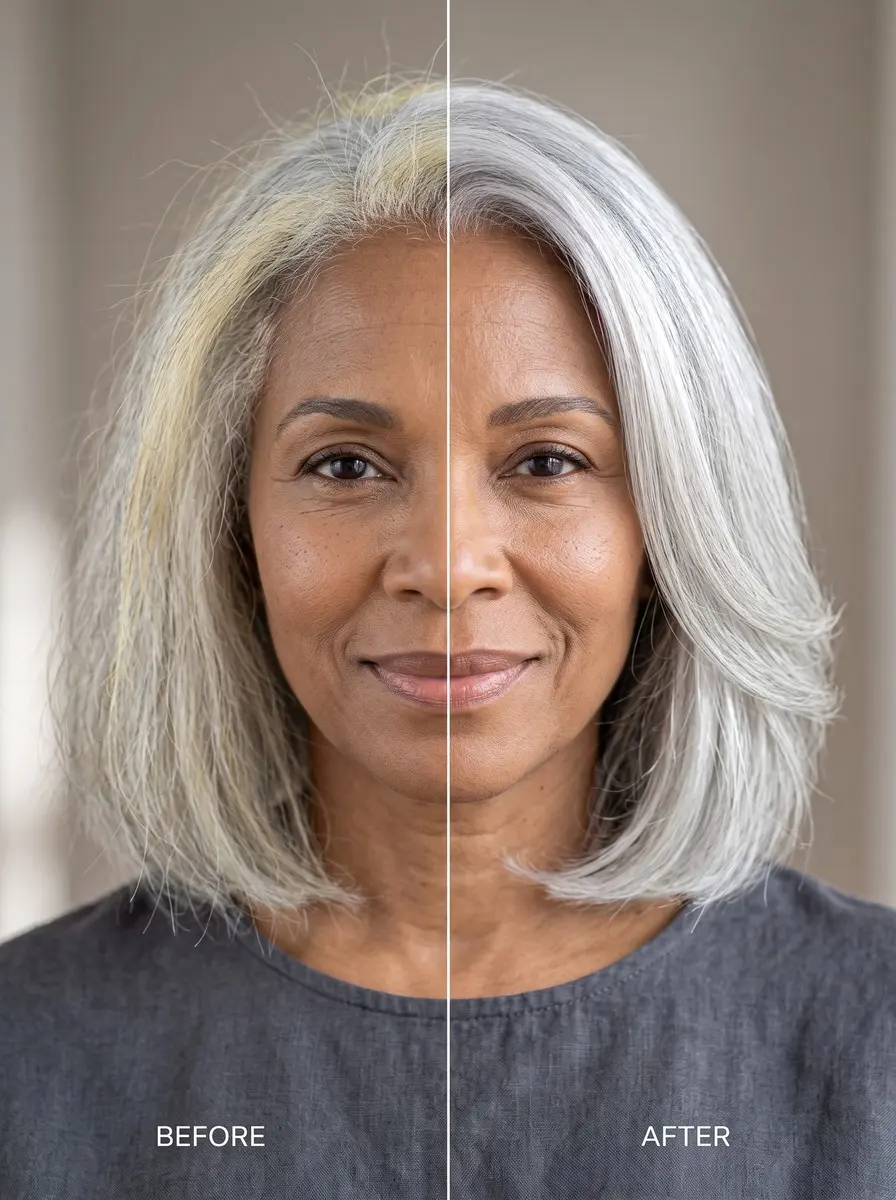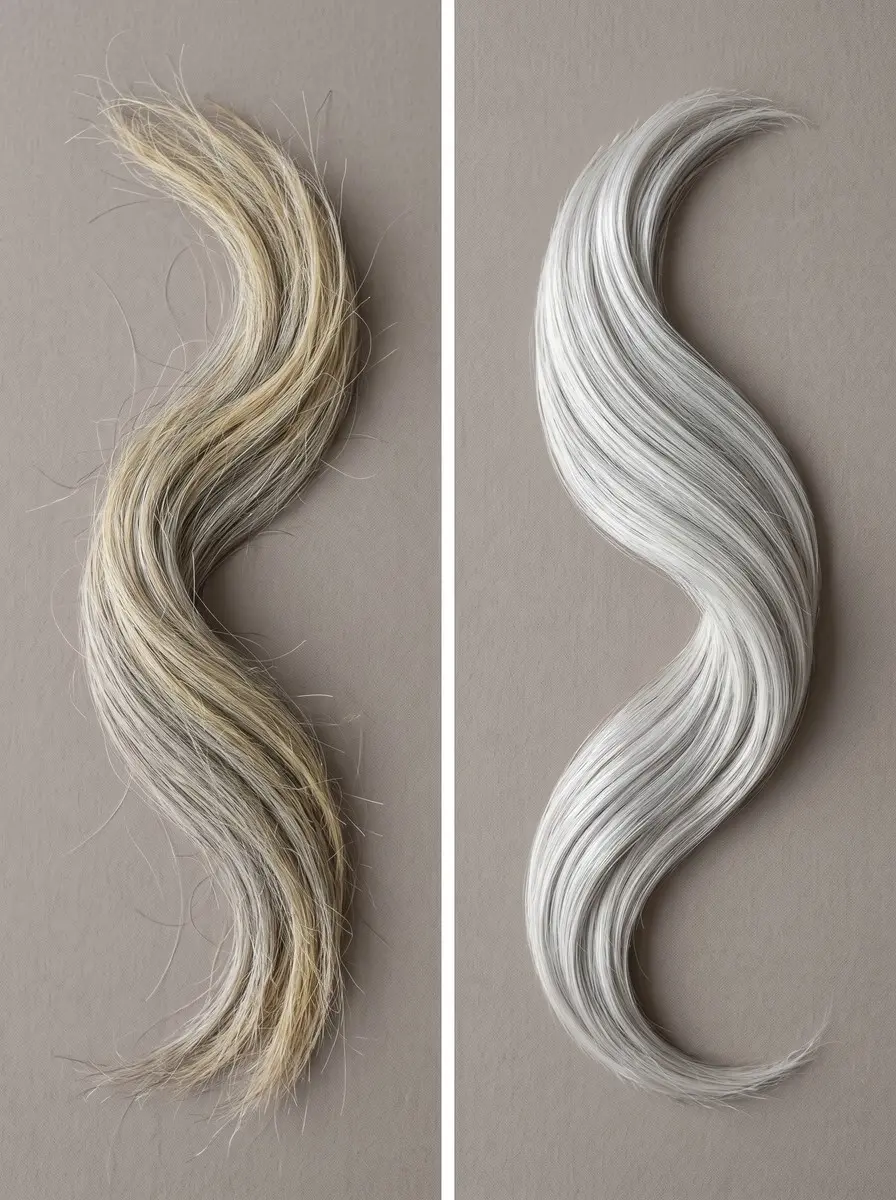
To soften coarse gray hair, wash with a moisturizing shampoo every few days, condition every wash, use a mask once or twice a week, and finish with a leave-in on damp hair. Then protect it with gentle drying and a silk pillowcase.
Going gray can bring a surprise nobody warns you about: the new strands often don’t feel like the hair you had before. Many women find their silver comes in wiry, springy and dry, poking out of a smooth bob or turning a sleek ponytail fuzzy by lunchtime. You aren’t imagining it, and dye isn’t the only answer. This routine shows you how to soften coarse gray hair without covering it.
Start by checking what you’re working with. Coarseness is strand diameter, not density, so even sparse hair can be made of coarse strands. Roll one shed strand between your thumb and finger: a coarse strand feels solid and springs back when bent, while a fine one is barely detectable. Coarse strands can take richer creams; fine gray hair that only feels rough needs the same moisture in lighter formulas. Either way, the feel comes down mostly to moisture and friction, and you can manage both at home.
What You’ll Need
- Purple toning shampoo for gray and silver hair — Its violet pigment cancels yellowing so gray looks bright and cool after one short wash.
- Deep conditioning hair mask — Delivers a heavier dose of conditioning agents in the weekly 10-minute treatment that softens dry lengths and ends.
- Leave-in conditioner (cream for coarse hair, spray for fine) — Keeps a softening layer on damp strands as they dry so wiry pieces don’t spring out.
- Heat protectant spray (lightweight mist for damp hair) — Buffers damp gray strands from the blow-dryer’s heat so already dry hair doesn’t end up rougher.
- Mulberry silk pillowcase — Creates less friction than cotton, so gray hair wakes up smoother and less tangled.
As an Amazon Associate, HairAide earns from qualifying purchases. Some links above are affiliate links — they cost you nothing extra and help support free tutorials.
Step-by-Step
-
Swap your everyday shampoo for a gentle, moisturizing formula and focus it on your scalp, letting the suds rinse through the lengths instead of scrubbing them. Gray hair often feels drier, and harsh, high-lather cleansers strip what little natural oil reaches the ends, which leaves strands rougher. Washing every two or three days instead of daily helps too, if your scalp allows. If your hair still feels parched, replace one shampoo a week with a co-wash (a cleansing conditioner). It cleans lightly and leaves more moisture behind. You’ll know it’s working when your hair feels clean but not squeaky after rinsing.
-
Condition after every wash, working a generous amount through the mid-lengths and ends, where gray hair is driest. Conditioning ingredients cling to the strand, smoothing the cuticle and reducing friction, so wiry hairs lie flatter and tangle less. Leave it on for two to three minutes. While it’s in, detangle with your fingers or a wide-tooth comb, starting at the ends and working up, because the slip stops strands from snapping. Rinse until your hair feels slippery-smooth rather than coated. A waxy feel means you used too much or didn’t rinse enough.
-
If your silver has picked up a yellow or brassy cast, use a purple shampoo in place of your regular shampoo about once a week, only while the yellowing shows, then condition exactly as in the step above. That cast is often blamed on mineral-heavy water, sun, smoke and product buildup. Violet sits opposite yellow on the color wheel, so its pigment cancels the yellow and makes gray look brighter and cooler. Leave it on for the time on the bottle, usually two to five minutes, because longer can leave a lilac tint. Many formulas are drying, so never skip the conditioner afterward. Stop once the yellow is gone, and skip this step entirely if your gray isn’t yellowing.
-
Once or twice a week, swap your regular conditioner for a richer mask. Smooth it over the lengths and ends of towel-blotted hair and leave it on for about 10 minutes. Masks hold more conditioning agents and oils than a rinse-out conditioner, so they leave more softening material on the strand. On alternate weeks, try a hot oil treatment. Warm 3-6 tablespoons of an oil such as olive or argan in the microwave for about 10 seconds, and check on your wrist that it’s only comfortably warm. Apply it to damp hair, cover with a shower cap for up to 20 minutes, then rinse and condition. Fine hair needs the lower amount, kept off the roots.
-
While your hair is still damp, apply a leave-in conditioner from mid-lengths to ends: a cream if your strands are coarse, a lightweight spray if they’re fine. Damp hair takes product more evenly, and a leave-in keeps a softening layer on the strand all day. That layer is what stops wiry pieces from springing out as they dry. Add oil only if you need it: one or two drops warmed between your palms and pressed over the ends. Too much oil weighs fine gray hair down and makes it look greasy and flat rather than soft.
-
Blot, don’t rub: press the water out with a microfiber towel or an old cotton T-shirt, because rough towel-drying creates frizz on already wiry hair. Detangle damp hair with a nylon-bristle brush that has space between the bristles, starting at the ends. Wet hair stretches and snaps more easily, and the wide spacing glides through instead of catching. Air-dry when you can. If you blow-dry, mist a heat protectant over damp hair first, since its thin film buffers the strand from direct heat. Then use medium heat, point the nozzle down the hair shaft and keep it a few inches from your hair so the hot air doesn’t scorch the ends.
-
Protect the softness overnight by sleeping on a silk pillowcase. It creates less friction than cotton, so strands don’t rough up, tangle or frizz as you move. If your hair is long enough, gather it loosely into a soft low braid or a silk scrunchie. Between washes, revive dry ends with a mist of water and a pea-size amount of leave-in instead of another shampoo. Wetting and re-conditioning softens wiry pieces without stripping the oil your scalp has made since your last wash.
-
Finally, ask your stylist for a shape that works with the texture instead of fighting it. Some length and weight help wiry strands lie down, which is why many stylists suggest collarbone-to-shoulder lengths or a lob with long, soft layers. Very short crops can show every springy hair, though a well-tapered pixie still works if you prefer short. Ask them to remove bulk from the interior and cut off dry, frayed ends. Many stylists also avoid razors on dry, wiry hair because they can leave the ends looking fuzzy. Book a trim every 8-12 weeks, or once the shape starts to lose its definition.
Common Mistakes to Avoid
- Shampooing every day with a harsh or clarifying formula, which strips the little oil gray hair has and leaves strands rougher.
- Using purple shampoo at every wash or leaving it on too long, which dries hair out and can leave a lilac cast.
- Piling heavy oils or butters onto fine gray hair, which weighs it down and makes it look greasy rather than soft.
- Dragging a brush through tangles from the roots down instead of detangling from the ends up while conditioner is in.
- Rubbing hair dry with a rough towel, which creates frizz on strands that are already wiry.
Pro Tip
If the weekly purple wash leaves your hair feeling dry, swap it for this on that same wash day: use your usual moisturizing shampoo, then mix a small dot of purple shampoo into your conditioner and leave it on for the usual two to three minutes. You still tone once a week while yellowing shows, just more gently and without the extra drying wash.
Frequently Asked Questions
Why does gray hair feel so coarse and wiry?
The reasons aren't fully settled, but two things are commonly involved. Gray strands sometimes grow in with a wirier texture than the pigmented hair around them, and the scalp tends to make less oil with age, so less natural conditioning reaches the lengths. The result is hair that often feels drier and rougher, and a moisture-focused routine helps with that.
How often should I use purple shampoo on gray hair?
Use it about once a week, only while yellowing shows, in place of your regular shampoo. Leave it on for the time on the label, usually two to five minutes, because longer or more frequent use can dry hair and leave a lilac tint. Always condition afterward, and stop once the yellow is gone.
Is it safe to blow-dry coarse gray hair?
Yes, if you're gentle. Mist a heat protectant over damp hair first, use medium rather than high heat, and point the nozzle down the hair shaft, keeping it a few inches away so it never touches your strands. Letting hair air-dry partway first and stopping as soon as it's dry cuts heat exposure further.
How long does it take to soften coarse gray hair?
Conditioner, masks and leave-in coat the strand, but that effect fades by the next wash, so the routine has to stay consistent. Products don't change the texture of new growth, and a trim that removes the driest ends helps. With consistent use, expect hair that feels softer after the first wash and handles noticeably more easily within 2-4 weeks.
When should I see a doctor about changes in my hair texture?
See your doctor or a dermatologist if your hair texture changes suddenly, or if the change comes with noticeable shedding, breakage near the scalp, bald patches, or an itchy, flaky or sore scalp. These can have medical causes that a care routine won't fix. Gradual wiriness as you go gray is normal and cosmetic.
You Might Also Like
- 20 low-effort lob haircut ideas for women over 60
- 20 bounce-restoring curly hairstyles for women over 50
- cold-weather routine for soft, shiny hair
- how to stop static and flyaways
- air-dry your hair without frizz
- sleep with long hair without damage
Stick with the routine and gray hair that felt like wire should feel softer, look shinier and lie flatter. That means gentle cleansing, conditioner every wash, a weekly mask or hot oil, a leave-in and a silk pillowcase. These products work on the hair you already have, so consistency matters more than any single miracle bottle.
Tone only while yellow shows, and book a trim every 8-12 weeks as the shape loses definition. If your hair still feels wiry or frizzy after 4-6 weeks of a consistent routine, book a stylist consultation about a clear gloss, a shape change or a professional treatment. If your texture changes suddenly, or the change comes with shedding, scalp itching or patchy thinning, see a doctor or dermatologist instead.
Sources
- Coarseness refers to strand diameter, not density. Coarse strands feel solid between the fingers and spring back when bent. us.davines.com