Quick answer To wash a synthetic wig, detangle it dry from the ends up, then soak it for about five minutes in cool water with diluted wig shampoo. Swish it without rubbing, rinse until the water runs clear, condition only the ends, then blot it and air dry it on a stand.
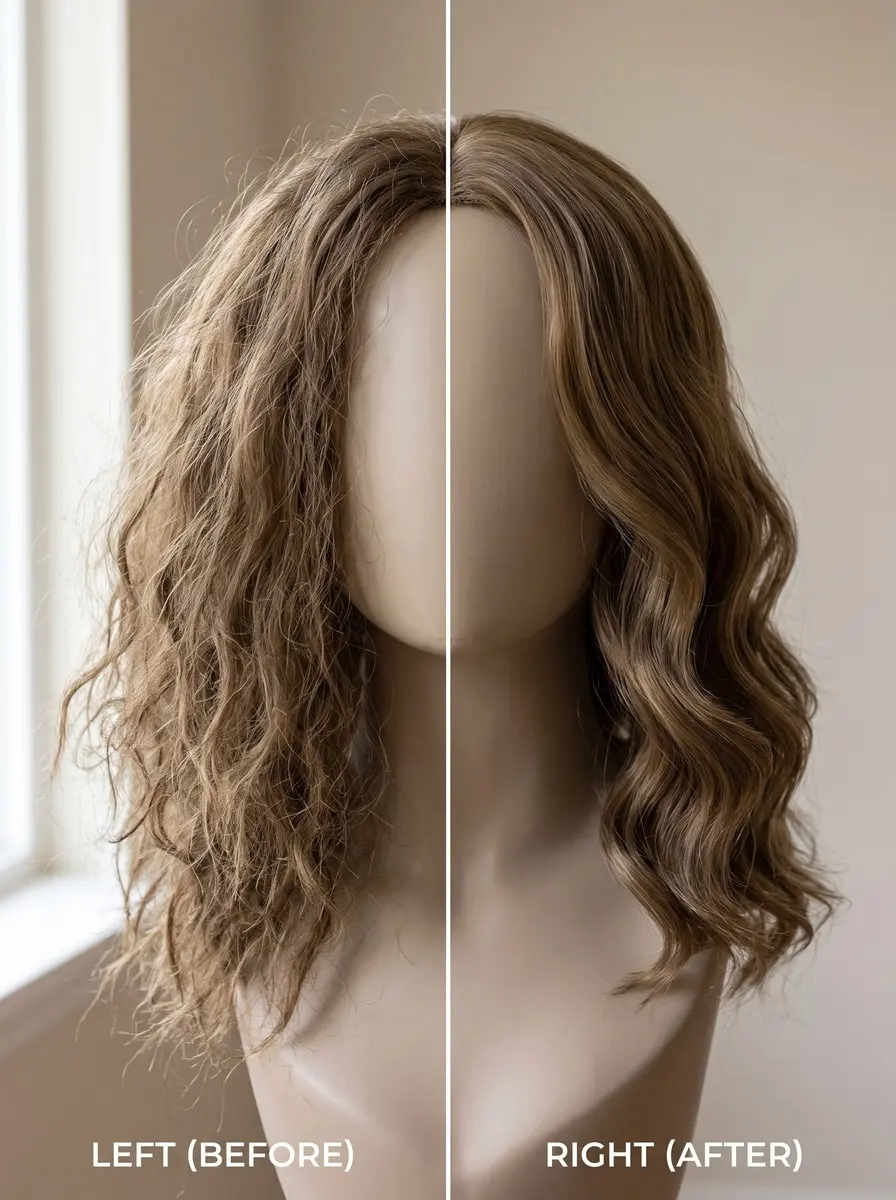
A synthetic wig that started out swingy and smooth can turn dull, stiff and tangled after a few weeks of wear, and the wrong wash makes it worse fast.
It’s tempting to wash a synthetic wig the way you wash your own hair, with hot water, a vigorous lather and a quick blast from the hair dryer. On synthetic fiber those habits can cause frizz that won’t come out, or loosen the style the wig was set in at the factory.
The fix is gentler than you’d expect. A synthetic wig needs a dry detangle, a short soak in cool water with diluted wig shampoo, a thorough rinse of the cap and a slow air dry on a stand. There’s no scrubbing, wringing or wet brushing. It takes about half an hour of hands-on time plus overnight drying. The same method works for standard and heat-friendly fiber, with or without a lace front.
Time 20-30 minutes hands-on, plus overnight air dryingDifficulty BeginnerSteps 8
How Often to Wash a Synthetic Wig
| Situation | When to wash |
|---|---|
| Worn daily | About once a week |
| Worn a few days a week | Every 7-10 wears |
| Heat, humidity or workouts | Sooner, once the cap smells or feels grimy |
| Stiff with product or smoke | Sooner, whatever the count |
| Storing it for a while | Wash first so it goes away clean |
What You’ll Need
As an Amazon Associate, HairAide earns from qualifying purchases. Product links in this guide are affiliate links: they cost you nothing extra and help keep these tutorials free.
- Wig shampoo for synthetic fiber Made to clean synthetic fiber and the cap without leaving the residue that makes fiber stiff.
- Synthetic wig conditioner or detangling spray Softens the ends that rub against collars and shoulders without coating the cap.
- Wide-tooth comb or wig brush Separates the fiber in small sections from the ends up without pulling strands out of the cap.
- Collapsible wig stand Holds the wig’s shape while letting air through the cap so it dries evenly overnight.
- Lace adhesive remover Dissolves tape or glue residue on the lace before the soak, so you never have to scrub it.
Step-by-Step
Step 1 Check the label for fiber type
Before the wig gets wet, find the tag inside the cap or on the original box and check whether the fiber is standard synthetic or heat-friendly (sometimes sold as heat-resistant).
Both are washed the same cool-water way, but they handle heat very differently: standard fiber takes no heat at all, while heat-friendly fiber can take low heat once it’s dry, within the limit printed on the label.
Check how the cap is built too, because a lace front or monofilament top needs gentler handling than a basic wefted cap. If the tag is gone and you can’t confirm the fiber, treat it as standard. Once you know what you’re washing, you’re ready to start.
Step 2 Detangle dry from the ends up
Set the wig on a stand or hold it firmly at the nape. Work a wide-tooth comb or wig brush through small sections, starting two or three inches from the ends, and move higher only once each section glides.
Starting at the ends stops you from dragging small knots down into bigger ones, and holding the base keeps the pull off the cap, where tugging loosens fibers. Do this while the fiber is dry: tangles tighten in the water, and wet synthetic fiber shouldn’t be brushed at all.
On curly or textured wigs, separate the curls with your fingers instead of a comb so the curl pattern stays intact. You’re done when the comb passes from root to tip without catching.
Step 3 Clean adhesive off the lace first
If you wear the wig with tape or glue, dissolve any residue on the lace or cap edges with a remover made for that adhesive before the wig goes in the water. Wig shampoo isn’t designed to break down adhesive.
If you leave the residue on, the soak just smears it around, and scrubbing at it in the basin is how fine lace tears. Apply the remover, leave it for the time on the label, then lift the softened residue off by pressing with a soft cloth or cotton pad instead of rubbing.
Skip this step if your wig has no lace or you never use adhesive. You’re done when the lace feels soft and smooth with no tacky patches.
Step 4 Mix a cool, diluted shampoo bath
Fill a basin or clean sink with enough cool water to cover the whole wig. Stir in wig shampoo that you’ve already mixed with water at about 1 part shampoo to 4-5 parts water.
Cool water matters because synthetic fiber is shaped with heat at the factory, and hot water can damage the fiber and loosen that set style, leaving frizz or limp curls.
Mixing the shampoo with water first means no undiluted shampoo lands on one spot of the fiber or cap, where it’s hard to rinse out and leaves the wig stiff. Swirl the water with your hand until it looks evenly cloudy and lightly sudsy, then it’s ready.
Step 5 Soak and swish for five minutes
Lower the wig into the bath and press it gently under until the cap and all the fiber are wet, then leave it to soak for about five minutes. Every so often, swish it slowly back and forth or dip it up and down.
Press the soapy water into the inside of the cap with your fingertips, focusing on the hairline, nape and ear tabs, where sweat and skin oil collect. Don’t rub, scrub or knead the fiber: friction is what tangles synthetic fiber, and the soak cleans it without any. Move on when the cap feels clean, not slick, when you press it.
Step 6 Rinse cool until the water runs clear
Drain the basin, then rinse the wig under a gentle stream of cool water running from the cap toward the ends, or dunk it in fresh basins of cool water, until no suds or cloudiness come out. Spend extra time on the cap.
Turn it inside out under the water and press the lining with your fingertips, because shampoo left in the cap sits against your scalp and makes the hairline look dull and stiff. Keep the water moving in one direction, from root to tip, so the fibers stay lined up instead of tangling. You’re finished when the rinse water runs clear and the cap no longer feels slippery.
Step 7 Condition the mid-lengths and ends only
Mix a small amount of wig conditioner with cool water, or use a spray-in conditioner made for synthetic fiber. Smooth it over the mid-lengths and ends only, keeping it off the cap and lace. The ends rub against collars and shoulders the most, so that’s where conditioner helps, while on the cap or roots it builds up and leaves the wig greasy and flat.
Leave a rinse-out conditioner on for the time on the bottle and rinse it out with cool water, but leave a spray-in conditioner in. Either way, you’re done when the ends slide between your fingers soft and smooth, without a slick feel.
Step 8 Blot, air dry, then comb and store
Lay the wig on a clean towel, roll the towel up around it and press firmly to soak up the water, without wringing, twisting or squeezing it in your fist, which stretches the cap and kinks the fiber.
Shake it out gently, set it on an open or collapsible wig stand that lets air move through the cap, and leave it to air dry, usually overnight, away from hair dryers, radiators and direct sun. Don’t comb or brush it while it’s damp, though you can shape curls or waves with your fingers now so they dry in place.
Once the cap seams and the thickest sections near the crown feel completely dry, comb it gently from the ends up with a wide-tooth comb or wig brush, using your fingers for curls, until the comb glides through without catching.
Store it on the stand or loosely in its hairnet and box so it holds its shape, away from sun and heat, and if it won’t be worn for a while, put it away clean so sweat and oil don’t sit in the cap.
Common Mistakes to Avoid
- Washing in hot water, which can damage synthetic fiber and loosen its factory-set curl or wave.
- Rubbing, scrubbing or kneading the wig in the basin instead of soaking and swishing it. Friction is what tangles the fiber.
- Wringing or twisting the wig to dry it faster, which stretches the cap and kinks the fiber.
- Brushing or combing the fiber while it’s still wet instead of waiting until it’s completely dry.
- Drying it faster with a hair dryer or on a radiator instead of letting it air dry overnight on a stand.
- Working conditioner or heavy styling product into the cap, which leaves the roots greasy and flat.
Pro tip Wash the wig the evening before you plan to wear it, never the morning of. Synthetic fiber can feel dry on the surface while the cap seams are still damp, and combing or wearing it then stretches both the fiber and the cap.
The Bottom Line
Done this way, a synthetic wig comes out of the wash with a clean cap, soft ends and the same shape it had when you bought it. Repeat every 7-10 wears, about weekly if you wear it daily, and sooner in heat or humidity or after a sweaty day. Comb it only once it’s completely dry.
Washing can’t fix everything. Ends that are frizzed or fused from heat, a stretched cap or torn lace won’t recover in the basin. Take the wig to a wig specialist or a stylist who services wigs, who can trim frizzed ends or repair the cap. If it can’t be repaired, it’s time for a new wig.
Frequently Asked Questions
How often should you wash a synthetic wig?
Wash a synthetic wig roughly every 7-10 wears, which works out to about once a week if you wear it daily. Wash it sooner in hot, humid weather, after workouts, or whenever the cap smells or feels grimy or the fiber is stiff with product. Washing after every wear means extra handling, which wears the fiber out faster.
Can I use regular shampoo on a synthetic wig?
A wig shampoo made for synthetic fiber is the safest choice because it rinses out cleanly. In a pinch, a small amount of gentle, sulfate-free shampoo mixed with water the same way will work. Skip 2-in-1 and heavy moisturizing formulas, whose conditioning ingredients can build up on synthetic fiber and leave it dull or sticky.
Can I use a hair dryer or hot tools on a synthetic wig?
Not on standard synthetic fiber: hot water and hair dryers can frizz it or loosen its style, and hot tools can melt it. Heat-friendly fiber can take a flat iron or curling iron, but only on completely dry fiber, after a heat protectant safe for synthetics, at or below 300°F (150°C) or the label's maximum, whichever is lower.
How long does a synthetic wig take to dry?
Most synthetic wigs air dry overnight on a stand. Long, dense or curly wigs and humid rooms can take longer. The fiber usually dries before the cap does, so press the seams and the thickest sections near the crown, and wait until they feel completely dry before combing or wearing it. An open, collapsible stand lets air reach the inside of the cap.
Why does my synthetic wig feel stiff or sticky after washing?
Stiff or sticky fiber after a wash usually means product was left behind: shampoo that wasn't fully rinsed out, too much conditioner, or conditioner worked into the cap. Rewash it in cool water with a little diluted wig shampoo and rinse until the water runs completely clear. Next time, use less conditioner and put it on the mid-lengths and ends only.
Keep Reading
Sources
- How to wash fibre wig 5 easy steps simplywigs.co.uk
- Step by step how to wash a wig wigstudio1.com
- 311 2022 Synthetic Wig Care and Resources.pdf media.cancercare.org