Quick answer To make hair shiny, first remove what is dulling it: use a clarifying shampoo about every two weeks to lift buildup and hard-water film, mask weekly, handle wet hair gently, blow-dry with the airflow aimed down the strand and trim split ends. Serums and glosses add surface shine.
If you want to make hair shiny, the fix starts with the surface, not another product. Shine is simply light bouncing off the hair: when the outer cuticle layer lies smooth and flat, it reflects light in one bright band, and when it is rough, lifted or coated in residue, it scatters that light and the whole head reads as flat.
That is why yet another shine spray so often disappoints. It treats the symptom, not the cause.
This guide starts with diagnosis instead of a shopping list. You will match what you see in the mirror to its likely cause, whether that is product buildup, hard-water film, dryness, heat or split ends, then use the fix that suits it. Done in order, the steps double as a two-week reset you can repeat whenever your shine fades, and every one of them works at home.
Time 45-60 minutes per wash dayDifficulty BeginnerSteps 8
What’s Dulling Your Hair, and the Fix
| What you notice | Likely cause | Fix |
|---|---|---|
| Waxy, heavy, products stop working | Product buildup | Clarifying shampoo |
| Flat and rough in a hard-water area | Mineral film | Chelating shampoo |
| Dry, straw-like, tangles easily | Rough, dry cuticle | Weekly mask, gentle handling |
| Matte and frizzy after drying | Drying technique | Downward blow-dry |
| Rough after frequent hot tools | Heat damage | Lower heat, then trims |
| Shiny on top, dull at the ends | Split ends | Dust or trim |
| Faded color or yellowed gray | Porous, faded surface | Gloss |
What You’ll Need
As an Amazon Associate, HairAide earns from qualifying purchases. Product links in this guide are affiliate links: they cost you nothing extra and help keep these tutorials free.
- Clarifying shampoo Strips the product buildup and mineral film that block shine, so every later step works on a clean surface.
- Rinse-out conditioner and a weekly hair mask Smooths and softens the lengths after each wash, with the mask doing the heavier weekly conditioning.
- Wide-tooth comb and microfiber towel Let you detangle and dry wet, stretchy hair without roughing up the cuticle, and the comb spreads a gloss evenly.
- Heat protectant spray Cushions the strand from blow-dryer and hot-tool heat, which roughens the surface over time.
- Blow-dryer with a concentrator nozzle, plus a paddle or round brush Directs the airflow down the strand and adds tension for a smooth, light-reflecting finish.
- Shine serum or lightweight hair oil Adds a clear surface film for extra gloss once hair is dry; it coats the strand rather than repairing it.
- Hair-cutting shears Optional: for dusting split ends at home; skip them if you book a trim instead.
- At-home hair gloss Optional: adds shine and refreshes tone on color-treated or gray hair when the routine alone is not enough.
Step-by-Step
Step 1 Diagnose what is dulling your hair
Before buying anything, look at your hair in daylight and notice where the dullness sits and how it feels. Waxy, heavy lengths that no longer respond to products point to buildup; flat, rough hair that tangles easily in a hard-water area points to mineral film; straw-like, frizzy lengths point to dryness or heat damage; and fuzzy, see-through ends point to splits.
Matching the cause first matters because each fix only works on its own problem, and the table above shows which step to prioritize. Most dull hair has two or three causes at once, so expect to use several of the steps that follow.
Step 2 Clarify buildup and hard-water film
Start the reset with a clarifying shampoo, lathering twice at the scalp and letting the suds run through the lengths.
Silicones, oils, dry shampoo and styling polymers pile up in layers, and L’Oréal Professionnel notes that hard-water deposits can coat the shaft and leave it looking flat, so anything you apply for shine just sits on top of that film. If your water is hard, choose a chelating formula, which binds the minerals so they rinse away.
Repeat about once every two weeks, as L’Oréal recommends, rather than at every wash, because frequent clarifying leaves hair dry; hair that feels light and lifts at the root is your cue that it worked.
Step 3 Condition every wash and mask weekly
Follow every wash with a rinse-out conditioner on the mid-lengths and ends, and once a week swap it for a hair mask or deep conditioner, which L’Oréal Professionnel also recommends for shine. Conditioning ingredients coat and smooth the cuticle, so the surface reflects light more evenly and tangles less.
Match the formula to your hair: fine hair does best with a lightweight mask kept off the roots, while thick, coarse or curly hair can take a richer one left on for the full time on the label.
If bleached hair feels mushy or overly stretchy when wet rather than dry and rough, it may need a protein mask instead of more moisture. The cue for done is hair that feels slippery and lets a comb glide through without snagging.
Step 4 Handle wet hair gently
Detangle with a wide-tooth comb in the shower while your conditioner is still in, starting at the ends and working up in small sections so you never drag a knot down the length.
Dermstore notes that a healthy strand can stretch up to 50 percent of its length when wet, so wet hair strains and roughens far more easily than dry hair and deserves the slow approach.
After rinsing, squeeze the water out with your hands, then press and blot with a microfiber towel instead of rubbing, which roughs up the cuticle you just smoothed. Hair that is tangle-free from root to tip and no longer dripping is ready to dry.
Step 5 Blow-dry with the airflow pointing down
A cold final rinse, which Dermstore’s stylist source suggests, is fine as an optional finish, but water temperature does not open or seal the cuticle, so any boost is cosmetic and gone by the next wash. The drying is what actually lays the surface smooth.
Mist a heat protectant through damp hair, rough-dry on medium heat until it is about 80 percent dry, then work in sections with a paddle or round brush, aiming the concentrator nozzle down the strand from root to ends, because the cuticle’s overlapping scales point toward the tips and air blown the same way presses them flat.
Finish each section with the cool shot so the smooth shape sets as it cools, and stop only when the roots are completely dry, since damp roots let frizz creep back in.
Step 6 Finish with a serum or light oil
Once hair is dry, warm one or two drops of a shine serum or lightweight oil between your palms and glaze it over the lengths and ends, adding more only if the hair still looks matte.
Silicone serums leave a thin, clear film that fills in roughness and reflects light, and light oils add slip and surface gloss, but neither repairs the strand underneath, and both wash out.
That makes them a finish rather than a fix, and it is also why they look greasy instead of glossy when they go on over buildup. Keep them away from the roots, where they flatten volume, and stop once the hair looks polished but not wet.
Step 7 Dust or trim away split ends
Split ends fray into several thin tips that catch and scatter light, which is why so many heads look shiny at the crown and dull at the bottom. No serum or mender can fuse a split permanently; products only hold it down until your next wash, and only cutting removes it.
Book a trim, or dust at home by twisting a small section and snipping just the frayed tips that stick out, using sharp hair-cutting shears rather than kitchen scissors, which crush the ends.
Ends that look solid and even rather than see-through when you hold them up to the light are done, and most people need a dusting every 8 to 12 weeks as the ends wear and the shape softens.
Step 8 Gloss color-treated or gray hair
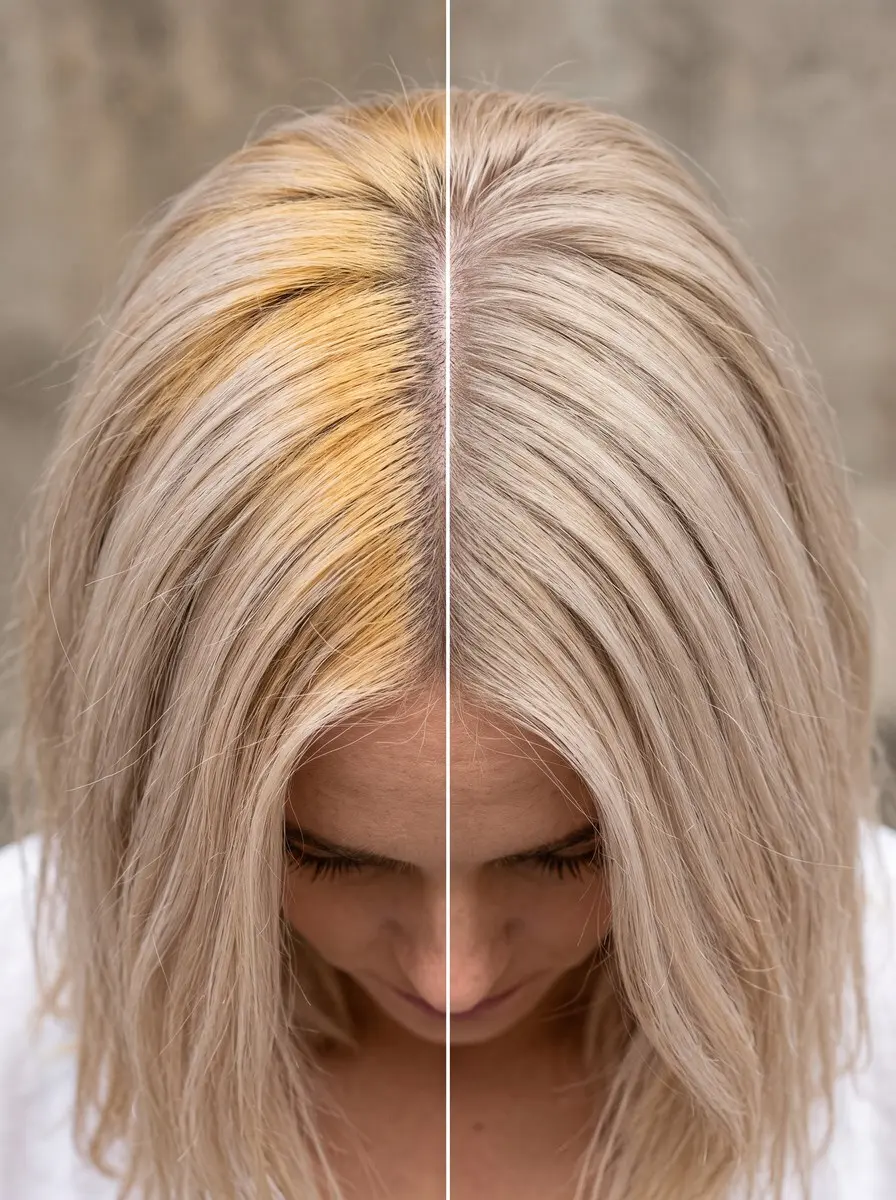
Shine is hardest to hold on color-treated and gray hair: permanent color and bleach lift the cuticle to work, which leaves the surface porous and rough, fading color reads as flat, and gray hair is often coarser and drier and can pick up a dull yellow cast.
When clarifying, masking and careful drying still leave it matte, an at-home gloss is the right fix, because it deposits sheer color or clear shine that smooths the surface. Pick a clear gloss if you only want more shine without changing the color, or a violet-toned one if gray or blonde hair has turned yellow, since violet cancels yellow.
Most glosses go on freshly washed, towel-blotted damp hair (check your label, as a few are applied to dry hair), so work it from roots to ends and comb it through with your wide-tooth comb for even coverage.
Leave it on for the label’s time, typically 10 to 20 minutes, then rinse with cool water until it runs clear. It is done when hair feels slick and looks even-toned from root to tip; repeat about every four to six weeks as it fades with shampooing, and use the HairAide hair gloss guide linked below for the full walkthrough.
Common Mistakes to Avoid
- Piling shine serum or oil on top of buildup, which adds another film and makes hair look greasy instead of glossy. Clarify first.
- Clarifying at every wash: about every two weeks is enough, and more often leaves hair dry and rough.
- Rubbing wet hair with a towel or forcing a brush through knots while the strand is stretched and fragile.
- Blow-drying with the nozzle pointed up or across the hair, which ruffles the surface you are trying to smooth.
- Expecting a cold rinse or a split-end serum to fix damage that only gentler habits and a trim can deal with.
Pro tip Shine lives on the top layer of your hair, the part the light actually hits, so give the crown and top sections the most brush tension and the strictest downward airflow when you blow-dry. You can rough-dry the underneath and no one will see the difference.
The Bottom Line
Shiny hair comes from a clean, smooth surface, so the order matters: clarify, condition, handle wet hair gently, dry it down the strand and only then add a serum.
As a two-week reset, clarify and mask on day one, condition and blow-dry with care at every wash, mask again around day seven and clarify again on day fourteen. After that, keep the rhythm going and dust your ends every couple of months.
If a full reset still leaves hair dull, rough or snapping, especially after bleach or a chemical service, book a stylist, who can judge whether a professional gloss, a proper trim or a treatment is the next step. Sudden dullness that comes with shedding or scalp changes is worth a dermatologist’s look.
Frequently Asked Questions
Why is my hair dull even though I condition it?
Conditioner can't shine through a layer of residue. Product buildup and hard-water minerals coat the strand and leave it flat, and conditioning on top just adds to the film. Wash with a clarifying shampoo, or a chelating one if your water is hard, then condition; L'Oréal Professionnel suggests clarifying about once every two weeks.
Which shine fixes are temporary and which actually change your hair?
Serums, oils, a cold rinse and glosses all work on the surface and fade with washing, so they need repeating. Clarifying, weekly masks, gentle wet handling and lower heat improve the condition of your hair going forward, and trimming is the only thing that removes split ends. Nothing reverses existing damage on the lengths; you protect them and cut it off over time.
Does heat styling make hair dull?
Repeated high heat roughens the cuticle, and that damage stays until it is cut off. Use a heat protectant every time and keep the blow-dryer on medium heat on damp hair. Irons go on completely dry hair only, since wet hair under an iron is genuinely damaging, at about 150°C/300°F for fine or bleached hair and no more than 180-200°C/355-390°F for coarse hair.
How often should I gloss color-treated or gray hair?
An at-home gloss usually lasts several weeks and fades a little with every shampoo, so most people repeat it roughly every four to six weeks, or when the shine and tone start to slip. Washing less often helps it last. See a colorist if you want a big change in tone or your hair is heavily bleached and breaking.
How long does it take to get shiny hair?
You will usually see a difference on the first wash day, once buildup is gone and hair is dried smoothly. Lasting shine takes longer: typically a few weeks of the clarify-and-mask rhythm plus a trim to remove frayed ends. If hair is still dull and also breaking or shedding after that, see a stylist or a dermatologist.
Keep Reading
Sources
- Hair mag how to get shiny hair lorealprofessionnel.in
- How to get shiny hair dermstore.com