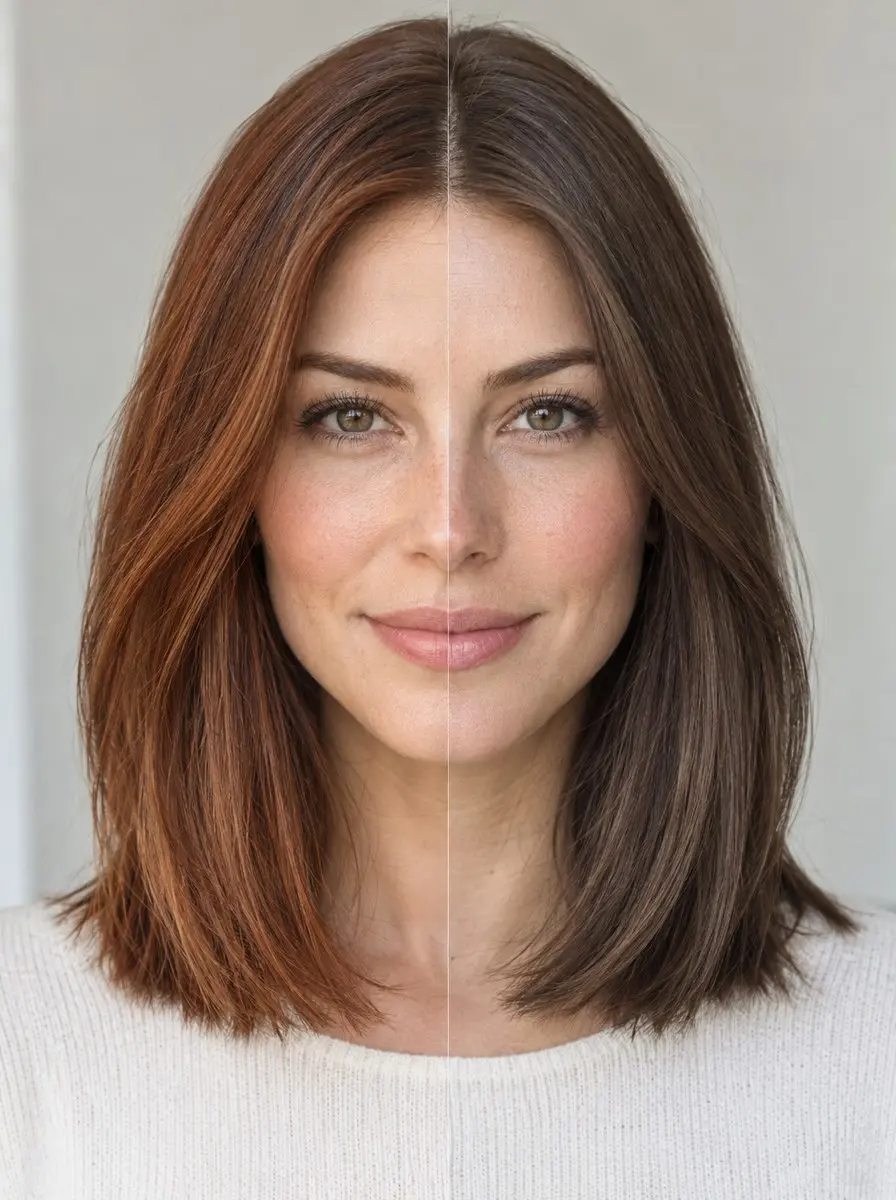
Quick answer To get red tones out of brown hair, first work out whether the red comes from fading dye, natural warmth or a shade that was too warm. Then neutralize it with a green or blue-green toning conditioner or an ash gloss, or re-dye one level darker in an ash shade.
You dyed your hair a cool, neutral brown, and a few weeks later it shines auburn in every bathroom mirror. Red creeping into brown hair is one of the most common at-home color complaints, and it rarely means you did anything wrong. Brown hair has red and orange pigment underneath, and many brown dyes carry warm tones of their own. When the cooler tones that balanced them fade, the warmth is what’s left.
You can remove red tones at home once you know where they’re coming from. This guide starts with a quick diagnosis. It then explains the color theory that makes green and blue-green the right tools and purple the wrong one.
After that come three fixes, from gentlest to strongest, and the routine that stops the red coming back. Every option starts with a patch test and a strand test, so you see the result on a few hairs before you commit your whole head.
Time 20 minutes to 2 hours per treatment, plus a 48-hour patch testDifficulty IntermediateSteps 8
Which Fix for Which Red
| What you see | Likely cause | First fix |
|---|---|---|
| Red creeping in, worst on ends | Dye fading | Green or blue-green toning conditioner |
| Red-orange at roots right after dyeing | Natural warmth exposed by lightening | Ash gloss, or re-dye one level darker |
| Red all over from day one | Shade too warm | Re-dye in an ash or neutral shade |
| Coppery red-orange, not true red | Orange-leaning warmth | Blue-green or blue toner |
| Red survives two rounds of toning | Built-up warm dye | Color remover, then re-dye cooler |
What You’ll Need
As an Amazon Associate, HairAide earns from qualifying purchases. Product links in this guide are affiliate links: they cost you nothing extra and help keep these tutorials free.
- Green or blue-green color-depositing conditioner for brunettes Adds the opposite tone to cancel mild red between bigger fixes: green for true red, blue-green or blue for coppery red-orange.
- Sectioning clips Keep the strand-test section separate and divide hair into four even sections for a gloss or dye.
- Sulfate-free, color-safe shampoo Cleans before toning and slows fading afterwards, so the cool tones that hide the red last longer.
- Hair color gloves, tint brush and non-metal mixing bowl Protect your hands and let you mix and place toner, gloss or dye precisely on the reddest areas.
- Ash or green-based demi-permanent gloss kit Cancels stubborn red for several weeks without lightening your hair and exposing more natural warmth.
- Ash or neutral permanent brown hair color Replaces a too-warm shade; at the same level or one level darker it covers red without uncovering more warmth.
- Sulfur-based hair color remover Removes built-up warm dye when toning keeps failing, so you can re-dye in a cooler shade.
Step-by-Step
Step 1 Work out where the red comes from
Look at your hair in daylight by a window and compare the roots, mid-lengths and ends. If the color looked right for the first few weeks and the red crept in afterwards, worst on the ends, the dye is fading: the cooler tones that balanced the warmth have washed out.
If red-orange showed up right after dyeing, mostly at the roots, the dye lightened your natural color and exposed its warm underlying pigment. If your hair was red all over from day one, the shade itself was too warm. The cause matters because each one needs a different fix, and the wrong fix wastes product and time.
Step 2 Pick green or blue-green, not purple
Toning works by adding the shade opposite the unwanted one on the color wheel. Green cancels red, blue cancels orange, and blue-green cancels the red-orange that most brown hair shows. Look closely at your warmth: true red or auburn needs a green-based product, while coppery red-orange needs blue-green or blue.
Purple shampoo is the wrong tool. Violet sits opposite yellow, so it is made for brassy blonde, and because violet already contains red it can make red-orange brown look warmer rather than cooler. Green-based products are designed for dark or brown hair, and on lighter pieces they can leave a visible tint.
Step 3 Patch test and strand test first
Before any dye, gloss or remover, do the skin allergy test exactly as the box describes. Most permanent and demi-permanent kits ask you to wait 48 hours before every use, even with a brand you’ve used before, because a dye allergy can develop over time.
Then do a strand test. Clip the rest of your hair away from a hidden section underneath, apply a little product, time it on your phone, then rinse and dry it.
The strand shows whether the red actually cancels, whether the result turns greenish or too dark, and the shortest time that works. Never go past the box’s maximum time: overprocessing can leave hair muddy, darker or greenish, and it raises the risk of irritation.
Step 4 Mute mild red with a toning conditioner
If the red crept in as the dye faded, start with the gentlest fix: a green or blue-green color-depositing conditioner made for brunettes. Wash with a sulfate-free shampoo and squeeze out the excess water. Then put on gloves and work the conditioner evenly through the reddest areas.
Leave it on for the shortest time on the label, or the time your strand test showed, then rinse. It leaves a small amount of opposite-tone pigment on the hair, which knocks back the red without lightening or changing your base color.
This is a stopgap that fades within a few washes, so use it weekly in place of your usual conditioner. If you see a greenish cast, especially on lighter or porous ends, skip it for a wash or two.
Step 5 Cancel stubborn red with an ash gloss
If a toning conditioner only dulls the red for a day or two, move up to an ash or green-based demi-permanent gloss. Salon colorists use the same approach to cancel warmth in brown hair.
Pick a shade at your current level and prep your hair as the kit says (most glosses go on clean, towel-dried hair). Mix the gloss with the kit’s developer in a non-metal bowl and divide your hair into four sections with clips.
Apply with a tint brush, starting where the red is strongest and finishing on porous ends, which take color fastest. Demi-permanent color adds tone without meaningfully lightening, so it cools the red without exposing more natural warmth. Rinse at the time your strand test showed, and never go past the box maximum.
Step 6 Re-dye in a cooler, darker shade
If the red has been there since day one, either because the shade was too warm or because the dye lightened your hair into its natural warmth, toning will keep losing the fight. Re-dye with a permanent shade labeled ash or neutral (many brands mark ash with .1 after the level number, but check the chart on the box).
Avoid shades named auburn, mahogany, copper, golden or warm. Choose the same level as your current hair or one level darker. A darker shade needs little or no lightening, so less of your natural red-orange pigment is exposed, and its extra pigment covers what remains.
Apply with gloves, clips and a tint brush exactly as the box directs. Going lighter and cooler at the same time is the hardest move at home, because any lightening uncovers more warmth, so leave that to a colorist.
Step 7 Use a color remover if toning fails
If the red survives two rounds of toning, or you’ve built up layers of warm dye, a sulfur-based color remover is the fallback. It shrinks artificial dye molecules so they can be rinsed out, but it does not lighten your natural pigment.
Expect to land on the warm, often red-orange base the dye lightened you to, not your original natural color, and expect a strong sulfur smell. Rinse for exactly as long as the instructions say, because dye that isn’t fully rinsed out can oxidize again and darken.
Your hair is more porous afterwards and takes color darker, so wait as long as the remover advises. Many brands suggest re-dyeing with an ash shade one level lighter than the color you want, after a fresh strand test. Removers don’t work on henna, so if you’ve used henna, see a colorist.
Step 8 Keep the red from coming back
Red comes back as the cool tones fade, so slow the fading down. Wash two or three times a week or less with a sulfate-free, color-safe shampoo, and use your toning conditioner once a week.
Refresh with an ash gloss whenever the red creeps back, often every four to six weeks. Cut down on long stretches in strong midday sun where you can, since UV fades color, and rinse your hair with clean water before and after swimming so it absorbs less chlorine.
Hair grows about half an inch a month, so plan root touch-ups with the same cool shade every four to eight weeks. One myth to skip: a cold final rinse does not seal in color. Fewer, gentler washes do far more.
Common Mistakes to Avoid
- Reaching for purple shampoo: violet cancels yellow, not red, and on red-orange brown hair it can make the color look warmer.
- Leaving a green toner on longer than the label says or using it every wash, which builds a greenish, khaki cast on lighter or porous ends.
- Choosing a lighter shade to brighten the red away, when the extra lightening uncovers even more natural red-orange pigment.
- Skipping the 48-hour patch test because you’ve used the brand before, or leaving dye on past the box’s maximum time.
- Pulling permanent color through your lengths at every touch-up, which stacks pigment into dark, uneven ends.
Pro tip When you re-dye, put the permanent ash shade on your regrowth only and refresh the faded lengths with an ash demi-permanent gloss. Pulling permanent color through hair that’s already dyed at every touch-up stacks pigment into dark, uneven ends, while a gloss cools them without the buildup.
The Bottom Line
Matching the fix to the cause is what gets red out of brown hair: a green or blue-green toner for fading color, a darker ash shade when the base is too warm, and a remover only when toning keeps failing.
Keep the result with a weekly toning conditioner, an ash gloss every four to six weeks and fewer, gentler washes. Strand test each new product first, even one you’ve used before, because porous ends can grab tone faster than the rest of your hair.
See a colorist instead if the red is back within days of every fix, if you want to go lighter and cooler at once, or if your hair is snapping. A colorist can lighten and tone in controlled stages.
Frequently Asked Questions
Why does my brown hair turn red when the dye fades?
Brown hair has red and orange pigment underneath, and permanent dye exposes some of it when it lightens your natural color. Colorists explain that the cool tones in a brown dye tend to fade first, so as you wash, the warmth they were balancing shows through. Sun, chlorine and frequent washing all speed up the fade.
Can I use purple shampoo to get red out of brown hair?
No. Violet sits opposite yellow on the color wheel, so purple shampoo neutralizes yellow brass in blonde hair. Red sits opposite green, and blue-green cancels the red-orange in most brown hair. Because violet already contains red, it can make red-orange brown look warmer. Use a green or blue-green toning product instead, or a blue one for coppery orange.
How long does a green or ash toner last on brown hair?
A green or blue-green toning conditioner is a stopgap that fades within a few washes, which is why most people use it once a week. An ash demi-permanent gloss lasts longer, usually several weeks depending on how often you wash. If the red returns sooner, wash less often with a sulfate-free shampoo and spend less time in strong midday sun.
Will a color remover take my hair back to my natural color?
Not exactly. A color remover shrinks artificial dye so it rinses out, but it can't restore natural pigment the dye has already lightened, so most people land on a warmer, often red-orange version of their base. Hair is also more porous afterwards, so wait as long as the instructions advise and strand test before re-dyeing in a cooler shade.
When should I see a colorist instead of fixing red at home?
Book a colorist if the red survives a color remover, if you want to go lighter and cooler at the same time, if you have henna in your hair, or if your hair feels gummy or snaps when wet. These situations need careful lightening and toning in stages, which is hard to judge at home.
Keep Reading
Sources
- How to remove red tones from brown hair wella.com
- How to remove red and orange tones from brassy brown hair redken.com
- Hair color common problems madison-reed.com