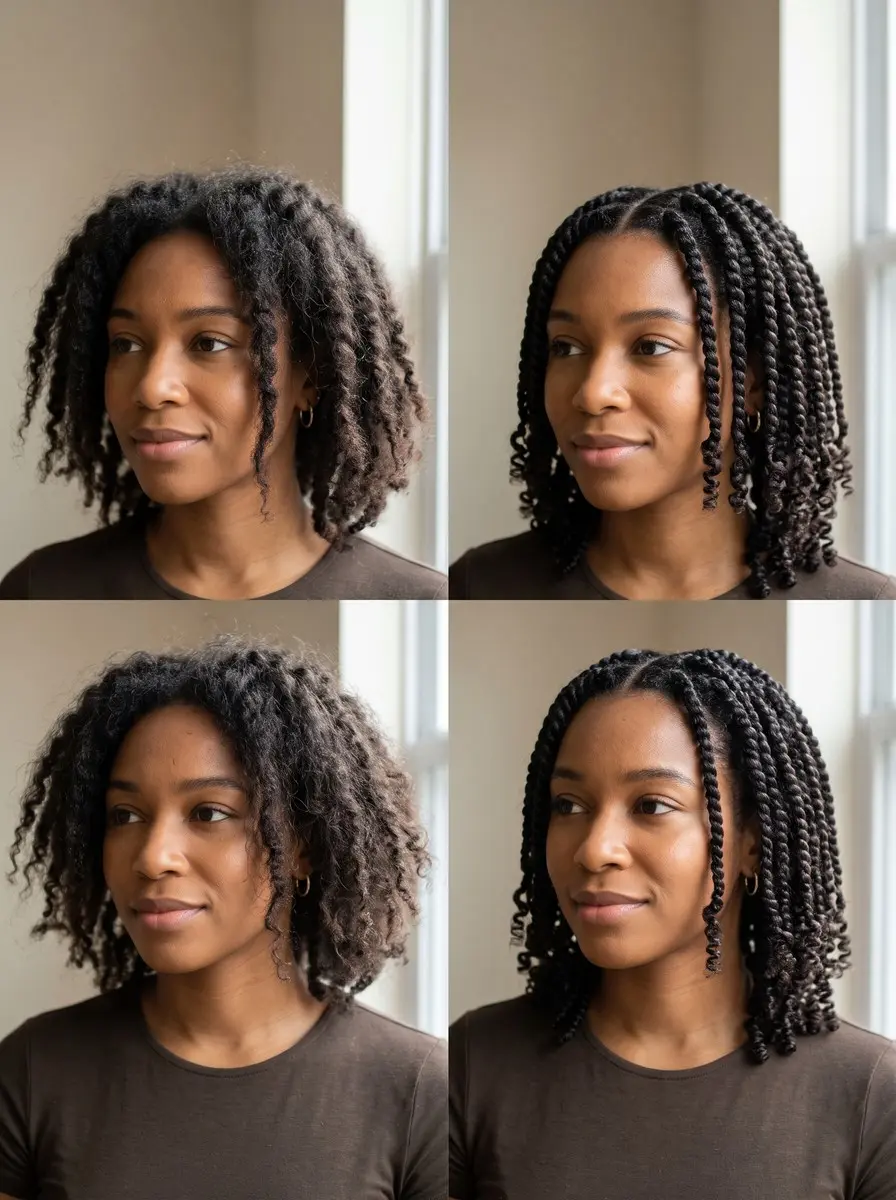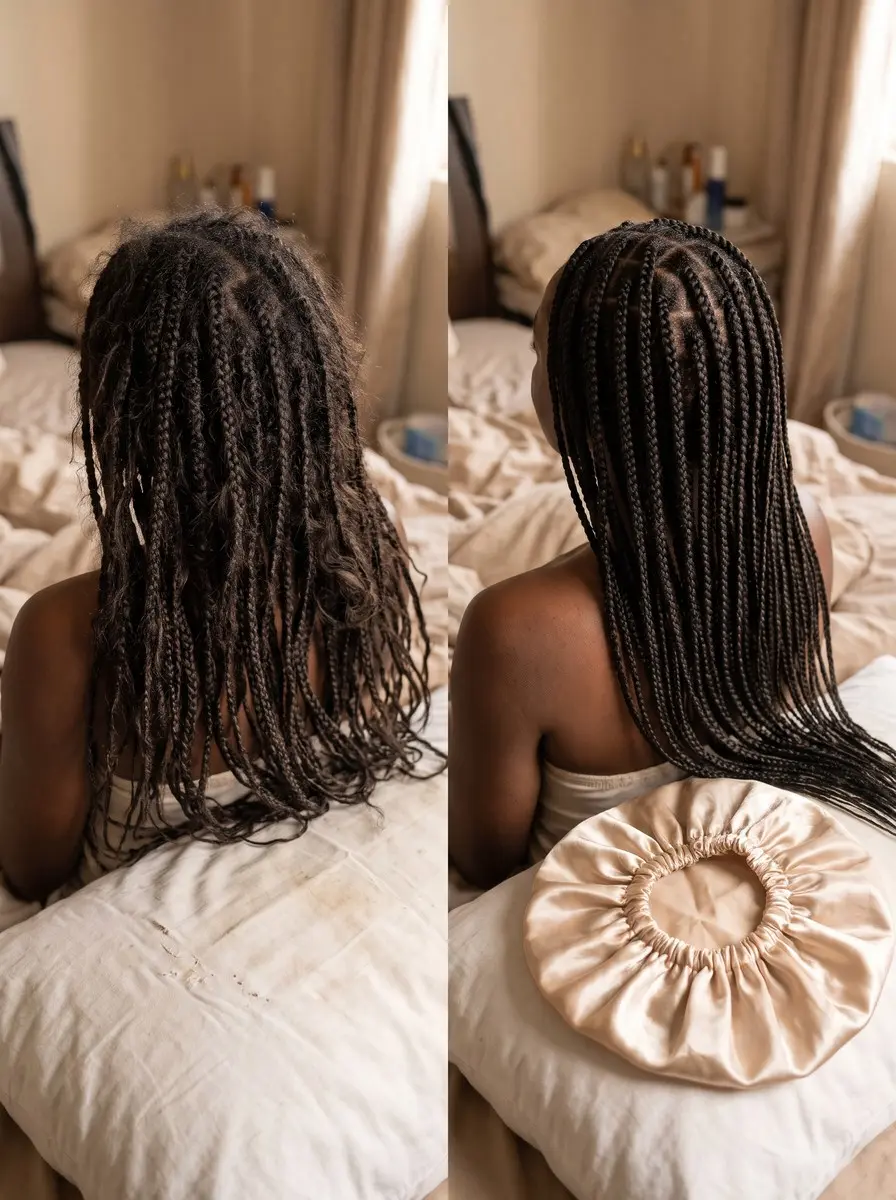
Quick answer To sleep with braids, make sure they're completely dry, loosen any tight ponytail, oil only your scalp and hairline, then cross short braids over or pile long ones into a loose top bun. Cover them with a satin bonnet or scarf and sleep on a satin pillowcase.
Braids are supposed to save you time, but a few rough nights can make a fresh install look weeks old. Sleep on cotton with nothing on your head and you’ll usually wake up to fuzzy roots, frayed ends, braids flattened on one side and a sore spot where a ponytail pulled all night.
Box braids, knotless braids and cornrows need a different night routine from loose hair, because the weight of the braids, the tension at the root and the extension hair all change what works.
The good news is that the routine takes five to ten minutes and needs little more than a satin bonnet or scarf, a satin pillowcase and a light oil. The steps below run in order: drying, a quick scalp-tension check, the right wrap for your braid length, bonnet versus scarf, sleep position and a morning refresh.
Time 5-10 minutesDifficulty BeginnerSteps 7
Night Method by Braid Style
| Braid style | How to set them | Cover |
|---|---|---|
| Short to medium box braids | Cross-over method | Bonnet or scarf |
| Medium to long box or knotless | Loose top bun, satin scrunchie | Extra-large bonnet |
| Cornrows with long lengths | Silk durag first | Scarf over the durag |
| Braided updo | Keep shape, remove tight pins | Scarf |
What You’ll Need
As an Amazon Associate, HairAide earns from qualifying purchases. Product links in this guide are affiliate links: they cost you nothing extra and help keep these tutorials free.
- Extra-large satin-lined bonnet Covers a full top bun of long braids without squashing it or leaving ends exposed to the pillow.
- Large square silk or satin scarf Needed for the triangle method, which presses braids flatter and cuts frizz at the roots and edges.
- Satin or silk pillowcase Lets braids glide instead of catching like cotton, and protects them if the bonnet slips off overnight.
- Jojoba oil A few drops along the parts and hairline soften a dry, itchy scalp without weighing down the braids.
- Light leave-in conditioner spray A light morning mist smooths flyaways and frizz along the parts without soaking the braids.
Step-by-Step
Step 1 Go to bed with fully dry braids
Never wrap or sleep on braids that are still damp from wash day or a heavy mist. Thick braids, especially ones with added extension hair, hold water at the center long after the surface feels dry, and a bonnet traps that moisture against your scalp overnight, which is how mildew and a musty odor start.
Wash in the morning or early afternoon so the braids have hours to air-dry, and squeeze them section by section in a microfiber towel first to pull out excess water. They are ready for bed when you squeeze the thickest braid near the root and it feels dry and room-temperature rather than cool.
Step 2 Release tight styles and check your scalp
Before you wrap for the night, take down any high ponytail or tight updo and remove the day’s clips, pins and elastics. Braiding already keeps steady tension on every root, and a ponytail adds more pull for another seven or eight hours, which is how soreness and breakage at the edges build up.
Run your fingertips over your scalp and hairline: some tenderness in the first few days after a new install is common, but pain that lasts, pain when you lie down, or small pimple-like bumps around the braids mean they are pulling too hard.
If those signs persist, take down the tightest braids or the whole style rather than sleeping through them; your scalp is ready when it feels comfortable and moves freely under your fingertips.
Step 3 Oil the scalp and edges only
On nights your scalp feels dry or tight, put a few drops of a light oil such as jojoba or grapeseed on your fingertips and press it along the parts and around the hairline, not down the length of the braids.
The scalp under a braided style is hard to reach and can turn dry and itchy, and a thin layer of oil softens it overnight with nothing to rinse out.
Oil on the braids themselves only collects lint and buildup, especially on synthetic extension hair, and it rubs off onto your bonnet and pillowcase. Stop when the parts look soft rather than shiny; if your fingertips come away greasy after touching a braid, you used too much.
Step 4 Set the braids for their length
For short to medium box braids, use the cross-over method: split the braids into two halves down the back, cross each half over to the opposite side so they lie flat around the back of your head, and let your bonnet or scarf hold them there.
For medium to long box or knotless braids, gather them at the crown and twist them into a loose top bun, high enough that you aren’t lying on it, held with a large satin scrunchie rather than a thin elastic.
For cornrows with long lengths, smooth a silk durag over the rows first and tie a scarf over it to hold the lengths; for a braided updo, keep the shape, remove any pins that dig in and hold it with a scarf.
Keeping braids compact stops them tangling and rubbing on the pillow, and keeping the bun loose keeps their weight off your edges, so you’re done when you can turn your head without feeling a tug at the nape or hairline.
Step 5 Choose a bonnet or a scarf
A satin-lined bonnet is the fastest option and the easiest fit over a top bun; for long braids, choose an extra-large or braid-length size so it covers every end without crushing the bun. A scarf takes a minute longer but presses the braids flatter, so it cuts frizz at the roots and edges more than a bonnet does.
For the triangle method, secure the braids in a loose ponytail or bun first, fold a large square scarf into a triangle, lay the folded edge across the back of your head, bring both corners forward and tie them, then take the ends back, tie again and tuck them in.
Many people use both, a scarf to hold the edges with a bonnet over the lengths, and either cover is on right when it stays put through a firm head shake with no braid ends poking out.
Step 6 Sleep on satin, side or back
Swap a cotton pillowcase for satin or silk: cotton grips the braids and roughs up their surface, which is where morning frizz and fuzzy roots come from, while satin lets them glide. It also works as a backup if your bonnet or scarf slips off during the night.
Sleep on your side or back where you can, since both positions keep the braids from being pinned under you and tugged at the root every time you move.
If you sleep on your stomach, sweep the braids to the back of your head or to one side before you wrap them so the cover holds them there; it worked if you wake with the braids still behind you rather than trapped under your chest or shoulder.
Step 7 Refresh and re-tuck in the morning
Take the cover off, let the braids down and shake them out gently at the roots. Mist frizzy spots and the roots lightly with water or a light leave-in spray, then smooth flyaways along the parts and edges with your palm or a soft brush; keep the mist light, because soaking the braids brings back the damp-braid problem.
Re-tuck any ends that slipped out of the bun or wrap, and twist loosened braid ends back into shape rather than pulling at them. The refresh is done when the parts look clean, the edges lie flat and the braids hang separately instead of clumping together.
Common Mistakes to Avoid
- Wrapping braids that are still damp at the center after wash day, which traps moisture overnight and leads to mildew and a musty smell.
- Sleeping in the day’s high ponytail, or securing a night bun with a thin, tight elastic, so your edges stay under pull for hours.
- Oiling the full length of the braids instead of just the scalp and hairline, which collects lint and leaves buildup on your bonnet and pillowcase.
- Using a standard-size bonnet over long braids, so it slides off overnight or crushes the bun and leaves the ends rubbing on the pillow.
- Sleeping through scalp pain or bumps that last beyond the first few days instead of taking down the braids that are too tight.
Pro tip After misting and smoothing your edges in the morning, tie the scarf back on for 10 to 15 minutes while you get dressed. The gentle, even pressure sets flyaways flat as they dry, so you need far less edge product to keep them down.
The Bottom Line
A good night routine for braids comes down to a handful of habits: dry braids, no extra tension, oil on the scalp only, a wrap that suits your length and satin on every surface your hair touches. Do it every night and the style keeps its clean parts and smooth roots noticeably longer, with fewer mornings spent fighting frizz.
Even with good sleep habits, braids loosen and fuzz at the roots as the weeks pass, and that is the point for a refresh or a takedown rather than more product. If scalp pain, bumps or thinning at your edges continue after you’ve loosened the style at night, take the braids down and see a dermatologist before you reinstall.
Frequently Asked Questions
Is it better to sleep with braids in a bonnet or a scarf?
Both protect braids; the difference is speed versus finish. A satin bonnet goes on in seconds and fits best over a top bun of long braids. A scarf tied with the triangle method presses the braids flatter, so it cuts frizz at the roots and edges more. Many people wear a scarf for the edges with a bonnet over the lengths.
Can I sleep with wet or damp braids?
No. Thick braids, especially ones with extension hair, hold water at the center long after the outside feels dry, and covering them overnight can lead to mildew and a musty odor. Wash early in the day, squeeze out water with a microfiber towel and let them air-dry for several hours. Only wrap them once the thickest braid feels dry right through.
How do I know if my braids are too tight to sleep in?
Some tenderness for the first few days after an install is common. Pain that lasts longer, pain when you lie on the braids, or small pimple-like bumps around the roots or hairline mean the braids are pulling too hard. Take down the tightest braids or the whole style, because ongoing tension can cause traction hair loss, and see a dermatologist if bumps or thinning persist.
How do you sleep on your stomach with braids?
Sweep the braids to the back of your head or to one side before you wrap them, then let a bonnet or scarf hold them in place so they can't slide under your chest. Turn your face to the side on a satin or silk pillowcase. The aim is to wake up with the braids still behind you, not pinned under you and tugging at the roots.
Do I need a satin pillowcase if I already wear a bonnet?
It's worth having both. Bonnets and scarves often slip off during the night, and when they do, a cotton pillowcase grips the braids and roughs up the surface into frizz. A satin or silk pillowcase lets braids glide, so it acts as a backup layer and also protects your edges if the cover rides up.
Keep Reading
Sources
- How to sleep on braids saatva.com
- How to sleep with braids curlcentric.com