Quick answer To stretch 4c hair without heat, wash, deep condition, detangle and moisturize, then band, twist, braid, bantu-knot or thread damp (not soaking) sections and let them dry completely, ideally overnight. Unravel gently and finger-comb; the stretch lasts about 5 to 7 days with nightly protection.
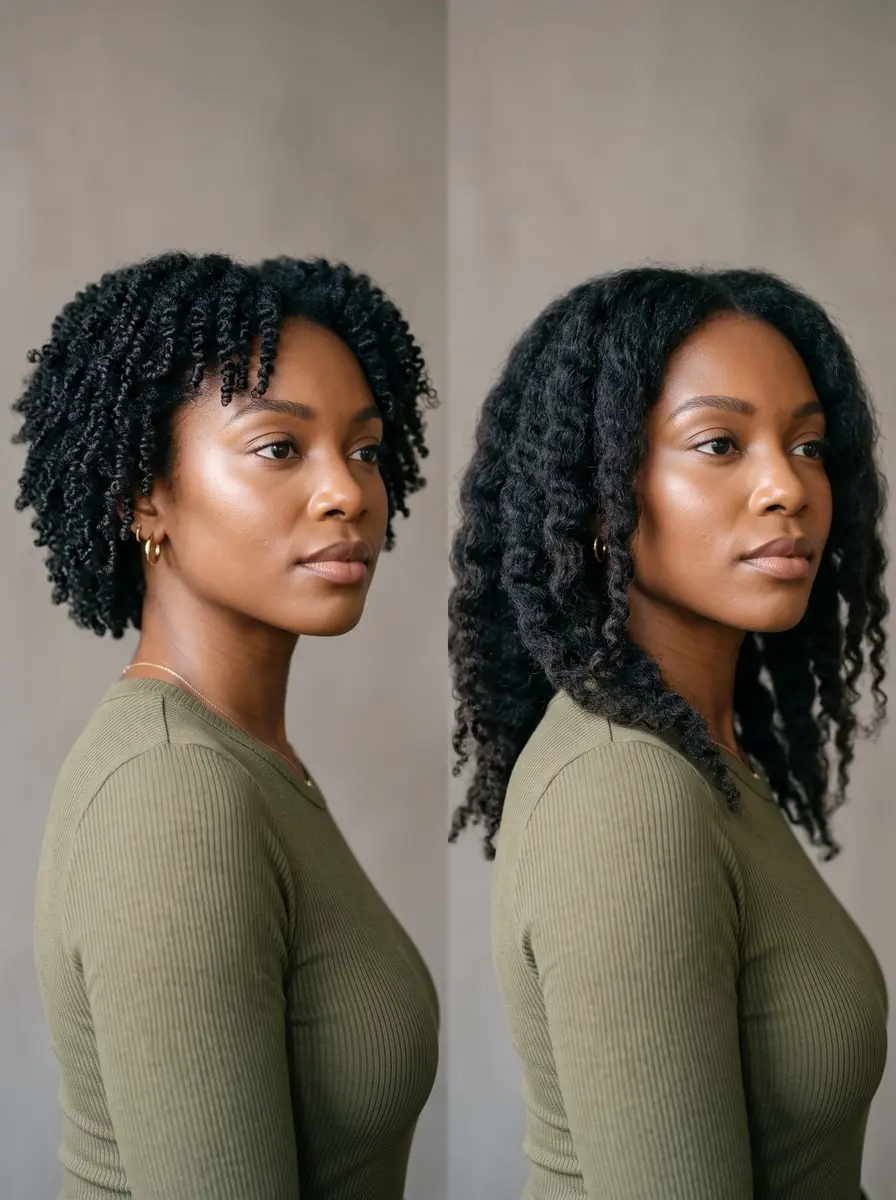
Learning to stretch 4c hair without heat starts with understanding shrinkage: tightly coiled strands can look inches shorter than they really are the moment water touches them, and that makes them harder to detangle, style and even measure.
Heat does it fast, but regular high heat is exactly what most people with fragile coils are trying to cut back on. The good news is that water, gentle tension and time can do the same job: hair held in a stretched shape while damp dries in that shape.
This guide covers the prep that makes any stretch hold, then four heatless methods (banding, twists or braids, bantu knots and African threading) and what each one gives you in length and texture. All of them work at home with ties, thread and an overnight dry. Expect elongated, softer hair rather than bone-straight hair, and a stretch that lasts most of a week.
Time 1-2 hours hands-on, plus overnight dryingDifficulty BeginnerSteps 9
Heatless Stretch Methods for 4c Hair Compared
| Method | Stretch | Finish | Best for |
|---|---|---|---|
| Banding | Most | Smooth, elongated | Puffs, buns, updos |
| African threading | Most | Smooth, elongated | Low-manipulation weeks |
| Braids | Medium-high | Crimped wave | Stretch with a wave |
| Two-strand twists | Medium | Soft, defined coils | Stretch with definition |
| Bantu knots | Medium | Bouncy curls, volume | Stretch plus curl |
What You’ll Need
As an Amazon Associate, HairAide earns from qualifying purchases. Product links in this guide are affiliate links: they cost you nothing extra and help keep these tutorials free.
- Moisturizing deep conditioner Softens the coils and adds slip before you section, so hair stretches with less breakage.
- Water-based leave-in conditioner Keeps strands flexible while they’re held stretched and drying, and it’s the first layer of LOC or LCO.
- Snag-free elastic hair ties Hold each banded section straight without metal clasps catching and snapping coils.
- Satin-lined bonnet Cuts friction overnight so the stretch isn’t crushed or frizzed by day two.
- Wide-tooth comb Removes knots from damp sections before you set them, so none get locked into the stretch.
Step-by-Step
Step 1 Wash and deep condition first
Start on wash day with a gentle, moisturizing shampoo to clear oils and product buildup. Then smooth a moisturizing deep conditioner through every strand and leave it on for the time on the label, under a plastic cap if you like.
Clean hair sets evenly because nothing on the strand stops water and leave-in from reaching it. Deep conditioning softens the coils and adds slip, so they stretch with less resistance and snap less when you detangle. Keep the conditioner in for the next step instead of rinsing straight away.
Step 2 Detangle and blot to damp
Split hair into four to eight sections and detangle each one while the conditioner is still in, using your fingers first and then a wide-tooth comb, working from the ends up to the roots.
Any knot you leave behind gets locked into the set and tightens as it dries, so the stretch comes out uneven and is harder to take down. Rinse, then blot with a microfiber towel or cotton T-shirt until hair is damp but no longer dripping.
Water temporarily breaks the hydrogen bonds that hold each coil’s shape, and they re-form in whatever position the hair dries in, which is why every method here starts on damp hair. Soaking-wet hair can still be wet at the core by morning, and it shrinks back the moment it’s released.
Step 3 Moisturize and seal each section
Working one section at a time, smooth a water-based leave-in conditioner from root to tip, then seal with a light oil or butter, using whichever of the LOC or LCO orders suits your hair. The leave-in keeps strands flexible while they’re held under tension, and the sealant slows moisture loss so your hair isn’t brittle once it dries stretched.
Use enough to make each section feel soft and supple but not greasy, because heavy layers slow drying and weigh the finished stretch down. Then choose one of the four methods below for the finish you want: banding, twists or braids, bantu knots or African threading.
Step 4 Band for the most stretch
Make six to ten sections and gather each into a loose ponytail. Secure it near the scalp with a metal-free elastic tie that sits snug without pulling. Add more ties down the length about an inch apart until you reach the ends.
More ties along a section give more stretch, because each one holds another length of hair straight while it dries. On the front sections, put the first tie a little away from your hairline so your edges aren’t under tension all night. Banding gives the most stretch of these methods, with a smooth, elongated finish that suits puffs, buns and updos.
Step 5 Twist or braid for definition
Split hair into medium-to-large sections and two-strand twist or three-strand braid each one. Start as close to the scalp as you can so the root dries stretched along with the length. Keep the tension gentle, especially along the hairline, and redo any section where you feel pulling or see the scalp lift around the base.
Fewer, chunkier sections and looser twisting give a looser, more stretched result, while small, tight twists keep more of the coil. Braids usually hold a little more stretch than twists and dry into a crimped wave; twists give a medium stretch with softer, defined coils.
Step 6 Bantu knot for stretch and curl
Divide damp hair into 4 to 12 sections. Twist each one from root to tip, then coil it around itself at the base into a knot and tuck the end underneath. Fewer, larger knots give bigger, looser curls but take longer to dry through, so match the number of knots to your hair’s length and density.
Wrap firmly enough that each knot holds its shape, but never so tightly that the base feels sore or the scalp pulls. Bantu knots give a medium stretch and trade some length for bouncy curls and volume, so they’re a good pick when you want stretch and shape from one overnight set.
Step 7 Thread for a smooth stretch
For African threading, wrap a soft threading yarn or cotton thread around a small-to-medium section, from just above the scalp toward the ends. Lay each wrap right beside the last so little hair shows between them. Keep the wraps snug enough to hold the hair straight but not tight at the base, and leave your most delicate hairline sections unthreaded or only loosely wrapped.
Because the full length is held straight while it dries, threading rivals banding for stretch and leaves a smooth, elongated finish. It takes longer to put in, but you can wear the threaded sections as a low-manipulation style for a few days before you unwrap them.
Step 8 Dry fully, then unravel gently
Let the set air-dry completely, ideally overnight on a satin pillowcase. Before taking anything down, check the base and center of your thickest section. Hair that’s even slightly damp inside shrinks back as soon as it’s released, which is a common reason a stretch is gone by midmorning.
To take it down, rub a drop of oil between your fingertips, unravel each section in the reverse direction it was set, and remove ties or thread slowly. Then finger-comb gently to separate the sections and reduce tangles, and keep fine-tooth combs away so the finish stays smooth, not frizzy.
Step 9 Protect at night and refresh
Each night, gather dry hair into four to six large bands, chunky twists or loose plaits. Cover it with a satin bonnet or sleep on a silk or satin pillowcase to cut friction and keep the stretch from being crushed.
To refresh, smooth a little leave-in or cream onto dry ends only, then re-band or twist those sections overnight so any moisture you add dries stretched.
Don’t spritz your whole head with water, because water, sweat and humidity loosen those hydrogen bonds again and let the coils draw back up. With this routine, expect a stretch to last about 5 to 7 days, and start fresh on your next wash day.
Common Mistakes to Avoid
- Setting soaking-wet hair, so the centers of sections are still damp by morning and shrink back the moment you take them down.
- Taking the set down before the thickest sections, usually at the nape, are completely dry inside.
- Banding, twisting or wrapping so tightly at the root that the scalp lifts or feels sore, especially along the hairline, which risks traction hair loss over time.
- Using elastics with metal clasps, which catch and snap coils.
- Skipping detangling, so knots get locked into the set and tighten as they dry.
- Combing out the finished stretch with a fine-tooth comb instead of finger-combing, which causes frizz and breakage.
Pro tip Once a section is detangled, twist it loosely and keep it twisted while you rinse, blot and apply leave-in. The coils never get the chance to shrink and re-tangle into their neighbors, so you start your stretch on smooth hair and skip a second round of detangling.
The Bottom Line
A heatless stretch comes down to the same three things whichever method you choose: a moisturized, detangled base, hair that’s damp rather than soaking, and a complete dry before anything comes down. Banding and threading give the most length, braids and twists add a wave or defined coils, and bantu knots trade some length for bounce.
Expect about 5 to 7 days before humidity, sweat and moisture draw the coils back up. Refresh by re-banding or twisting dry hair at night instead of rewetting it. If you notice thinning, tenderness or small bumps along your hairline, give it a break from tension and see a dermatologist, or book a stylist who specializes in 4c hair to help you choose a lower-tension method.
Frequently Asked Questions
How long does a heatless stretch last on 4c hair?
Most heatless stretches on 4c hair last about 5 to 7 days. How long yours holds depends on humidity, sweat, how much water-based product you add and whether you protect it at night. Re-banding or twisting dry hair into a few large sections before bed, under a satin bonnet, keeps the stretch going until your next wash day.
Which heatless method stretches 4c hair the most?
Banding and African threading usually give the most stretch, because they hold each section straight from root to end while it dries. Braids come next and leave a crimped wave. Twists give a medium stretch with softer, defined coils, and bantu knots trade some length for curl and volume. Pick by the finish you want, not only by length.
Does stretching 4c hair help with length retention?
It can. Stretching doesn't change your growth rate, which stays at about half an inch a month, but it shows the length that shrinkage hides and cuts down on tangles and single-strand knots between wash days. Fewer knots mean less breakage when you detangle, so you hold on to more of the length you already have.
Is shrinkage a sign that my 4c hair is damaged?
No. Shrinkage is what healthy, elastic coils do when they get wet, and tightly coiled hair shows it the most. It's more of a warning sign when wet hair stops springing back, or when sections stay straight or limp after washing, which can point to heat or chemical damage. A heatless stretch is temporary by design and reverts on wash day.
How do I protect my edges when stretching 4c hair?
Keep the first band, twist or wrap a little away from the hairline, use metal-free ties, and stop tightening as soon as you feel pulling or see the scalp lift. Repeated tension at the hairline can cause traction hair loss, so switch between methods and give your edges low-tension days. See a dermatologist if you notice thinning, bumps or soreness.
Keep Reading
Sources
- 6 ways to stretch natural hair without heat carolsdaughter.com
- So long shrinkage 4 ways to stretch natural hair without heat sistersletter.com
- Hair stretching patternbeauty.com