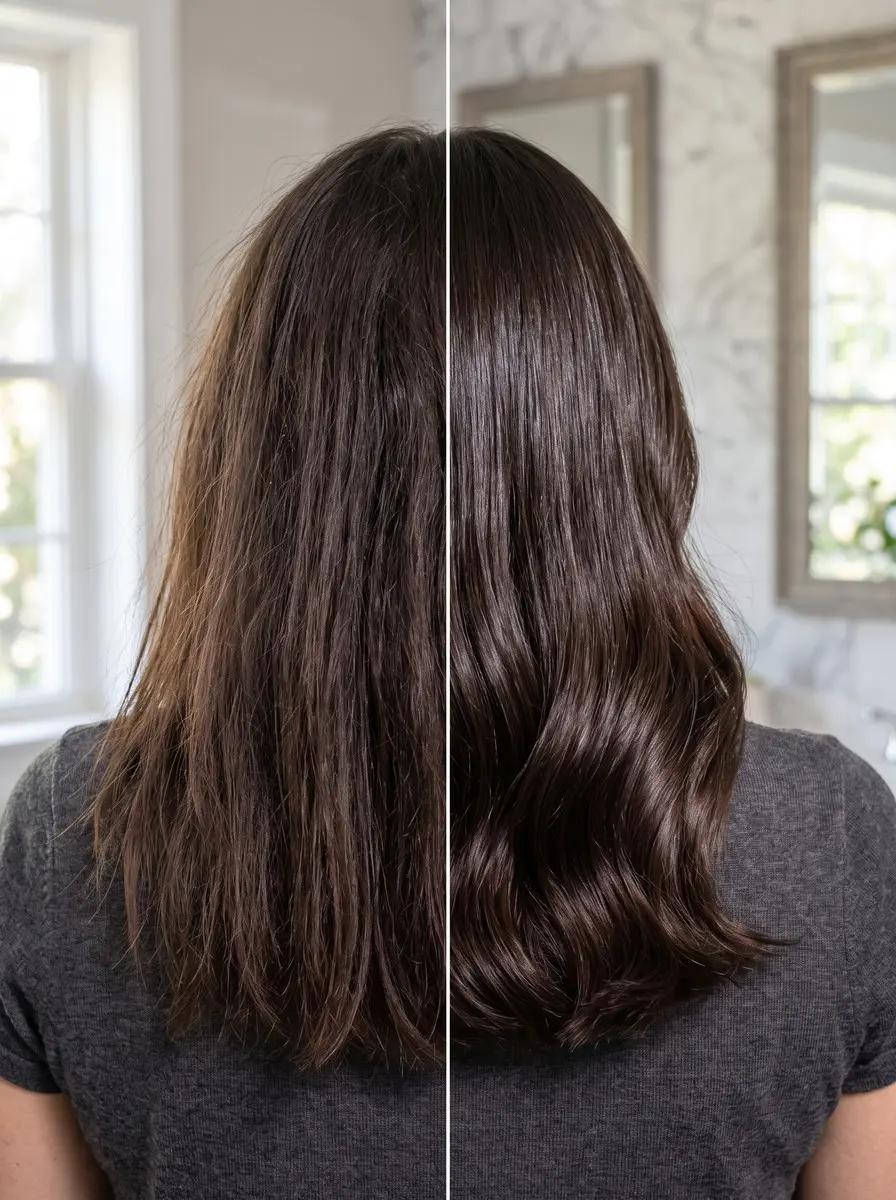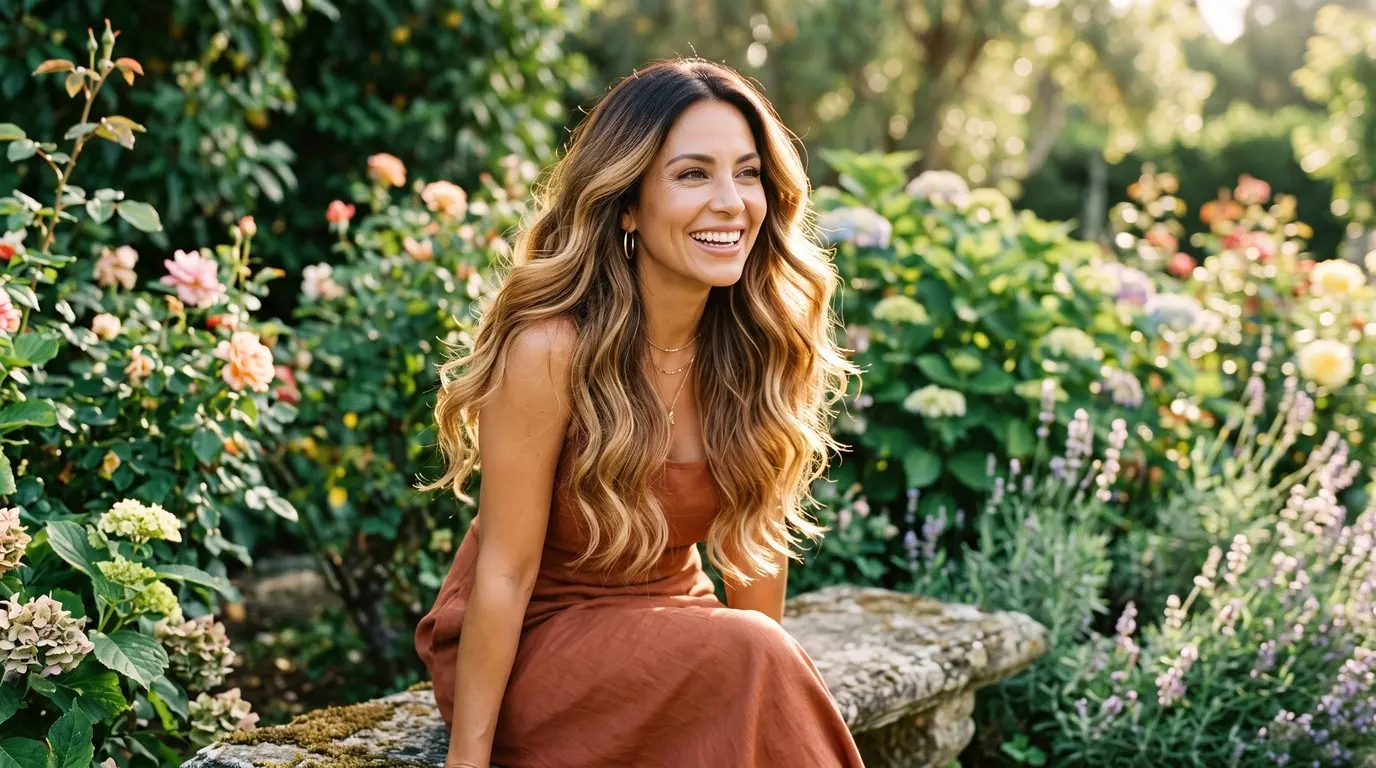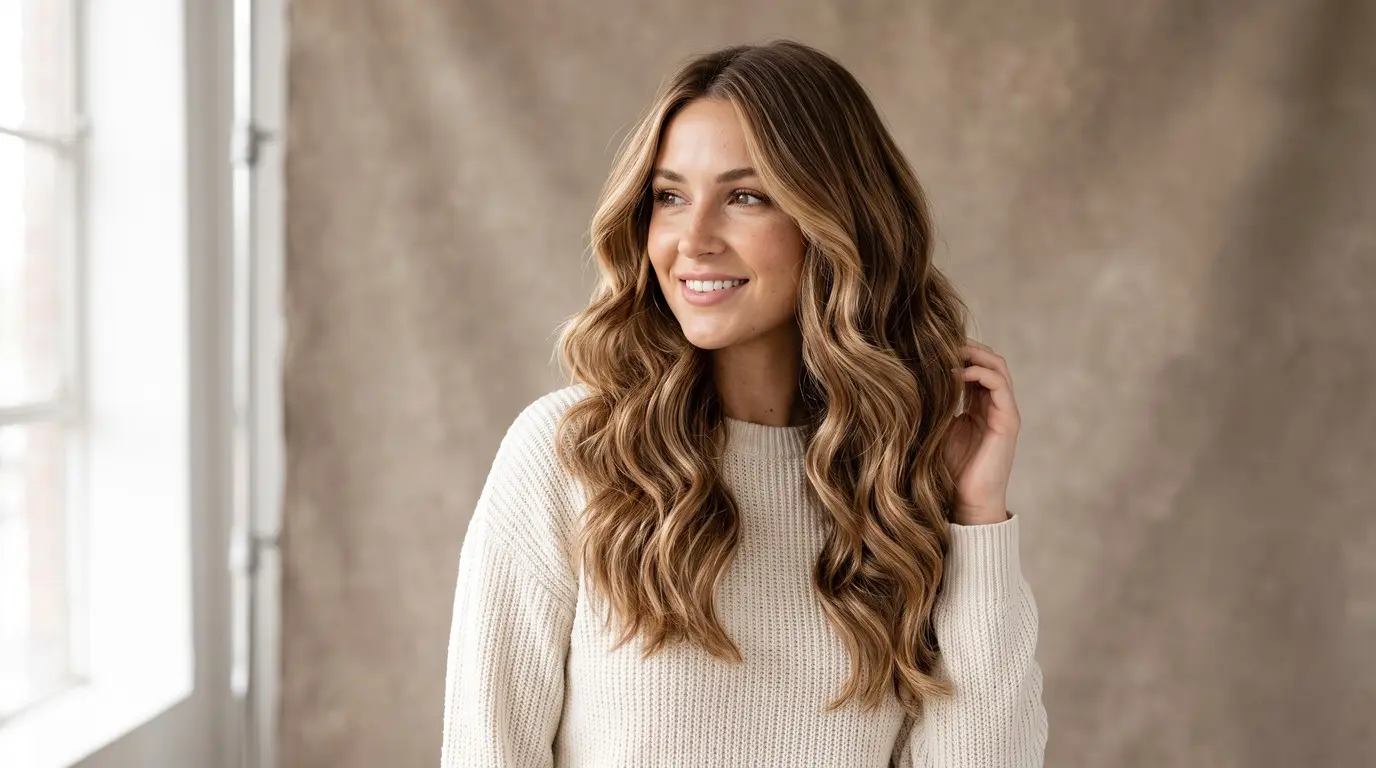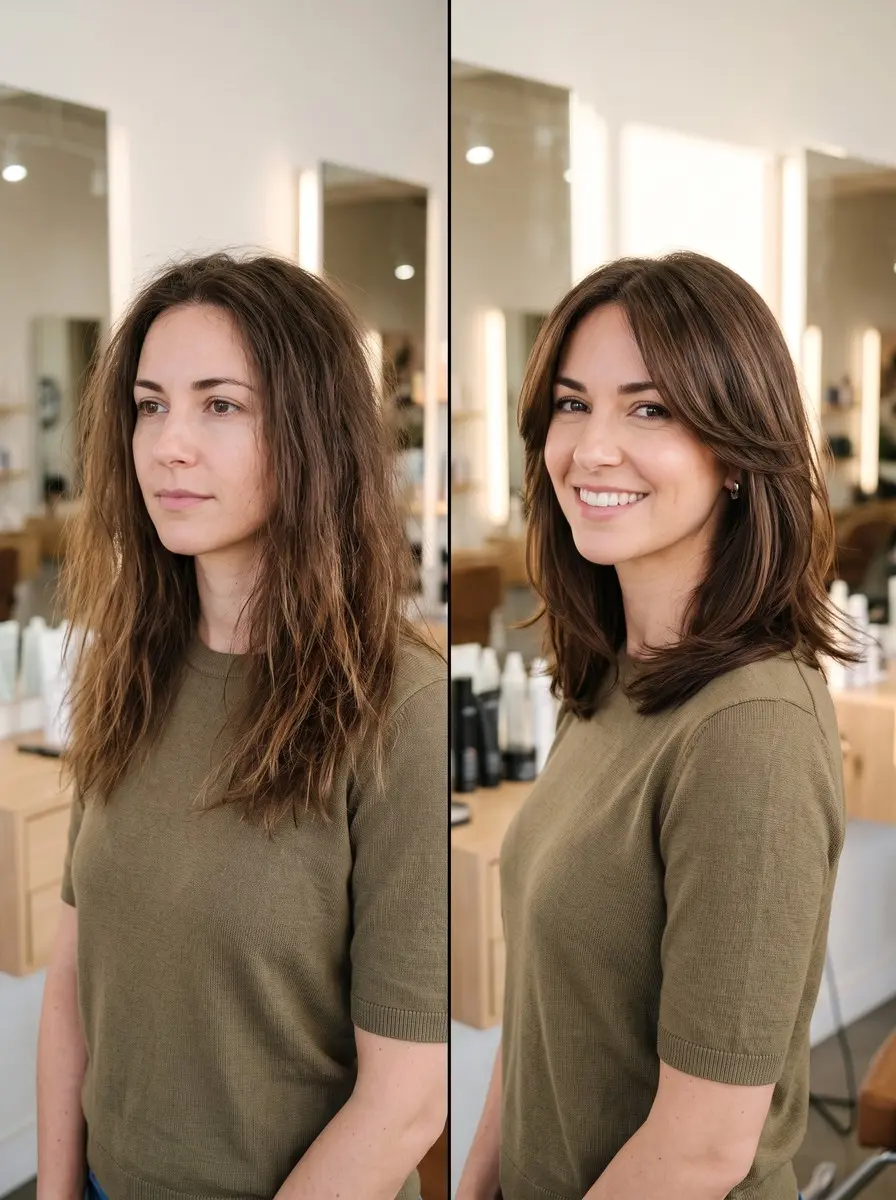
To ask your stylist for the haircut you want, bring 5-7 reference photos from several angles that match your hair type, describe length with landmarks, inches or clipper guard numbers, ask how it air-dries and grows out, and repeat the plan back before any cutting starts.
Knowing how to ask your stylist for the haircut you want starts before you sit in the chair. Maybe you asked for a trim and walked out missing four inches, or showed a photo of soft, swingy layers and got a choppy shag. Most bad-haircut stories aren’t about skill; they’re about translation. Words like ‘trim,’ ‘layers’ and ‘shoulder length’ mean different things to different stylists, and one photo can hide half of what you liked about it.
The fix is a consultation routine you can repeat: the right reference photos, concrete measurements, a few questions asked before the scissors come out, and a calm script for the moment something feels off. You don’t need salon vocabulary or a confrontational tone. Use the steps below at your next appointment, whether it’s a routine tidy-up or a big change. You’ll sit down with a plan your stylist can follow and walk out with the cut you pictured.
What You’ll Need
- Soft measuring tape (flexible tailor’s tape) — Lets you measure how much you want off and where your target length lands, so you can give your stylist a number instead of ‘a little.’
- Handheld styling mirror — Lets you check the back and sides of the finished cut before you leave the chair.
- Heat protectant spray — Protects your hair if the new cut needs a blow-dry or an iron to look its best at home.
- Lightweight air-dry styling cream — Helps a cut chosen for low-heat days hold its shape and texture when you let it dry naturally.
As an Amazon Associate, HairAide earns from qualifying purchases. Some links above are affiliate links — they cost you nothing extra and help support free tutorials.
Step-by-Step
-
Before you book, decide what you want the cut to fix and how much time you’ll really spend styling it each morning. Write down two or three specifics, like ‘my ends look thin,’ ‘I want it off my neck’ or ‘I air-dry five days a week,’ plus anything you won’t do, like blow-drying every day or growing out bangs again. Stylists build a cut around your routine, so this tells them which versions of a look will work for you at home and not just in the salon chair. You’re ready when you can describe your goal and your daily styling time in one or two sentences.
-
Save 5-7 reference photos of the cut you want, with front, side and back views so your stylist sees the whole shape and not just the face-framing pieces. Choose photos of hair like yours in texture and density (fine and straight, thick and wavy, tightly coiled) and, where you can, a similar face shape and hairline. A cut photographed on very different hair may not fall the same way on yours. Add one or two ‘not this’ photos of what you want to avoid; they narrow things down as much as the goal shots do. Finally, know exactly what you like in each picture, whether that’s the length, the fringe or the movement, because a photo alone doesn’t tell your stylist which detail caught your eye.
-
Swap vague words for measurements and landmarks your stylist can’t misread. Instead of ‘a trim,’ say ‘half an inch off, just the split ends’ or ‘two inches, so it hits my collarbone.’ Instead of ‘short on the sides,’ give a clipper guard number: a #2 leaves about 1/4 inch and a #4 about 1/2 inch, though sizes vary slightly by brand. Name landmarks like your chin, jawline, collarbone, shoulders or bra strap, and show with your hand where the shortest and longest pieces should land once dry. Numbers remove the guesswork, because ‘a little’ can mean an inch to one stylist and a quarter inch to another, and you’re ready when every length you want has a number or landmark attached.
-
Arrive with your hair styled the way you normally wear it, not freshly washed, slicked back or tied up. If you air-dry, come in air-dried; if you usually blow it out, come in blown out. That way your stylist can see your natural texture, where your part falls, any cowlicks at the crown or hairline, and how your current cut behaves before they plan the new one. For a big change, like going from long hair to a bob or trying bangs for the first time, ask for extra consultation time when you book so the conversation isn’t squeezed into the first two minutes. You’re set when your stylist has seen your hair looking the way it does on an ordinary day.
-
Before the first snip, ask how the cut will look air-dried versus blow-dried, how often you’ll need a trim to keep its shape, whether it needs heat styling to look right, and how it will grow out. The answers show whether the cut fits your real routine or only looks good after a salon blowout. The grow-out question matters most for precise shapes. Hair grows at a steady half an inch or so a month, and a blunt bob or sharp fringe loses its definition sooner than soft, long layers do. If an answer doesn’t suit your life, ask what the stylist would change, such as longer layers that air-dry well or a fringe that sweeps aside as it grows.
-
Once you’ve talked it through, repeat the plan back in your own words: ‘So we’re taking about two inches off, the shortest layer lands at my chin, and the back stays one length.’ This is one of the quickest ways to catch a mismatch, because it shows the stylist what you heard rather than what they meant. With curly or coily hair, confirm whether they’ll cut wet or dry and where the length will sit once it springs up, since curls can dry noticeably shorter than they look wet. You’re ready to start when you both agree on the length, the shape and where the shortest piece will fall.
-
If something feels off mid-cut, say so right away, calmly and specifically. Hair can’t be put back on, but it can be left longer. Try ‘Can we pause for a second? I want to check the length before we go further,’ or ‘This is shorter than I pictured, so can we keep the rest longer and look at it dry?’ Checking in instead of criticizing keeps the conversation friendly, and most stylists would much rather adjust now than fix it later. If you’re unsure, ask them to leave it long: ‘Let’s go a bit longer than planned; we can always take more off.’
-
When the cut is finished, check the back and sides with a handheld mirror and look at it the way you’ll wear it: parted where you part it, and fully dry. Ask the stylist to show you how to style it at home, whether that’s with a round brush, a diffuser or just air-drying, and which one or two products they used. If something still isn’t right, say so before you leave and ask about the salon’s policy on small adjustments; many will tweak a cut within a short window. Take a few photos of the finished style too. At your next appointment, you can start from ‘more of this’ instead of from scratch.
Common Mistakes to Avoid
- Saying ‘just a trim’ without a number. To one stylist that means a quarter inch of split ends; to another it means two inches to reshape the ends.
- Asking for ‘layers’ without saying where the shortest one should start. Face-framing layers at the chin and long layers below the shoulders are completely different cuts.
- Asking for ‘thinning’ or ‘more texture’ without naming the problem, such as bulk at the nape, puffiness at the sides or heavy ends, so the stylist can’t pick the right technique.
- Judging length on wet hair. Wet hair hangs longer, so ask where the cut will sit once it’s dry, especially if your hair is wavy or curly.
- Staying quiet when something feels wrong and hoping it looks better at home. It’s much easier to adjust mid-appointment than to fix it afterward.
Pro Tip
Ask your stylist to cut the first guide section and show you where it falls before working around the rest of your head. It takes seconds, and it turns ‘I hope this is right’ into a quick yes or no while there’s still plenty of length to work with.
Frequently Asked Questions
How many reference photos should I bring to a haircut appointment?
Bring 5-7 photos showing the cut from the front, side and back, ideally on hair with a texture and density similar to yours. One or two 'not this' photos help too. Many more than that can muddy the message, so be ready to point out the detail you like in each one, whether it's the length, the fringe or the way the layers move.
What does 'a trim' actually mean at a salon?
There's no standard definition, which makes it one of the most common misunderstandings in the salon chair. Some stylists take a quarter inch of split ends; others take one to two inches to rebuild the shape. Always put a number on it, like 'half an inch' or 'enough to hit my collarbone,' and confirm it out loud before any cutting starts.
How often should I get my haircut trimmed to keep its shape?
Trim timing depends on how quickly your cut loses its shape, since hair grows at a steady half an inch or so a month. Precise shapes grow out visibly first: fringes often need a tidy every 3-4 weeks and pixies and blunt bobs every 4-8 weeks, while long, soft layers can go 8-12 weeks. Ask your stylist what interval suits your cut.
Should I choose a haircut that needs heat styling to look right?
Only if you're happy to style it most days. If you are, use a heat protectant before any heat styling. Blow-dryers and diffusers go on damp hair, but flat irons and curling irons should only touch completely dry hair, at about 150°C/300°F for fine or bleached hair or 180-200°C/355-390°F for coarse hair. If you mostly air-dry, ask for a cut that falls well without heat.
What should I do if I don't like my haircut after I leave the salon?
Wash it and style it yourself for a day or two, because a fresh cut can look different once the salon finish wears off. If it still isn't right, contact the salon soon, explain exactly what's bothering you, and ask whether they'll adjust it. Many salons will make small corrections within a short window after the appointment.
You Might Also Like
- 20 soft shag haircut ideas to inspire your next look
- 15 textured fringe ideas to inspire your next look
- 20 modern bixie cut ideas to inspire your next look
- how to grow out bangs gracefully
- a wash-to-finish volume routine for thin hair
- heatless curls for low-heat styling days
- flattering curtain bangs
A great haircut starts before the scissors come out. You need clear goals, 5-7 well-chosen photos, lengths given in inches, landmarks or guard numbers, and a plan you’ve repeated back out loud. Keep photos of the finished style so your next visit starts from ‘more of this,’ and rebook when the shape starts to blur instead of waiting until it’s completely grown out.
For big changes, like going from long hair to a pixie, getting your first fringe, or pairing a cut with a color change, book a separate consultation first. And if you and your stylist never seem to see a look the same way, it’s fine to find someone whose portfolio matches the cuts you love.
Sources
- Bringing 5-7 reference photos from multiple angles, matched to your own hair type and face shape, is described as the single most effective communication tool. burmanandco.com
- Using specific measurements or guard numbers and physically showing length with your hands removes ambiguity before cutting begins. theglossylocks.com
- Recommended consultation questions include how the cut looks air-dried vs. blow-dried, maintenance frequency, and whether it needs heat styling to look right. gingerandmaude.com