To find your hair porosity without the float test, wash with a clarifying shampoo, let hair dry fully, then mist a section: beading water means low porosity, gradual absorption means medium, and instant soak-in means high. Confirm with a touch test: smooth strands read low, rough ones high.
A hair porosity test shows how easily your hair takes in water and how well it holds on to it, and knowing that explains a lot of wash-day frustration: the leave-in that sits on top like a film, the curls that feel crunchy by noon, the ends that soak up every product and still look parched. Most guides send you straight to the float test, where you drop a strand into a glass of water and see whether it sinks. But a strand coated in oil, conditioner or hard-water residue floats whatever its porosity, and the result shifts with how long you wait.
Three simple checks give a far more reliable read, using nothing but a spray bottle, your shower and your fingertips. You’ll run them on clean hair, spot mixed porosity and common misreads, then turn your result into a routine that suits your hair: light, water-based layers or richer ones backed by protein.
What You’ll Need
- Clarifying or chelating shampoo (clarifying shampoo) — Removes product and hard-water buildup, which would otherwise make water bead and skew every test toward low porosity.
- Continuous fine-mist spray bottle (spray bottle) — An even, fine mist makes the difference between beading, gradual absorption and instant soak-in easy to see in the spray-bottle and wet tests.
- Lightweight water-based leave-in conditioner (leave-in conditioner) — Moisturizes low-porosity hair without leaving the surface film that heavy creams do.
- Protein hair mask (hydrolyzed protein treatment) — Reinforces worn, high-porosity or bleached lengths and reduces breakage when used every few weeks.
- Rich curl cream (shea-based styling cream) — Works as the final layer of the LOC method, slowing moisture loss from high-porosity hair as it dries.
As an Amazon Associate, HairAide earns from qualifying purchases. Some links above are affiliate links — they cost you nothing extra and help support free tutorials.
Step-by-Step
-
Start with a clean slate. Wash with a clarifying shampoo, or a chelating one if you have hard water. Skip leave-ins, oils and stylers this once, and use only a little rinse-out conditioner if you can’t detangle without it. Then let your hair air-dry completely. Silicones, butters, dry shampoo and mineral deposits coat the strand and repel water, so testing over them makes almost any hair read as low porosity. That same flaw is what undermines the float test. You’re ready when a section feels bare, with no slip or residue when you rub it between your fingers.
-
Run the spray-bottle test on clean, completely dry hair. Part off a section at the crown, where it’s easy to see, and mist it two or three times with room-temperature water from a fine-mist bottle. Then watch closely for a full two minutes before you decide. If droplets bead up and roll off like rain on a waxed car, the cuticle is lying tightly closed and resisting water, which means low porosity. If the mist sinks in gradually over a minute or two, you have medium, or normal, porosity. If the section darkens and soaks through almost instantly, water is getting past a raised or worn cuticle, which means high porosity.
-
Next, do the wet test, which measures how quickly your hair absorbs a larger dose of water. Mist a bigger section steadily, 10 to 15 sprays, or step into the shower before you apply any product, and notice how quickly it goes from dry to fully wet. Low-porosity hair resists: water beads and runs off, and you have to work it in with your fingers. High-porosity hair turns dark, heavy and saturated within seconds. For a supporting clue, time your next product-free air-dry. Hair that lets water out as easily as it takes it in dries fast, which leans high, while hair that stays damp for many hours leans low. Dense hair dries slowly whatever its porosity, so give dry time less weight than the other signs.
-
For the texture or touch test, choose a single strand from the crown. One still attached to your head is best, so hold it taut near the scalp to avoid pulling. Run your thumb and forefinger down the strand, then slowly back up from the tip toward the scalp. The upward pass runs against the cuticle’s overlapping edges, so any lifted or worn scales will catch. Smooth and slippery reads as low porosity, a faint texture reads as medium, and a rough, bumpy or snagging feel reads as high. Check three or four strands from different areas before you decide, because a single hair can mislead you.
-
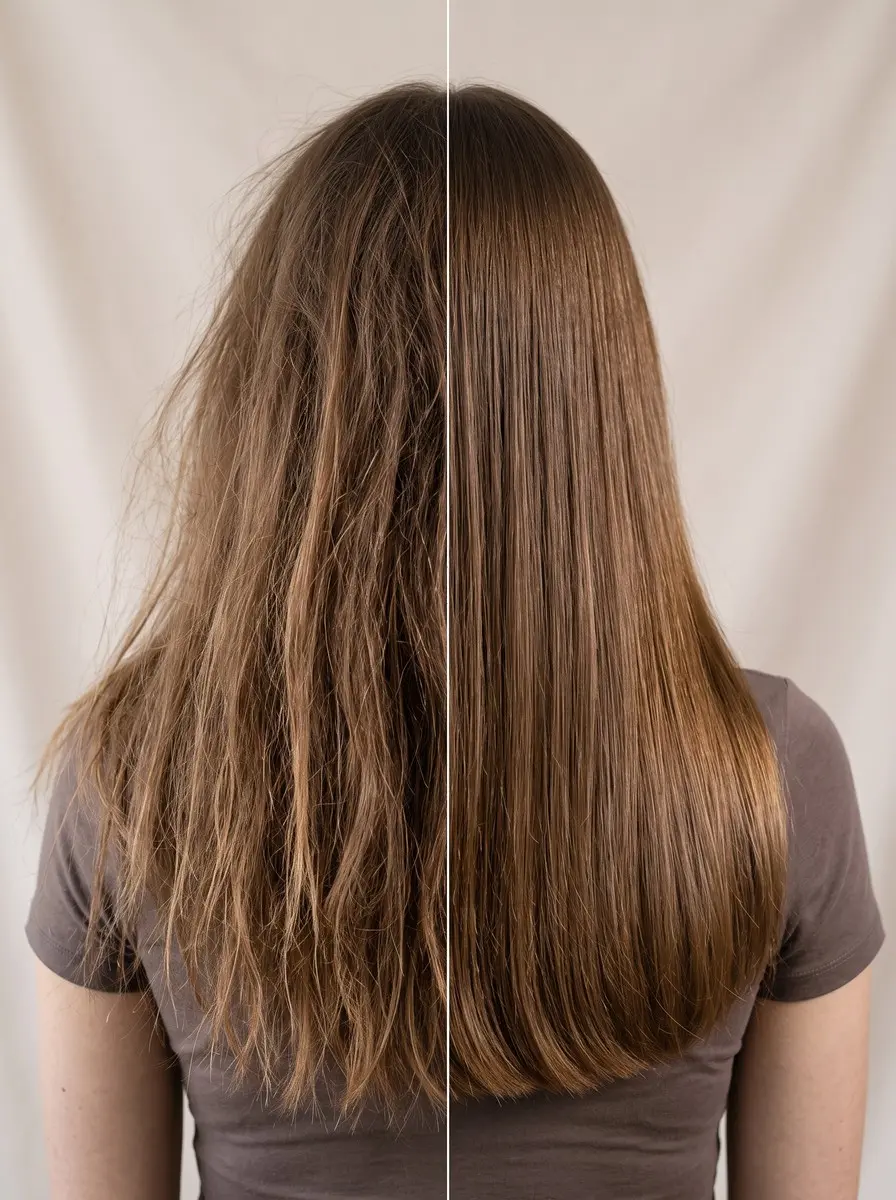
Repeat the spray and touch tests on three zones: the first couple of inches from the scalp, the mid-lengths and the last few inches. Your ends are the oldest hair on your head and have had the most brushing, sun and styling, and bleached or colored lengths usually read more porous than new growth. It’s common to get a low reading at the roots and a high one at the ends. That’s mixed porosity, and it explains why one product can feel greasy at your scalp and do nothing for your tips. You’re done when you’ve noted a result for each zone, because your routine will treat each one differently.
-
Cross-check before you commit. Treat each test as a vote and settle on a result only when at least two of the three agree. Watch for the common misreads. Fine, low-density hair gets wet and dries quickly simply because there’s less of it, which can look like high porosity. Very dense hair takes a long time to wet and dry because there’s so much of it, which can look like low. And leftover product or hard-water minerals can make water bead on hair that’s really medium. If your results disagree, clarify again and repeat the spray test. Then see how your hair reacts to products over the next two or three washes: products that sit on top and feel coated point to low porosity, and hair that drinks conditioner but frizzes within hours points to high.
-
If you read low porosity, go light and apply products to wet hair. Low-porosity hair resists letting water and product in, so the goal is to get moisture in without piling anything on top. Clarify every two to four weeks, or whenever your products start to feel coated. Apply a lightweight, water-based leave-in to soaking-wet hair, where it spreads thin and even instead of clumping on the surface. Keep to one or two thin layers, such as a leave-in and a light gel. Use lighter oils like argan or jojoba sparingly, go easy on heavy butters, and keep protein occasional: many people with low-porosity hair find frequent protein leaves it stiff. When you deep-condition, cover your hair with a plastic cap for 15 to 20 minutes so the conditioner has time to absorb instead of drying on the surface. It’s working when your hair feels soft rather than coated.
-
If you read high porosity, layer products to hold moisture and add protein. High-porosity hair takes in water quickly and loses it just as fast, so the goal is to slow that loss and reinforce the worn areas. Layer with the LOC method: first a liquid (water or a water-based leave-in), then an oil, then a cream. Switch to LCO if your hair prefers the cream before the oil. Either way, the heavier final layers slow moisture loss as your hair dries, and richer creams and shea-based stylers tend to suit these lengths. Use a protein mask every two to four weeks and alternate it with moisturizing deep conditioners. Hydrolyzed proteins cling to worn areas of the strand and reduce breakage. If your hair turns stiff, cut back on protein; if it feels mushy or overstretches when wet, add more. For medium porosity, take the middle road. For mixed porosity, use the low-porosity approach at the roots and this one on the ends.
Common Mistakes to Avoid
- Testing over product, dry shampoo or hard-water buildup. Any coating makes water bead and pushes the result toward low porosity.
- Relying on one shed strand from your brush. It tells you about a single, often old, hair, not the head you actually style.
- Assuming one result covers your whole head, when colored or bleached ends often read far more porous than your roots.
- Mistaking density or strand thickness for porosity. Dense hair dries slowly and fine hair wets quickly, whatever the porosity.
- Piling heavy butters and oils onto low-porosity hair to fight dryness. They sit on the surface and build up, which makes hair feel drier.
- Loading high-porosity hair with protein and skipping moisture, which leaves it stiff, brittle and more likely to snap.
Pro Tip
Keep a simple wash-day log for three washes: how long your hair took to get fully wet, how long it took to air-dry, and how your leave-in felt the next morning. A pattern across several washes is more reliable than any one-off test, and it shows you when your porosity changes after color or once damaged ends have been trimmed away.
Frequently Asked Questions
Why is the float test not accurate for hair porosity?
The float test shows how a strand behaves in a glass of water, not how your hair absorbs moisture. Natural oils, conditioner or styling residue can keep any strand afloat, water's surface tension can hold up a dry hair, and most strands sink eventually if you wait long enough. The spray-bottle and touch tests, done on clean hair, are more dependable.
Can your hair porosity change over time?
Yes. Bleach, permanent color, relaxers, frequent heat styling, sun and rough handling all raise porosity over time, most noticeably on the ends. That wear can't be reversed, but products can temporarily smooth the surface, new growth comes in at your natural baseline, and regular trims remove the most porous lengths. Retest every few months and after any chemical service.
Can you have low porosity at the roots and high porosity at the ends?
Yes, and it's very common. Mixed porosity shows up most on long, colored or heat-styled hair, because the ends are the oldest hair and have taken the most wear. Treat the zones separately: keep the roots light with water-based products, and give the mid-lengths and ends richer creams, layering and regular protein.
Does low porosity hair need protein?
Usually only a little. Many people with low-porosity hair find that frequent protein treatments leave it stiff or straw-like, so lightweight, moisture-focused products tend to make the best base routine. If your hair feels limp, mushy or overly stretchy when wet, an occasional light protein treatment can help. Let your hair's response, not the label, decide how often.
When should I see a professional about hair porosity?
See a stylist or trichologist if your hair snaps easily, feels gummy or stretches without bouncing back when wet, or if its porosity jumped suddenly after a color or chemical service. A professional can assess the damage in person, trim the most porous ends and plan future color so it doesn't make the problem worse.
You Might Also Like
- 20 soft shag haircut ideas that show off natural texture
- 20 balayage ideas to inspire your next color
- remove hard water buildup from your hair
- repair bleach-damaged hair at home
- dust away split ends without losing length
- get heatless curls overnight
- make thin hair look thicker
Once you know your porosity, wash day stops being guesswork. Low-porosity hair gets regular clarifying and light, water-based layers applied to wet hair, while high-porosity hair gets layered moisture and steady protein support. Retest every few months, and again after bleach, color or a big trim, because your result can change. If you diffuse or blow-dry, apply a heat protectant to damp hair first, since porous lengths are the most vulnerable to heat.
If your tests keep contradicting each other, or your hair breaks, feels gummy when wet or won’t hold moisture whatever you use, book a consultation with a stylist. They can read your hair in person, trim away the most damaged ends and help you build a routine for the hair you actually have.
Sources
- The wet test measures how quickly hair absorbs misted water — beading indicates low porosity, quick heavy saturation indicates high porosity. curlmaven.ie
- The texture/touch test judges porosity by running fingers down a strand — a smooth feel indicates low porosity, rough/bumpy indicates high. smytten.com
- A spray-bottle test on clean, dry hair shows water beading and rolling off for low porosity, gradual absorption for medium, and immediate soak-in for high porosity. curlsmith.com