Quick answer To wash locs without buildup, mix a residue-free shampoo 50/50 with water in a spray bottle, apply it to the scalp only and massage. Rinse until the water runs clear, then dry your locs completely. Repeat weekly to every three weeks, depending on your loc stage and how much you sweat.
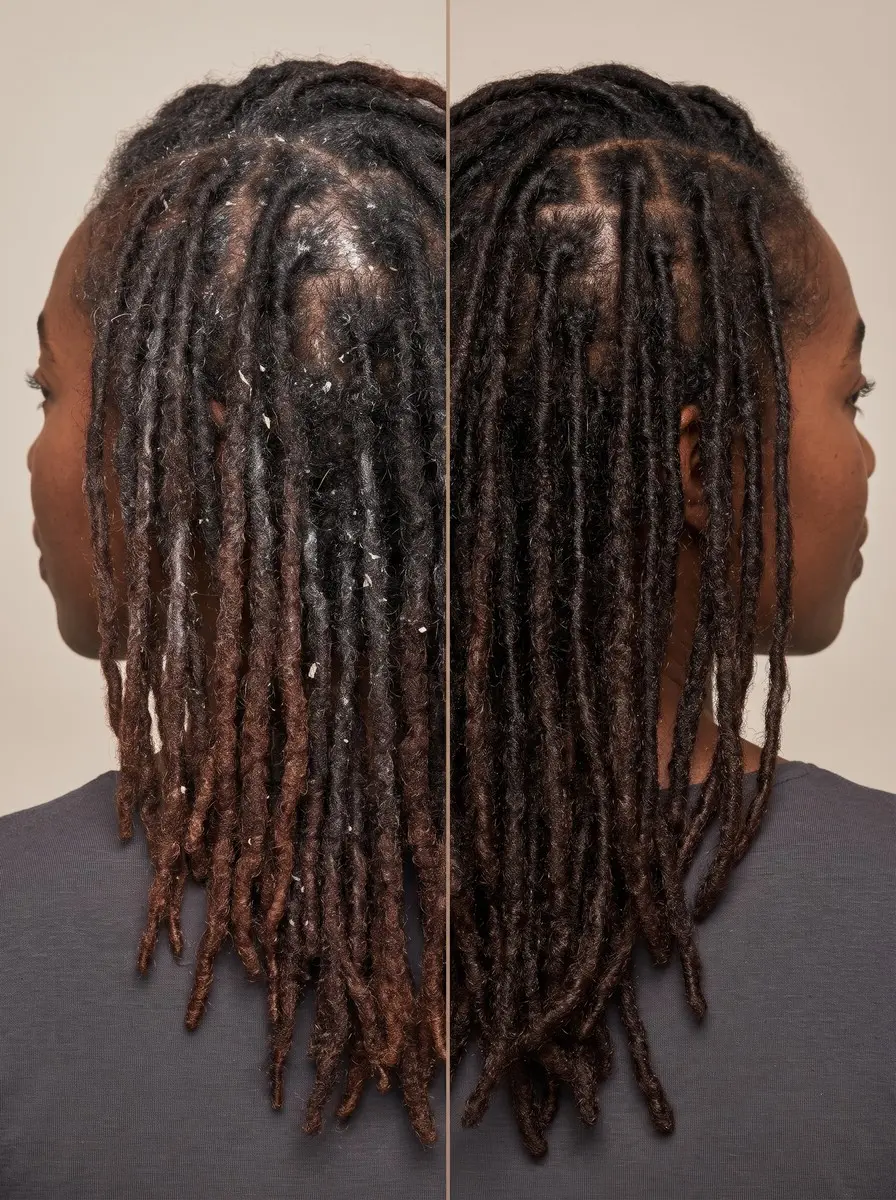
Locs collect things loose hair can simply rinse away. Shampoo, creams, lint and oils get pulled into the matted core of each loc and stay there. Over time that shows up as chalky white specks, a stiff feel, an itchy scalp or a sour smell that keeps coming back.
Most of it comes from two habits: rubbing creamy products straight into the locs, and not rinsing or drying them all the way. This guide shows how to wash locs without buildup, whatever stage your locs are at.
The good news is that a clean wash day is easier than it sounds. Work on the scalp, use less product than you’d expect and spend more time rinsing and drying than shampooing. The steps below work for fragile starters and heavy mature locs alike. They cover how often to wash, which shampoo to use, how to keep new locs from unravelling and how to clear old buildup without wrecking your hair.
Time 45-90 minutes, plus drying timeDifficulty BeginnerSteps 8
How Often to Wash Locs by Stage
| Loc stage | Wash every | Wash-day note |
|---|---|---|
| Starter locs | 2-4 weeks | Stocking cap or tie-ups, scalp only |
| Budding locs | 1-3 weeks | Diluted shampoo, gentle squeeze rinse |
| Mature locs | 1-3 weeks | Long rinse, dry the core fully |
| Active or oily scalp | Weekly | Same method, plan drying time |
| Deep cleanse (any stage) | 3-6 months or as needed | Baking soda soak + ACV rinse |
What You’ll Need
As an Amazon Associate, HairAide earns from qualifying purchases. Product links in this guide are affiliate links: they cost you nothing extra and help keep these tutorials free.
- Residue-free clarifying shampoo Cleans the scalp and rinses out of the loc core without leaving the film that traps lint.
- Applicator or fine-mist spray bottle Lets you apply a 50/50 shampoo and water mix straight to the scalp with very little rubbing.
- Stocking caps or mesh loc caps Holds starter locs in place while you wash so coils and twists don’t unravel.
- Microfiber hair towel Absorbs water quickly when you squeeze, without leaving the lint cotton towels do.
- Raw apple cider vinegar Used for the occasional deep-cleansing rinse after a baking soda soak.
Step-by-Step
Step 1 Set your wash schedule by stage
Pick a wash rhythm that suits your loc stage and your lifestyle rather than a fixed rule, because sources genuinely disagree. Some stylists suggest every 2 to 3 weeks for most people, while others recommend weekly if you work out often or have an oily scalp.
Starter locs usually do best at the longer end, every 2 to 4 weeks, since every wash is a chance for them to loosen. Budding and mature locs can usually handle a wash every 1 to 3 weeks. Your cue to wash is an itchy or flaky scalp, visible oil at the roots or a smell, not the date on the calendar.
Step 2 Choose a residue-free shampoo
Look for a shampoo labelled residue-free or clarifying, and check the ingredient list for silicones (most end in -cone or -siloxane), waxes, butters and heavy oils. Creamy, moisturising shampoos are made to leave a conditioning film on loose hair, and inside a loc that film builds up and traps lint.
A clear or lightly coloured liquid formula usually rinses more cleanly than a thick, opaque cream. Skip rinse-out conditioner on mature locs, or keep it to the ends, because it is hard to rinse out of the dense core. You have the right product when your locs feel clean and light after drying, not coated or tacky.
Step 3 Protect starter locs before wetting
If your locs are under a few months old, pull a stocking cap or a snug mesh cap over your head before you get them wet. Some people band each section with small elastic loc tie-ups instead.
The cap holds coils, comb twists and two-strand twists in place while you massage the scalp through it, so the friction goes to your roots and not the fragile ends.
Many loctitians suggest waiting a few weeks after installation before the first full wash, and keeping water pressure low for the first months. You’ll know the method is working if your parts and sections look the same after drying as they did before the wash.
Step 4 Spray diluted shampoo onto the scalp
Mix your shampoo half and half with water in an applicator or spray bottle. Wet your hair, then spray the mix directly onto the scalp, working section by section along your parts.
Massage with the pads of your fingers, not your nails, for a minute or two so the lather lifts oil and flakes off the skin. Diluting the shampoo means you use less of it, it spreads more evenly and you don’t have to rub it in as hard.
That is gentler on new locs and leaves less to rinse out of mature ones. Let the suds run down the length of your locs instead of scrubbing them, because that runoff is enough to clean them.
Step 5 Rinse until the water runs clear
Rinse for longer than you think you need to, at least as long as you spent shampooing and ideally twice as long. Point the water at your scalp first, then gently squeeze each loc under the stream like a sponge to push water through the core and out the bottom.
Leftover shampoo is the main cause of white residue and stiffness, because it dries inside the loc where you can’t see it.
Keep squeezing until no suds come out and the water dripping from your ends is completely clear. If your locs are long or very thick, rinse them a few at a time so the middle of the head gets just as much water as the outside.
Step 6 Dry every loc completely
Squeeze each loc firmly in a microfiber towel or an old cotton T-shirt, pressing instead of rubbing so you don’t create frizz or catch lint. Then let them air-dry in a warm, well-ventilated room, or sit under a hooded dryer or use a blow-dryer on a low setting to speed up the core.
A loc that stays damp inside for hours can develop mildew and a stubborn sour smell, and this is the most common way wash day goes wrong.
Thick mature locs can take most of a day to dry, so wash in the morning, never right before bed. Press a loc between your fingers near the root and in the middle. It’s done when no part feels cool or damp.
Step 7 Deep-cleanse buildup every few months
When normal washes stop working and you can see white specks, feel a waxy coating or notice a smell that won’t go, do a deep-cleansing soak. A common version is to dissolve about half a cup of baking soda in a basin of warm water, soak your locs for 15 to 20 minutes and squeeze them so the water moves through.
Then pour on a rinse of roughly one part apple cider vinegar to four parts water. Finish with a residue-free shampoo and a long, thorough rinse. You’re finished when the rinse water runs clear and the locs feel light, not waxy.
A soak leaves the cores more saturated than an ordinary wash, so squeeze and dry every loc fully again exactly as in the drying step, until no part feels cool or damp. Curl Centric suggests doing an ACV rinse every 3 to 6 months or as needed.
Baking soda is alkaline and drying, so don’t do this more often, and skip it on freshly coloured locs. It loosens surface residue but it can’t remove everything that’s set deep in the core, so very heavy buildup is a job for a loctitian.
Step 8 Moisturise with light, wax-free products
Once your locs are fully dry, add moisture with something that won’t stay in the loc. Good options are a water- or aloe-based spritz, rosewater or a few drops of a light oil like jojoba on the scalp and along the locs. Stay away from beeswax and products made with it.
Beeswax gets embedded in locs and is very hard to wash out, and it keeps catching lint long after you stop using it. Heavy creams, butters and petroleum-based greases cause the same problem more slowly. Your locs should feel soft and flexible, not greasy, and should still feel that way a day later rather than tacky.
Common Mistakes to Avoid
- Rubbing shampoo or creamy conditioner straight into the locs instead of applying it to the scalp, which pushes residue into the core.
- Cutting the rinse short, so dried shampoo is left inside the locs as white residue and stiffness.
- Going to bed or tying locs up while the cores are still damp, which leads to mildew and a lingering sour smell.
- Using beeswax, heavy butters or petroleum grease to hold or moisturise locs. They get embedded and keep catching lint.
- Doing baking soda soaks often. They are drying and should be an occasional rescue, not part of every wash.
Pro tip When you think you’ve finished rinsing, pick your thickest, most densely packed loc and squeeze it over a white towel. Dense locs take the longest to rinse through, so if that one shows even a faint film or bubbles, rinse the whole head again.
The Bottom Line
A clean wash day for locs comes down to a few habits. Put shampoo on the scalp, rinse much longer than feels necessary and don’t stop drying until the core of every loc feels dry. Do that weekly to every few weeks, depending on your stage and how much you sweat. Save the baking soda and ACV soak for every few months, when regular washes stop working.
If your locs still smell after drying, feel waxy all the way through or are thinning where buildup has been sitting, book a loctitian. A professional deep cleanse or a repair can fix problems a home wash can’t. Between appointments, light, wax-free products and patient drying keep your locs clean and defined for longer.
Frequently Asked Questions
How often should you wash locs?
Most people do well washing locs every 1 to 3 weeks. One stylist quoted by Makeup.com suggests every 2 to 3 weeks, while others recommend weekly for very active people or oily scalps. Starter locs are usually washed less often, every 2 to 4 weeks, to help them hold together. Let your scalp tell you: itchiness, flakes, oil or a smell are signs it's time.
What causes white buildup in locs?
White buildup is usually shampoo or conditioner that was never fully rinsed out, mixed with creams, waxes, lint and dead skin. Because locs are dense, that residue dries inside them instead of washing away. Prevent it by using a residue-free shampoo, applying it to the scalp only, rinsing until the water runs clear and avoiding beeswax and heavy creams.
Can I blow-dry my locs?
Yes. A hooded dryer or a blow-dryer on a low or medium setting helps dry the core of thick locs, and both are meant to be used on damp hair after you've squeezed out the excess water. Mist on a light heat protectant first and keep the dryer moving. What matters most is that every loc ends up completely dry, because a damp core causes mildew.
Will washing make my starter locs unravel?
It can, but a few precautions keep the damage minimal. Wear a stocking cap or mesh cap, or band each section with loc tie-ups, before you wet your hair. Shampoo through the cap with your fingertips, use low water pressure and blot dry instead of rubbing. A little frizz is normal and becomes part of the locking process.
How do you get beeswax out of locs?
Beeswax is very hard to remove because it gets embedded in the loc. Repeated washes with a clarifying or residue-free shampoo, plus an occasional baking soda soak and apple cider vinegar rinse, can loosen what's near the surface. Wax set deep inside may never fully come out at home, so for heavy buildup it's worth seeing a loctitian.
Keep Reading
Sources
- How often should i wash my locs curlcentric.com
- How to maintain locs makeup.com
- How to manage build up on locs standardmedia.co.ke